
When you think about your child’s development, fine motor skills play a crucial role in their everyday activities. Coloring isn’t just a fun pastime; it actively engages their hand muscles and promotes essential skills. As they learn to control their movements with crayons or pencils, they’re also sharpening their grip and coordination. But there’s more to coloring than meets the eye—let’s explore how this simple activity lays the groundwork for future tasks.
Key Takeaways
- Coloring engages hand muscles, enhancing fine motor skills critical for tasks like writing and drawing.
- Gripping crayons or pencils during coloring promotes coordination and dexterity in young children.
- Varying movements while coloring strengthens the small muscles in hands and fingers.
- Coloring within lines develops hand-eye coordination, improving precision and control.
- Different coloring techniques foster grip strength and overall motor skill growth through creative play.
The Importance of Fine Motor Skills in Child Development
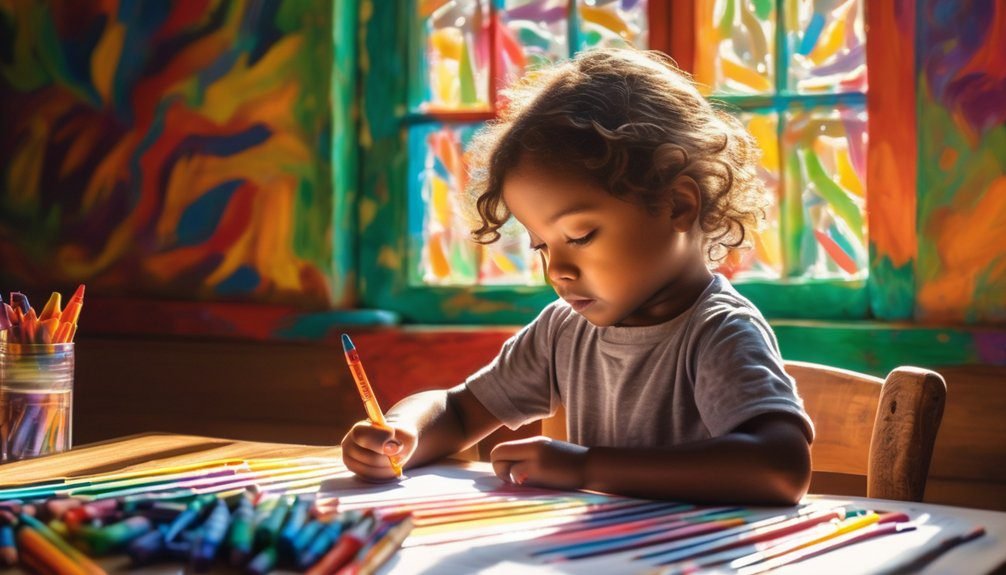
Fine motor skills are essential building blocks in a child’s development. These skills involve the coordination of small muscles in the hands and fingers, enabling kids to perform everyday tasks with ease.
As a parent or caregiver, you’ll notice how these skills influence your child’s ability to write, draw, and manipulate objects. Mastering fine motor skills not only boosts their confidence but also enhances their cognitive abilities.
Fine motor skills significantly impact your child’s writing, drawing, and object manipulation, fostering both confidence and cognitive growth.
When your child engages in activities that promote these skills, they’re preparing for more complex tasks later in life. Encouraging practice through play, like using building blocks or engaging in arts and crafts, lays a strong foundation for future learning.
Supporting your child’s growth in this area is crucial for their overall development.

How Coloring Engages Hand Muscles
Coloring is a fantastic way to engage your child’s hand muscles, and it can make a significant difference in their fine motor skill development. As your child holds crayons or colored pencils, they’re actively using their hand muscles to grip and control the tools.
This action encourages the development of coordination and dexterity, which are essential for tasks like writing and buttoning shirts. Each stroke strengthens small muscles in their hands and fingers, promoting better control and precision.
Additionally, coloring requires different movements, such as twisting and turning, which further enhances their muscle engagement. By incorporating coloring into their routine, you’re not only making it fun but also setting a solid foundation for their overall motor skills.
Enhancing Grip Strength Through Creative Activities
Creative activities like coloring can significantly enhance your child’s grip strength, an essential component of fine motor skill development. When your child holds crayons or markers, they’re not just creating art; they’re also building the muscles in their hands. Activities that require different grips, such as using chunky crayons or holding paintbrushes, promote varied hand movements and strengthen grip.
| Activity | Grip Strength Benefit |
|---|---|
| Coloring | Develops dexterity and control |
| Painting | Encourages wrist movement |
| Clay Modeling | Builds hand strength and coordination |
The Role of Hand-Eye Coordination in Coloring
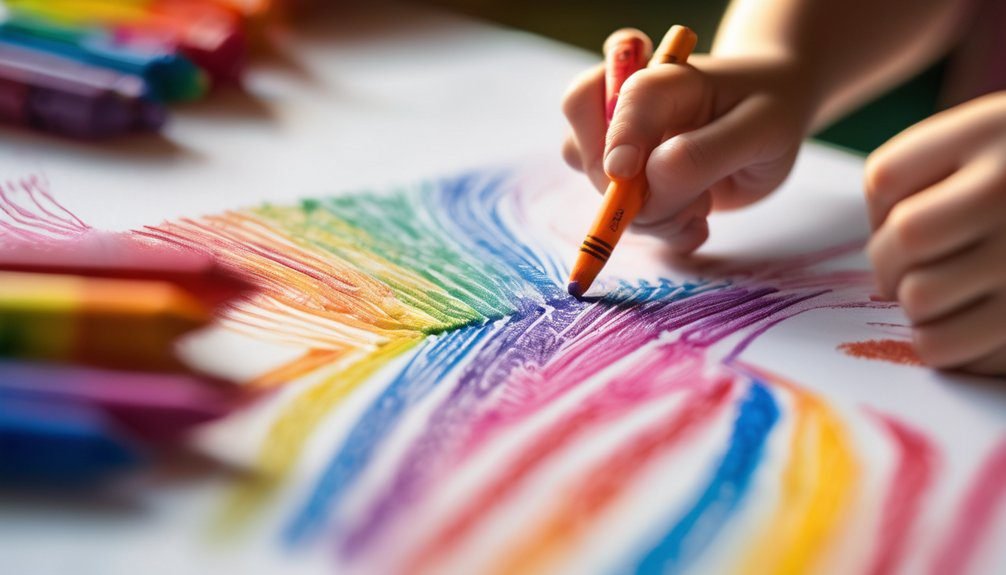
As your child engages in coloring, they’re not just having fun; they’re also honing their hand-eye coordination skills. This essential ability allows them to synchronize what they see with their hand movements.
When your child picks up a crayon and focuses on a specific area in their coloring book, they learn to control their hand’s actions based on visual feedback. Each stroke requires precision, helping them develop accuracy in their movements.
As they color within the lines or choose colors for different shapes, they practice adjusting their grip and pressure, enhancing their coordination further. These skills lay the foundation for more complex tasks, like writing and playing sports, making coloring a valuable activity for their overall development.
Choosing the Right Coloring Tools for Skill Development
Selecting the right coloring tools can significantly enhance your child’s fine motor skill development. Start by choosing crayons or colored pencils that are easy to grip; larger, ergonomic designs can help little hands maintain control.
As your child gains confidence, introduce markers with varying tip sizes, allowing them to practice different pressures and strokes. Consider washable options to encourage creativity without the stress of mess.
You might also explore finger paints, which promote tactile engagement and coordination. Lastly, opt for coloring books with diverse patterns and shapes, challenging your child while keeping the experience enjoyable.
Different Coloring Techniques to Boost Fine Motor Skills
Experimenting with different coloring techniques can greatly enhance your child’s fine motor skills. By trying various methods, your child can strengthen their hand muscles and improve their grip.
Here are some fun techniques to incorporate:
- Coloring with Different Materials: Use crayons, markers, or colored pencils to challenge their grip and control.
- Dot-to-Dot Coloring: Helps with precision and hand-eye coordination as they connect the dots.
- Coloring Inside Shapes: Encourage them to stay within lines to develop focus and control.
- Finger Painting: Allows for creativity while enhancing tactile skills and dexterity.
Incorporating these techniques into your child’s coloring activities can make skill development enjoyable and engaging!
Incorporating Coloring Into Daily Routines
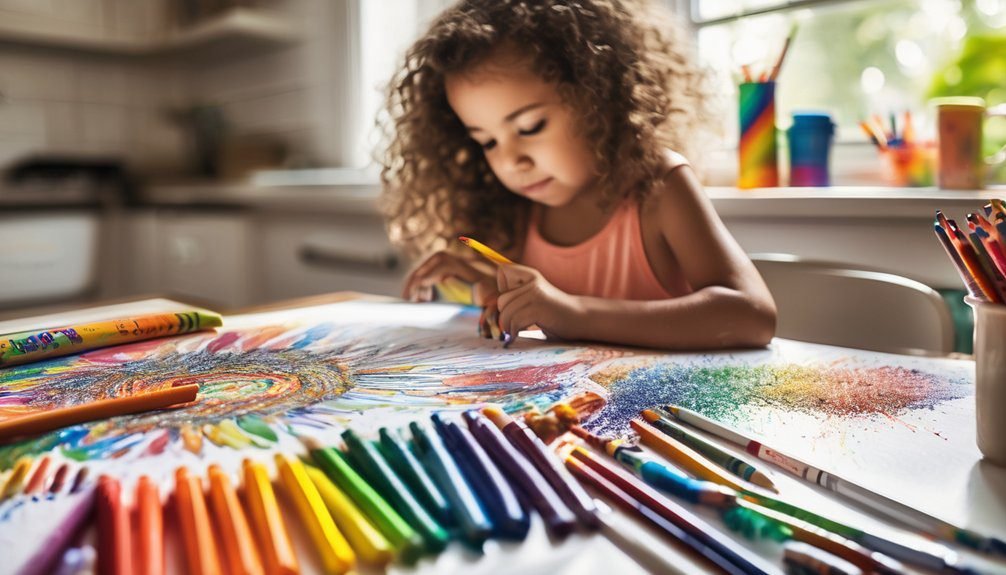
Incorporating coloring into your child’s daily routines can seamlessly blend fun with skill development. Set aside a specific time each day, like before dinner or during quiet time, for coloring. This not only gives your child something to look forward to but also establishes a creative habit.
You might consider using coloring books that relate to your child’s interests or seasonal themes, making it even more engaging. Encourage them to color while you read or during family game nights, turning those moments into opportunities for fine motor practice.
Encouraging Creativity and Expression Through Coloring
While coloring often serves as a fun activity, it also provides a vital outlet for your child’s creativity and self-expression. When kids engage in coloring, they explore their imagination and develop unique artistic styles. You can encourage this creative process by offering them a variety of materials and themes.
Here are some tips to enhance their coloring experience:
- Provide different coloring tools, like crayons, markers, and colored pencils.
- Use coloring books with diverse themes—animals, nature, or abstract designs.
- Allow your child to mix colors freely and experiment with different techniques.
- Encourage storytelling by asking them to explain their artwork.
These strategies help foster creativity, making coloring a joyful and expressive experience for your child.
Monitoring Progress and Celebrating Achievements
As you encourage your child’s coloring journey, monitoring their progress and celebrating their achievements becomes essential. Keep track of their skills by observing how they grip crayons, control movements, and stay within lines.
Take note of improvements over time; even small milestones matter. When your child completes a piece, celebrate it! Hang their artwork on the fridge or create a special display.
Praise their efforts, emphasizing the skills they’ve developed, like hand coordination and concentration. Consider creating a progress chart to visualize their growth.
This not only motivates them but also makes the learning process enjoyable. Remember, each stroke they make is a step toward mastering fine motor skills, so acknowledge their hard work and let them feel proud of their accomplishments!
Frequently Asked Questions
At What Age Should Kids Start Coloring for Skill Development?
Kids can start coloring as early as 18 months. By this age, they’ll enjoy scribbling, which lays the foundation for skill development. Keep it fun and encourage exploration to foster their creativity and motor skills.
Can Coloring Help With Children’s Emotional Well-Being?
Absolutely, coloring can boost your child’s emotional well-being. As they choose colors and express themselves, they release stress and anxiety, discovering joy and confidence. You might be surprised at how much it helps their mood!
How Often Should Kids Color to See Improvements?
You should encourage kids to color several times a week, ideally daily, to see noticeable improvements. Regular practice allows them to enhance their skills, build confidence, and enjoy the creative process. Keep it fun!
What Are Some Alternative Activities to Improve Fine Motor Skills?
You can try activities like threading beads, building with blocks, playing with playdough, or using tweezers to pick up small objects. Each of these fun tasks helps develop those essential fine motor skills your kids need.
Are There Specific Coloring Books Recommended for Skill Development?
You’ll find that coloring books featuring intricate patterns, like mandalas or nature scenes, ignite creativity while honing fine motor skills. Look for books with varying complexity to keep your child engaged and challenged throughout their artistic journey.
Conclusion
Coloring isn’t just a fun pastime; it’s a gateway to developing fine motor skills. As your child grips a crayon, imagine their hand muscles strengthening, like tiny builders constructing a bridge to better writing and drawing. Each stroke within the lines sharpens their hand-eye coordination, while vibrant colors ignite their creativity. By weaving coloring into daily routines, you’re not just filling pages; you’re crafting a foundation for their developmental journey, celebrating every vibrant masterpiece along the way.