
Some might think coloring is just a simple pastime, but it actually plays a crucial role in fostering creativity in children. As kids experiment with colors and shapes, they develop fine motor skills and cognitive abilities that extend beyond the page. The connection between art and imagination opens new pathways for self-expression and storytelling. Explore how these elements intertwine and contribute to a child’s growth in unexpected ways.
Key Takeaways
- Coloring stimulates imagination by allowing children to explore various themes and scenarios, encouraging creative narrative development.
- Open-ended questions about their artwork promote curiosity and inspire children to elaborate on their ideas.
- Experimenting with color combinations fosters critical thinking and innovative problem-solving skills.
- Artistic expression through coloring helps children communicate emotions and thoughts that are difficult to verbalize.
- Collaborative coloring activities enhance social interaction, encouraging teamwork and shared creativity among peers.
The Development of Fine Motor Skills Through Coloring
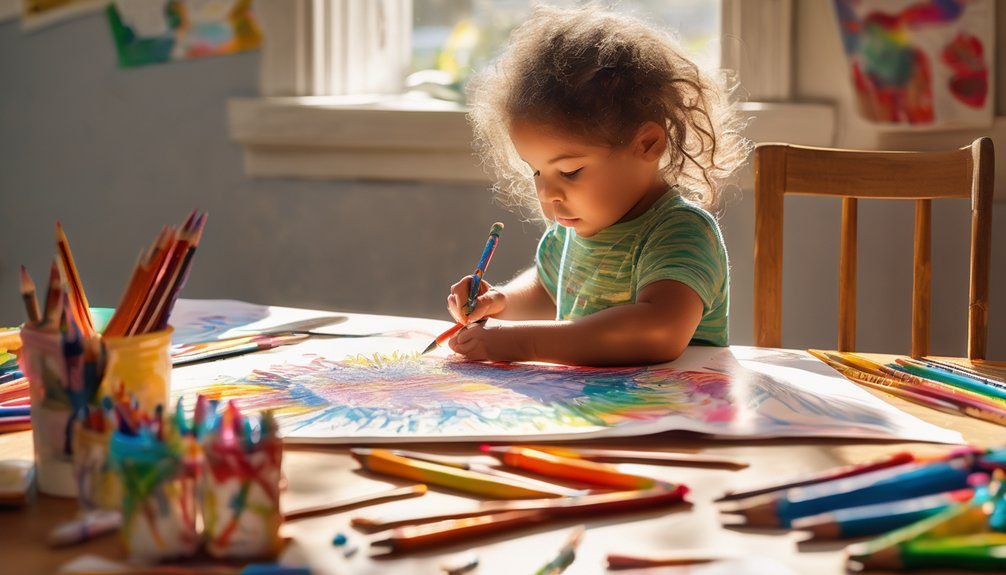
As children dive into coloring, they don’t just unleash their imagination; they also strengthen their fine motor skills in the process. Grasping crayons or markers requires coordination and control, helping them refine their grip. Each stroke and color choice demands precision, which enhances their hand-eye coordination.
When they fill shapes or stay within lines, they practice stability and dexterity, vital for writing and other tasks later on. As they switch between colors and experiment with techniques, they’re developing the small muscles in their hands and fingers.
This playful engagement not only boosts their creativity but lays a solid foundation for essential skills they’ll use throughout their lives. So, encourage them to color; it’s more than just fun!

Enhancing Cognitive Abilities With Color
Coloring not only fosters creativity but also plays a significant role in enhancing cognitive abilities in children. As you guide your child through coloring activities, they’ll improve their concentration and attention span.
Choosing colors and staying within lines requires decision-making skills and hand-eye coordination, which are essential for cognitive development. Additionally, when children experiment with different color combinations, they engage in critical thinking and problem-solving. This exploration encourages them to recognize patterns and develop spatial awareness.
You’ll notice that these skills translate into other areas of learning, such as math and reading. By providing coloring opportunities, you’re helping your child build a foundation for cognitive growth that lasts beyond childhood, setting them up for future academic success.
Emotional Expression and Processing via Art
Art serves as a powerful outlet for emotional expression and processing in children. When you give your child the tools to color, they start to explore their feelings in a safe and creative way.
Colors can represent different emotions; for example, blue might reflect sadness, while yellow can evoke happiness. As they fill the page, they’re not just creating images; they’re also communicating what might be hard to verbalize. This process helps them understand and manage their feelings, fostering emotional intelligence.
Encouraging Imagination and Storytelling
Imagination thrives when children pick up their crayons and start coloring. As they fill the pages with vibrant hues, they create entire worlds filled with stories.
You can encourage this imaginative play by asking open-ended questions about their artwork. For example, “What’s happening in this picture?” or “Who are these characters?” This sparks their curiosity and prompts them to elaborate on their creations.
You might also suggest themes or scenarios, like a jungle adventure or a trip to outer space, which can inspire them to develop narratives. By engaging with their stories, you help them build confidence in their storytelling abilities.
The more they express their ideas, the more their creativity flourishes, paving the way for limitless imagination.
The Role of Color Theory in Creative Exploration
While it may seem simple, understanding color theory can significantly enhance children’s creative exploration. When kids learn about primary, secondary, and complementary colors, they begin to see how colors interact and influence each other. This knowledge empowers them to make intentional choices in their art, sparking innovation and expression.
For instance, mixing colors to create new shades can lead to unexpected results, encouraging experimentation. Additionally, understanding warm and cool tones can help children convey emotions in their artwork, making their creations more impactful.
Social Interaction and Collaboration in Group Coloring Activities
When kids engage in group coloring activities, they not only unleash their creativity but also foster social interaction and collaboration.
As they share crayons and ideas, children learn to communicate effectively, express their thoughts, and listen to others. This teamwork encourages them to negotiate color choices and share responsibilities, helping them develop essential social skills.
You might notice them laughing, discussing, and even problem-solving together as they work on a communal project. These interactions can lead to friendships and a sense of belonging, which are vital for their emotional development.
Building Confidence and Self-Esteem Through Artistic Expression
Artistic expression through coloring is a powerful way to build confidence and self-esteem in children. When you encourage kids to choose colors and create their own designs, they gain a sense of ownership over their work. Each stroke of the crayon or marker becomes a step toward self-discovery.
As they see their artwork come to life, they begin to appreciate their unique perspective and creativity. Celebrating their finished pieces, whether through display or sharing with others, reinforces their sense of achievement. This positive reinforcement helps them feel valued and capable.
Moreover, overcoming challenges in coloring, like staying within lines or experimenting with different techniques, teaches resilience. Ultimately, coloring nurtures a child’s belief in themselves and their abilities.
Integrating Coloring Into Educational Settings for Creativity Boosts
Integrating coloring into educational settings can significantly enhance creativity and engagement among students. By incorporating coloring activities into lessons, you can provide a fun outlet for self-expression while reinforcing core subjects. For instance, when teaching science, let students color diagrams of ecosystems or anatomy. This hands-on approach not only makes learning enjoyable but also helps them retain information better.
You can also encourage collaborative coloring projects, fostering teamwork and communication skills. Set up coloring stations where students can share ideas and techniques, creating a vibrant classroom atmosphere.
Frequently Asked Questions
What Age Is Best to Introduce Coloring to Children?
You can introduce coloring to children as early as 18 months. At this age, they’ll enjoy experimenting with colors and shapes, developing fine motor skills and hand-eye coordination while having fun and expressing themselves creatively.
Are There Specific Coloring Books That Promote Creativity?
Yes, certain coloring books promote creativity. Look for books featuring intricate designs, abstract patterns, or themes like nature and fantasy. These can inspire your imagination and encourage unique interpretations while you color outside the lines.
How Can Parents Encourage Coloring at Home?
To encourage coloring at home, create a cozy space, provide various materials, and join in the fun. When you color together, you’re not just fostering creativity; you’re building memories that last a lifetime.
What Materials Enhance the Coloring Experience for Kids?
Use vibrant crayons, watercolors, and markers to enhance your kids’ coloring experience. Provide textured paper and coloring books with diverse themes. These materials stimulate their imagination and make the activity more engaging and fun for them.
Can Coloring Help Children With Special Needs?
Yes, coloring can help children with special needs. It enhances fine motor skills, promotes focus, and offers a calming effect. You’ll find it encourages expression, boosts confidence, and fosters social interactions when done in groups.
Conclusion
In the vibrant tapestry of childhood, coloring isn’t just an activity; it’s a gateway to a world of imagination. As kids splash their canvases with colors, they weave stories and build confidence, like artists painting their dreams. Every stroke of the crayon breathes life into their creativity, nurturing skills that extend far beyond the page. So, let’s embrace coloring as a powerful tool, lighting the spark of innovation and self-expression in every child’s heart.