
You might be surprised to learn that coloring isn’t just for kids. Engaging in this simple activity can actually trigger a meditative state in your brain, allowing stress to melt away. As you focus on choosing colors and filling in shapes, your body responds by releasing dopamine, which can boost your mood and motivation. But there’s more to this than just enjoyment. Understanding the science behind these benefits could change how you approach relaxation.
Key Takeaways
- Coloring activates the brain’s reward system, increasing dopamine levels that enhance mood and motivation.
- The repetitive motions of coloring ground attention, promoting a meditative state and reducing stress.
- Engaging in coloring reduces cortisol levels, effectively lowering stress and anxiety.
- The focus on colors and patterns allows for mindfulness, creating clarity and calmness in the mind.
- Coloring stimulates creativity, improving overall emotional well-being and providing a therapeutic outlet for relaxation.
The Therapeutic Benefits of Coloring

While you may see coloring as a simple childhood pastime, it actually offers profound therapeutic benefits for adults too. Engaging in coloring can reduce stress and anxiety, providing a calming effect that helps you unwind.
It encourages mindfulness, allowing you to focus on the present moment and escape from daily pressures. As you select colors and fill in intricate designs, your mind shifts away from worries, fostering a sense of peace.
Additionally, coloring stimulates creativity, which can improve your overall mood. This simple activity also enhances fine motor skills and hand-eye coordination.

Understanding the Brain’s Response to Creative Activities
As you engage in creative activities like coloring, your brain undergoes fascinating changes that enhance your mental well-being.
These changes can significantly impact your mood and stress levels. Here are four key responses your brain experiences:
- Increased dopamine levels: Creative activities boost dopamine, which improves your mood and motivation.
- Enhanced focus: Coloring requires concentration, allowing your mind to enter a meditative state, reducing anxiety.
- Stronger neural connections: Engaging in creativity stimulates various brain regions, strengthening connections and improving cognitive functions.
- Stress reduction: The repetitive motion of coloring can lower cortisol levels, leading to a calmer state of mind.
Coloring as a Form of Mindfulness
Coloring serves as an effective form of mindfulness, allowing you to immerse yourself in the present moment. When you focus on filling in each shape, your mind gradually shifts away from daily stressors and distractions.
The repetitive motions of coloring can help ground you, drawing your attention to the colors and patterns before you. This simple act encourages you to be fully engaged, promoting relaxation and clarity.
You’ll find that as you concentrate on what you’re creating, your thoughts quiet down, making space for a sense of calm. By setting aside time for coloring, you create a dedicated moment to practice mindfulness, enhancing your overall well-being and fostering a deeper connection with your creative side.
The Role of Color Psychology in Emotional Well-Being

Understanding how colors affect your emotions can significantly enhance your overall well-being.
Different colors evoke distinct feelings, and being aware of this can help you create a more positive emotional environment.
Here are four key colors and their associated emotional effects:
- Blue: Promotes calmness and tranquility, making it perfect for relaxation.
- Yellow: Boosts happiness and optimism, often sparking creativity.
- Green: Represents balance and harmony, helping to reduce feelings of anxiety.
- Red: Increases energy and passion, which can motivate you during creative tasks.
How Coloring Reduces Anxiety and Stress
While many people seek various methods to alleviate anxiety and stress, engaging in coloring has emerged as a surprisingly effective technique. When you pick up those colored pencils or markers, you enter a meditative state that allows your mind to unwind.
The repetitive motion of coloring helps to quiet racing thoughts, providing a mental break from daily pressures. As you focus on choosing colors and filling in patterns, you create a sense of control, which can be empowering during stressful moments.
Additionally, the act of coloring stimulates your brain’s relaxation response, reducing cortisol levels and fostering a sense of calm. This simple yet engaging activity can transform your mood, making it easier to cope with anxiety and stress.
Enhancing Focus and Concentration Through Coloring
As you immerse yourself in coloring, your focus sharpens and concentration deepens, creating an ideal environment for mental clarity. This practice not only relaxes your mind but also enhances your ability to concentrate on tasks.
Here’s how coloring can boost your focus:
- Mindfulness: Engaging with colors helps anchor your thoughts in the present moment.
- Routine: Establishing a coloring routine can signal your brain to shift into a focused state.
- Creativity: Expressing yourself creatively stimulates brain regions associated with concentration.
- Distraction Reduction: The repetitive motion of coloring minimizes external distractions, allowing you to hone in on your thoughts.
Coloring for All Ages: Benefits for Children and Adults
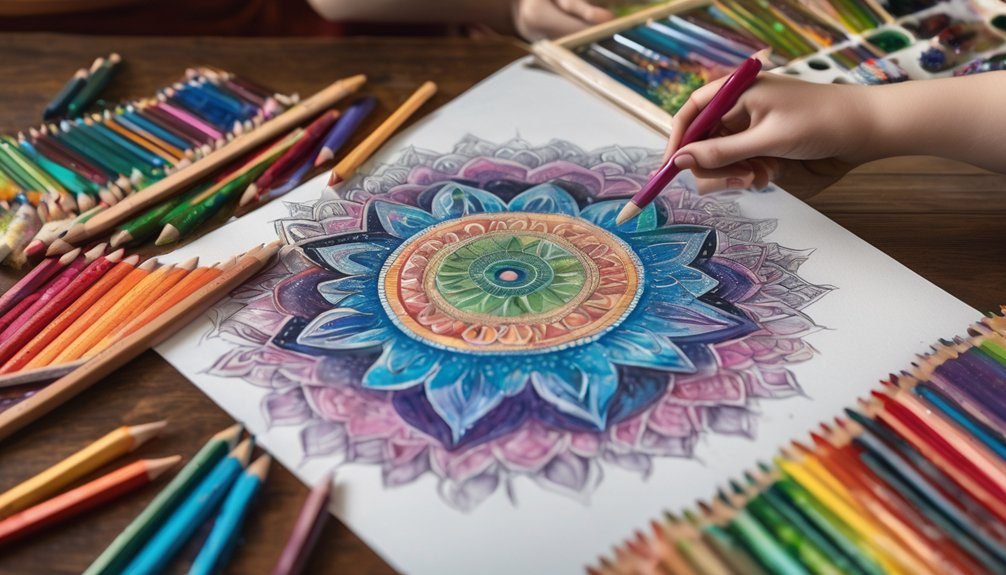
Coloring isn’t just for kids; it offers incredible benefits for people of all ages. Whether you’re a child expressing creativity or an adult seeking relaxation, coloring can enhance your well-being.
Here’s a quick look at the benefits for different age groups:
| Age Group | Benefits |
|---|---|
| Children | Boosts creativity and fine motor skills |
| Teenagers | Reduces stress and promotes mindfulness |
| Adults | Aids in relaxation and focus |
| Seniors | Improves cognitive function and memory |
| All Ages | Fosters social interaction and connection |
No matter your age, coloring can be a therapeutic outlet, helping you unwind while stimulating your mind. So grab some crayons or colored pencils and start experiencing the joy of coloring today!
Tips for Getting Started With Adult Coloring
Getting started with adult coloring is easier than you might think. Follow these simple tips to dive into this relaxing activity:
Getting started with adult coloring is simple and rewarding—just follow a few easy steps to unwind and express your creativity.
- Choose Your Materials: Invest in quality coloring books and a variety of coloring tools, like colored pencils, markers, or gel pens.
- Set Up Your Space: Find a comfortable, well-lit area where you can focus without distractions.
- Start Simple: Begin with less intricate designs to build confidence. As you get comfortable, you can tackle more complex patterns.
- Enjoy the Process: Remember, there’s no right or wrong way to color. Allow yourself to express creativity without judgment.
With these tips, you’ll be well on your way to enjoying the calming benefits of adult coloring!
Incorporating Coloring Into Your Daily Routine
While you may think finding time for coloring is challenging, incorporating it into your daily routine can be both simple and rewarding.
Start by setting aside just ten minutes each day, perhaps during your morning coffee or before bed. Keep your coloring supplies easily accessible, so you’re more likely to pick them up. You could even color during lunch breaks to recharge your mind.
Try to create a calming atmosphere by playing soft music or lighting a candle. Remember, it’s not about perfection; it’s about enjoying the process.
As you make coloring a habit, you’ll find it becomes a cherished part of your day, helping you unwind and express your creativity.
Frequently Asked Questions
Can Coloring Improve Fine Motor Skills in Children?
Yes, coloring can improve fine motor skills in children. As they grasp crayons and control their movements, they strengthen hand-eye coordination and dexterity, which are essential for tasks like writing, tying shoes, and using utensils.
What Types of Coloring Materials Are Best for Relaxation?
Imagine a garden, where vibrant pastels and soft watercolor paints bloom like flowers. For relaxation, you’ll find colored pencils and gel pens work wonders, inviting you to create serenity with each stroke, calming your mind beautifully.
Is There a Specific Time of Day for Coloring Benefits?
You’ll find coloring benefits are often best in the evening when you can unwind. Dedicating time after a busy day helps you relax, allowing your mind to clear and creativity to flow freely.
How Long Should I Color for Maximum Relaxation?
Imagine sinking into a cozy chair with a warm blanket. To maximize relaxation, color for about 20-30 minutes. This time lets your mind unwind, transporting you away from stress and into a peaceful creative space.
Can Group Coloring Activities Enhance Social Bonds?
Yes, group coloring activities can enhance social bonds. You share creativity, laughter, and conversation, which fosters connection. It’s a fun way to strengthen relationships while enjoying a calming, collaborative experience with others.
Conclusion
As you pick up your coloring pencils, think of each stroke as a gentle wave washing over your worries. Just like a river carves its path through rock, the simple act of coloring can reshape your stress into serenity. Studies show that even just 20 minutes of coloring can significantly lower anxiety levels. So, embrace this colorful escape; it’s not just a pastime, but a powerful tool to cultivate mindfulness and bring peace into your daily life.