
Coloring isn’t just a fun pastime for kids; it can significantly enhance their concentration skills. When children engage with colors, shapes, and patterns, they learn to focus on the details of their artwork. This practice not only captures their attention but also promotes a calming effect that encourages mindfulness. However, the benefits of coloring extend beyond mere concentration. There’s more to discover about how this simple activity can transform a child’s cognitive development.
Key Takeaways
- Coloring enhances focus by requiring attention to colors, shapes, and patterns, training the brain to concentrate on tasks.
- Engaging in coloring activities sharpens critical thinking and problem-solving skills through deliberate color choices and design planning.
- The repetitive motions involved in coloring promote relaxation, allowing children to maintain focus and reduce distractions.
- Coloring stimulates mindfulness, bringing awareness to the present moment and improving overall concentration through focused artistic expression.
- Completing coloring projects fosters a sense of accomplishment, boosting confidence and encouraging sustained concentration in future tasks.
The Cognitive Benefits of Coloring
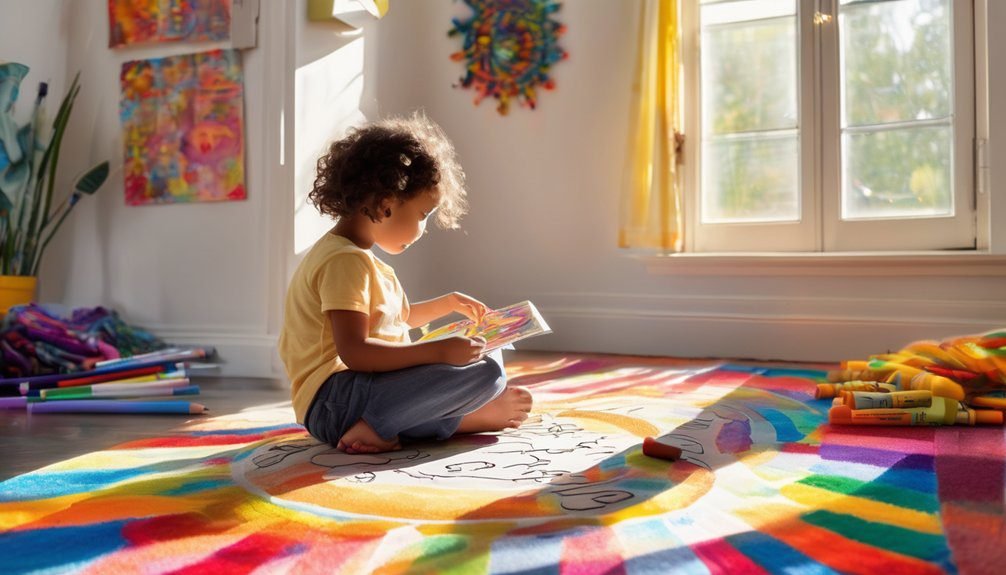
Coloring isn’t just a fun activity; it also boosts cognitive development in children. When your child engages in coloring, they’re not merely filling in spaces; they’re also stimulating their brain.
This creative process enhances their ability to focus and concentrate, as they need to pay attention to colors, shapes, and patterns. As they choose colors and make decisions about their artwork, they’re exercising critical thinking and problem-solving skills.

Moreover, coloring encourages imaginative exploration, allowing children to express their thoughts and feelings visually. This self-expression is vital for emotional development, too.
Enhancing Fine Motor Skills Through Art
As children immerse themselves in artistic activities, they naturally enhance their fine motor skills. Engaging in tasks like coloring, drawing, or crafting helps them develop precise hand movements.
Artistic activities help children naturally develop fine motor skills and precise hand movements through engaging tasks like coloring and drawing.
Here are some key ways art promotes these skills:
- Grip Strength: Holding crayons or paintbrushes strengthens their fingers and hands.
- Hand-Eye Coordination: Coordinating their movements with what they see on paper improves accuracy.
- Dexterity: Manipulating small objects, like beads or scissors, hones their ability to perform delicate tasks.
- Control: Practicing controlled strokes in coloring or painting encourages better control over their hand movements.
These activities not only foster creativity but also lay a strong foundation for everyday tasks like writing and self-care.
Coloring as a Mindfulness Practice
When you engage in coloring, it can transform into a powerful mindfulness practice that calms the mind and centers your thoughts. As you focus on selecting colors and filling in shapes, you’re pulled into the present moment, allowing distractions to fade away.
This simple act encourages you to breathe deeply and relax, creating a sense of peace. Each stroke of the crayon or pencil demands your attention, helping you develop better concentration skills. You’re not just creating art; you’re practicing being present.
Incorporating coloring into your routine can enhance your awareness of the here and now, making it a perfect tool for cultivating mindfulness. So grab your coloring tools, and let the experience guide you towards a more focused and centered mindset.
Reducing Anxiety and Stress in Children
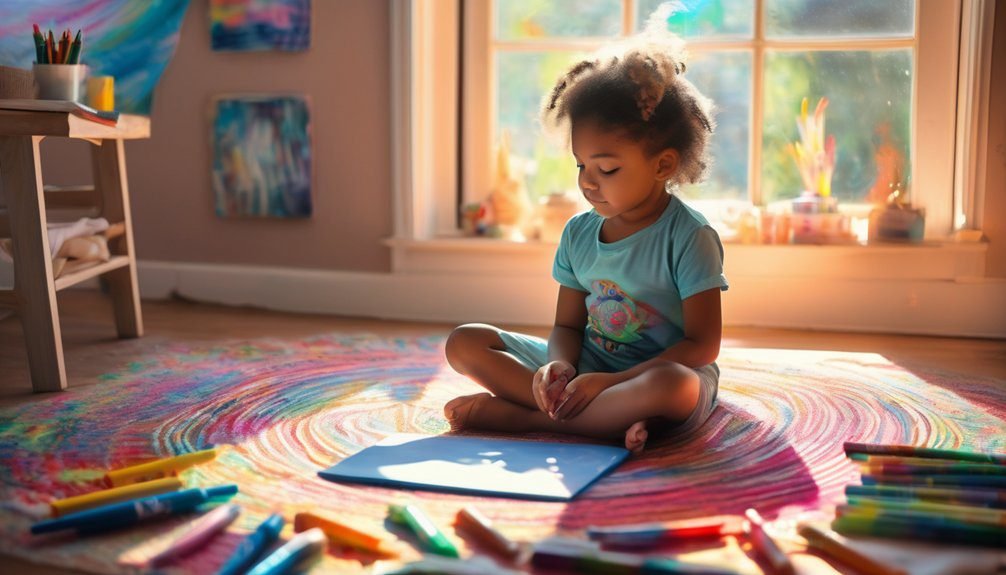
While many children face anxiety and stress in their daily lives, engaging in coloring can provide a soothing outlet. When kids color, they immerse themselves in a creative process that distracts from worries. This simple activity offers numerous benefits for reducing anxiety:
Coloring serves as a calming escape for children, helping them manage anxiety through creativity and focus.
- Focus: Coloring demands attention, helping children shift their minds away from stressors.
- Calmness: The repetitive motions can induce relaxation and a sense of peace.
- Expression: It allows kids to express feelings visually, making emotions easier to manage.
- Achievement: Completing a coloring project boosts confidence and provides a sense of accomplishment.
Encouraging Creativity and Imagination
Coloring not only provides a calming escape but also sparks creativity and imagination in children. When you give your child a blank page and a set of colored pencils, you invite them to explore their artistic side.
They can choose colors that reflect their mood or create fantastical scenes that exist only in their minds. This freedom fosters original thought and helps them express feelings that might be hard to articulate.
As they experiment with different shades and techniques, they learn to take risks and think outside the box. Ultimately, coloring nurtures their ability to innovate, turning simple art into a vibrant playground for their imagination.
Encouraging this creativity is essential for their overall development and self-confidence.
Frequently Asked Questions
How Often Should Children Color to See Improvement in Concentration?
You should encourage children to color daily for about 15 to 30 minutes. Consistent practice helps them develop focus, improve their attention span, and enhance their overall concentration skills over time.
What Age Is Best for Introducing Coloring to Children?
You’ll find that introducing coloring around age two sparks creativity and engagement. At this tender age, kids begin to grasp colors and shapes, laying the foundation for concentration and fine motor skills development.
Can Digital Coloring Apps Provide the Same Benefits as Traditional Coloring?
Yes, digital coloring apps can provide similar benefits to traditional coloring. They engage creativity and focus, though the tactile experience of physical materials might enhance the connection for some children. It’s worth trying both options!
Should Coloring Be Done Alone or in a Group Setting for Best Results?
Coloring’s like a campfire—warm and inviting. You should mix both solo and group settings for best results. When you color together, it sparks creativity and connection, but solo time’s essential for focus and personal expression.
What Types of Coloring Materials Are Most Effective for Concentration?
You’ll find that using high-quality colored pencils, markers, and watercolor paints can enhance concentration. Experiment with different textures and colors to keep your focus sharp and make the coloring experience more engaging and enjoyable.
Conclusion
In a world buzzing with distractions, coloring offers a serene escape, allowing your child to focus intently on vibrant hues and intricate designs. As they blend colors and fill shapes, you’ll witness their concentration sharpen, transforming chaos into calm. This simple act not only nurtures fine motor skills but also cultivates creativity and mindfulness. With each stroke of the crayon, they’re not just creating art; they’re building a foundation for a more focused and imaginative future.