
Choosing the right coloring tools can significantly impact your creative process. You’ll want to consider your skill level and artistic style before making a decision. Different mediums offer unique effects, and understanding these can help you achieve your desired outcome. But how do you assess color vibrancy and blendability? Exploring these factors can elevate your art. Let’s dive into the essential points to guide your selection.
Key Takeaways
- Assess your skill level to choose tools that match your expertise, such as colored pencils for beginners or watercolors for advanced users.
- Consider your artistic style; realism may require fine-tipped markers, while abstract art can benefit from the fluidity of watercolors.
- Evaluate color vibrancy by testing tools for rich hues and intensity with minimal pressure, ensuring they maintain brilliance after drying.
- Set a budget for quality coloring tools, prioritizing purchases based on frequency of use and project requirements for gradual collection building.
- Experiment with different mediums to discover what complements your style and desired effects, enhancing your overall artistic experience.
Understanding Different Coloring Mediums

When you dive into the world of coloring, understanding different mediums can make a significant difference in your experience. You’ve got options like colored pencils, markers, and watercolor paints, each offering unique textures and effects.
Colored pencils are great for fine details, allowing you to layer colors for depth. Markers provide vibrant, bold hues and are perfect for quick fills. If you prefer a softer look, watercolor paints can create beautiful blends and washes.
Consider your project’s requirements and your personal style when choosing a medium. Experimenting with each can help you discover what resonates with you. Ultimately, the right tools can elevate your artwork and enhance your creative expression.
Assessing Your Skill Level
How do you know which coloring tools are right for you? Start by assessing your skill level. If you’re a beginner, you might want to choose tools that are easy to use, like colored pencils or markers. These can help you build your confidence without overwhelming you.

As you progress, you can experiment with more advanced tools, such as watercolors or pastels.
Evaluate your comfort with techniques like blending and shading. If you’re still mastering these, stick with simpler mediums for now.
Considering Your Artistic Style
Your artistic style plays a significant role in determining which coloring tools will work best for you. If you lean toward realism, you might prefer fine-tipped markers or colored pencils for detailed work.
For a more abstract approach, you may enjoy the fluidity of watercolor or the vibrant strokes of pastels. If you favor bold, graphic designs, consider using gel pens or heavy-duty markers that deliver strong lines and vivid colors.
Experimenting with different tools can help you discover what complements your style. Think about the textures and effects you want to achieve, whether soft gradients or sharp contrasts.
Ultimately, choose tools that resonate with your creative vision and enhance your artistic expression.
Evaluating Color Vibrancy and Pigmentation
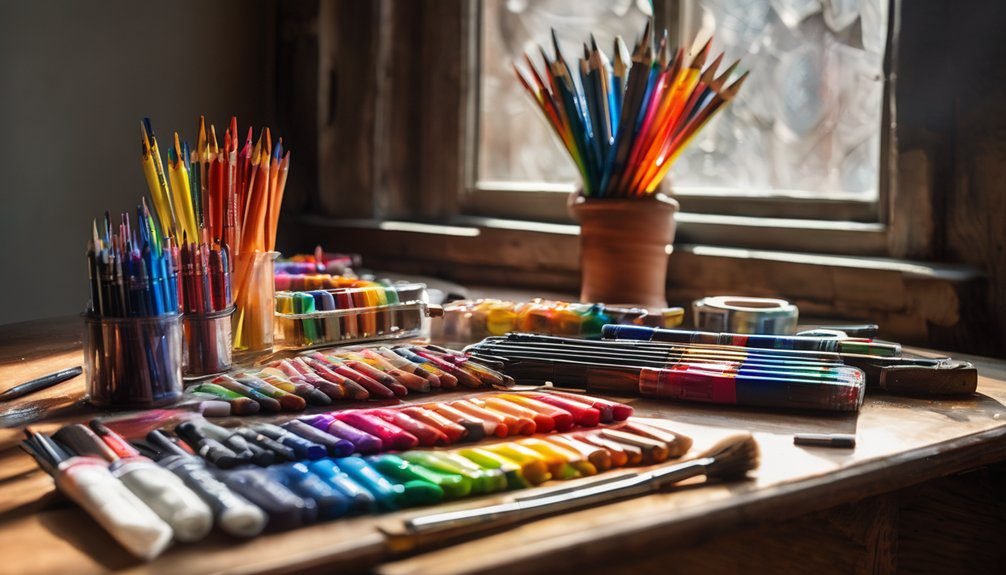
What makes a color truly captivating? It’s all about vibrancy and pigmentation. When you evaluate coloring tools, look for those that offer rich, bold hues that pop on the page.
Test how the colors appear when applied; vibrant pigments should deliver intensity with minimal pressure. You want tools that maintain their brilliance even after drying.
Evaluate the intensity of colors upon application; seek tools that retain their brilliance even after drying.
Check for transparency as well; some pigments can be too opaque, hiding the beauty of your paper. Different mediums—like markers, colored pencils, or paints—will have varying levels of vibrancy.
Don’t hesitate to swatch before you commit. A good tool shouldn’t only provide a stunning visual impact but also inspire your creativity and enhance your artwork.
Choose wisely, and let those colors shine!
Analyzing Blendability and Layering Techniques
Once you’ve found coloring tools with vibrant pigments, the next step is to consider how well they blend and layer. Blendability is crucial for achieving smooth transitions between colors. Test your tools by layering similar shades; this helps you gauge how they interact.
For instance, colored pencils that allow you to blend with a light hand can create beautiful gradients.
Layering techniques can also enhance depth and dimension. With markers or pastels, you can build up colors gradually to achieve richer tones.
Exploring Portability and Storage Options
How can you ensure your coloring tools are both accessible and easy to transport? Start by selecting storage options that suit your lifestyle. Consider compact cases or pouches that keep your tools organized. A portable caddy or backpack can make it easy to carry everything to your favorite coloring spot.
Here’s a quick overview of some storage options:
| Option | Pros |
|---|---|
| Pencil Case | Lightweight, compact |
| Art Tote | Spacious, multiple pockets |
| Rolling Cart | Easy mobility, lots of storage |
Budgeting for Quality Tools

Finding the right storage for your coloring tools is just the beginning; budgeting for quality tools is equally important. Investing in high-quality coloring tools can enhance your experience and results.
Start by determining how much you’re willing to spend. Consider your frequency of use and the types of projects you’ll tackle. It’s tempting to go for the cheapest options, but remember that quality often correlates with durability and performance.
Set aside a specific amount each month, if necessary, to gradually build your collection. Prioritize your purchases based on what you need most.
Whether it’s markers, colored pencils, or paints, quality tools can make a significant difference in your artwork, making your budgeting efforts worthwhile.
Reading Reviews and Recommendations
What factors should you consider when reading reviews and recommendations for coloring tools? First, look for detailed feedback from users who’ve similar needs and preferences as you. Pay attention to comments about color vibrancy, blending capabilities, and durability.
Check for consistent praise or criticism across multiple reviews, as this can indicate reliability.
Next, consider the reviewer’s expertise—are they an experienced artist or a casual colorist? Their level of experience can influence their perspective.
The reviewer’s background—be it professional artist or hobbyist—can greatly shape their insights on coloring tools.
Don’t ignore the ratings; a high average score usually reflects quality. Lastly, look for recent reviews to ensure the information is current.
Testing and Experimenting With Tools
To truly discover the best coloring tools for your needs, you should dive into testing and experimenting with them firsthand. It’s the most effective way to see how different tools feel and perform in your hands.
Here are some tips to guide you through the process:
- Try a variety of mediums: Experiment with colored pencils, markers, and watercolors.
- Test on different paper types: Notice how texture affects the application and blending.
- Mix colors: See how well tools work together to create new shades.
- Evaluate ease of use: Pay attention to how comfortable the tools feel during long coloring sessions.
- Observe the results: Assess the vibrancy and longevity of your work to determine quality.
Frequently Asked Questions
Can I Mix Different Coloring Mediums Together?
Yes, you can mix different coloring mediums together! Just ensure they’re compatible, like watercolor with colored pencils or pastels. Experimenting can yield unique effects, so don’t hesitate to try new combinations for your artwork.
What Are the Best Coloring Tools for Beginners?
Around 70% of beginners prefer colored pencils for their ease of use. You’ll find that colored pencils, markers, and watercolors are great choices, offering versatility and fun while you explore your creative side.
How Often Should I Replace My Coloring Tools?
You should replace your coloring tools when they show signs of wear, like fraying or drying out. Regularly assess their condition, and don’t hesitate to swap them out if they no longer meet your needs.
Are There Eco-Friendly Coloring Tool Options Available?
Sure, you can color the world green! Eco-friendly options are everywhere—biodegradable crayons, recycled paper, and plant-based markers. Just don’t expect them to magically enhance your artistic skills; that’s still all on you!
Do Coloring Tools Have Expiry Dates?
Most coloring tools don’t have strict expiry dates, but their quality can decline over time. If you notice dried-up markers or brittle crayons, it’s probably time to replace them for the best results.
Conclusion
Ultimately, choosing the right coloring tools is like selecting the perfect brush for a masterpiece; it can transform your creative vision into reality. By understanding different mediums, assessing your skill level, and considering your artistic style, you’ll find tools that resonate with you. Remember, investing in quality isn’t just about cost—it’s about enhancing your artistic journey. So, take the plunge, experiment, and let your imagination flourish with the tools that inspire you most!