
You might be surprised to learn that something as simple as coloring can actually help lower anxiety in teens. This activity shifts your focus, promotes mindfulness, and allows for emotional expression. By engaging in coloring, you can create a sense of control and accomplishment. But what’s the science behind it? Let’s explore how this creative outlet can significantly impact your well-being and alleviate stress.
Key Takeaways
- Coloring engages the brain’s right hemisphere, enhancing creativity and emotional processing, which can alleviate anxiety in teens.
- The repetitive motions of coloring create a calming effect, similar to meditation, promoting relaxation and reducing stress.
- Coloring encourages mindfulness, helping teens focus on the present moment and diminish worries about the past or future.
- This creative outlet allows teens to express their emotions safely, channeling anxiety and frustration into tangible art.
- Structured coloring activities provide stability and a sense of accomplishment, reinforcing confidence and reducing feelings of helplessness.
The Science Behind Coloring and Anxiety Reduction

While you might think of coloring as just a childhood pastime, research shows it can significantly reduce anxiety in teens. When you engage in coloring, your brain shifts focus from stressors to the task at hand, promoting a state of relaxation.
The repetitive motions involved in coloring can create a calming effect, similar to meditation. Studies indicate that coloring activates your brain’s right hemisphere, which is associated with creativity and emotions, helping you process feelings more effectively.
Additionally, the choice of colors and designs allows you to express yourself, offering a sense of control. This creative outlet not only distracts from anxious thoughts but also fosters a sense of accomplishment, further contributing to reduced anxiety levels.
How Coloring Encourages Mindfulness
As you immerse yourself in coloring, you naturally cultivate mindfulness, allowing your thoughts to settle and your awareness to sharpen.

The repetitive motion of coloring and the focus required to choose colors and stay within lines help anchor you in the present moment. You’ll find that distractions fade away as you concentrate on creating something beautiful.
This act of focusing on each stroke and shade encourages you to breathe deeply and relax, enhancing your overall sense of well-being. Instead of worrying about the past or future, you become fully engaged in the now.
The Role of Creativity in Emotional Expression
Creativity serves as a powerful outlet for emotional expression, allowing you to articulate feelings that might be difficult to put into words.
Engaging in creative activities like drawing, painting, or writing lets you explore your emotions in a safe space. When you create, you can channel your anxiety, sadness, or frustration into something tangible, transforming those feelings into art.
This process not only helps you understand your emotions better but also fosters a sense of accomplishment. You might find that expressing yourself creatively offers relief and promotes healing.
Coloring as a Form of Meditation

Coloring can serve as a meditative practice, offering a unique way to calm your mind and focus your thoughts. As you immerse yourself in vibrant hues and intricate patterns, you engage in a rhythmic activity that allows distractions to fade away.
This process encourages mindfulness, where you concentrate solely on the present moment, letting go of worries and stress. The repetitive motions of coloring can soothe your nervous system, much like traditional meditation techniques.
You’ll find that the act of choosing colors and filling spaces can create a sense of flow, enhancing your overall well-being. By embracing this simple, creative outlet, you tap into a powerful tool for relaxation and self-discovery, making it an effective way to manage anxiety.
Benefits of Structured Activity for Teens
When teens engage in structured activities, they often experience a sense of stability and purpose that can significantly reduce anxiety. These activities provide a framework that helps you focus your energy in a positive way.
Whether it’s sports, art, or music, having a routine can establish predictability in your life, which alleviates stress. Structured activities also foster social connections, allowing you to build friendships and support networks.
As you participate, you’re likely to develop new skills and boost your confidence, reinforcing your sense of accomplishment. This sense of achievement can counteract feelings of helplessness that often accompany anxiety.
Easy Ways to Incorporate Coloring Into Daily Life
Incorporating coloring into your daily routine can be a simple yet effective way to enhance your mental well-being. Start by setting aside just ten minutes each day, perhaps during lunch or after school.
Keep a coloring book and some colored pencils or markers in your backpack or on your desk, making it easy to grab whenever you need a break. Try coloring while listening to your favorite music or a podcast; it can amplify relaxation.
Keep a coloring book and some colored pencils handy for quick relaxation breaks, and enjoy the process while listening to music or podcasts.
You could even invite friends to join you for a coloring session, turning it into a fun social activity. Lastly, don’t forget to experiment with different coloring styles and techniques to keep things interesting.
Embrace this creative outlet and watch your stress levels decrease!
Recommended Coloring Books and Materials
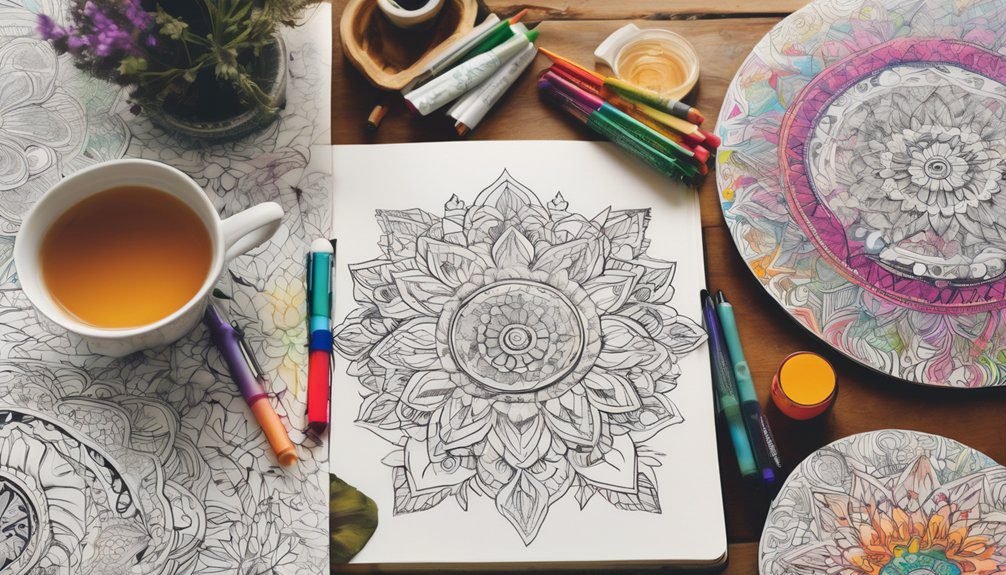
Finding the right coloring books and materials can make all the difference in your experience. When choosing, consider what styles resonate with you. Here are some recommendations:
| Type | Recommended Brands | Notes |
|---|---|---|
| Adult Coloring Books | Johanna Basford | Intricate designs for focus |
| Mandala Coloring Books | Coloring Book Cafe | Great for mindfulness |
| Gel Pens | Sakura Gelly Roll | Vibrant colors, smooth flow |
These options cater to varying interests and skill levels. Whether you prefer intricate patterns or simpler designs, having quality materials can enhance your relaxation. Don’t forget to grab some colored pencils or markers that you enjoy working with, as they can really elevate your coloring sessions.
Group Coloring Activities: Building Connections
Coloring isn’t just a solo activity; it can also be a powerful way to connect with others. When you join group coloring activities, you create an environment filled with creativity and collaboration. You’ll find that sharing ideas and techniques fosters a sense of belonging.
As you color alongside friends or classmates, conversations naturally flow, easing tension and anxiety. This shared experience can strengthen your bonds, as you discover new perspectives and styles together.
Plus, the relaxed atmosphere encourages laughter and fun, making it easier to open up about personal challenges. So grab some coloring supplies, invite your friends, and experience the joy of connecting through color. You might just find that these moments become some of your favorite memories.
Success Stories: Teens Who Found Relief Through Coloring
Relief often comes from unexpected places, and for many teens, coloring has become a surprising source of comfort.
Take Emma, for instance. Struggling with anxiety, she picked up coloring during a tough semester. It helped her focus and escape overwhelming thoughts, allowing her to express herself creatively.
Then there’s Jake, who found solace in group coloring sessions at school. He discovered that sharing this activity with friends not only lowered his stress but also strengthened their bonds.
You might relate to these stories, realizing that simple acts like coloring can provide a much-needed outlet.
Whether you’re doodling alone or coloring with friends, you could find the relief you’ve been searching for through this therapeutic art form.
Frequently Asked Questions
Can Coloring Help With Other Mental Health Issues, Aside From Anxiety?
Yes, coloring can help with other mental health issues, like depression or stress. Engaging in this creative activity allows you to express emotions, improve focus, and create a calming routine, promoting overall mental well-being.
What Age Group Benefits Most From Coloring Activities?
Teens often reap the greatest rewards from coloring, as it provides a creative outlet during a tumultuous time. You’ll find that engaging in this activity can spark joy and foster emotional stability among your peers.
Are There Specific Colors That Reduce Anxiety More Effectively?
Yes, calming colors like blue and green often reduce anxiety more effectively. You’ll find that these hues can promote relaxation, while bright colors like yellow can uplift your mood. Experiment to see what works best for you.
How Long Should Teens Color to See Anxiety Relief?
You should color for at least 20 to 30 minutes to start feeling anxiety relief. This duration allows your mind to focus, helping you relax and enjoy the calming effects of the activity.
Can Digital Coloring Apps Provide the Same Benefits as Traditional Coloring?
Digital coloring apps can offer similar benefits as traditional coloring, but they may lack the tactile experience of physical mediums. You’ll find joy in both, yet the connection to your creativity might differ slightly.
Conclusion
Incorporating coloring into your routine can be a game changer for reducing anxiety. Research shows that just 20 minutes of coloring can significantly lower stress levels, making it a simple yet effective tool for calming your mind. By engaging in this creative process, you not only express your emotions but also cultivate mindfulness. So grab your favorite coloring book and let the colors guide you to a more relaxed state of being. You’ve got this!