
Have you ever noticed how a simple act like breathing can transform your creative experience? When you pair mindful breathing with coloring, you create a unique space for relaxation and self-expression. It’s not just about filling in designs; it’s about finding a rhythm that calms your mind. As you explore this practice, you might discover techniques that enhance your focus and creativity in unexpected ways. Let’s uncover those benefits together.
Key Takeaways
- Begin your coloring session with a few minutes of mindful breathing to center your focus and calm your mind.
- Inhale deeply while selecting colors, visualizing the hues as part of your breath.
- As you color, synchronize your strokes with your breathing rhythm for a more immersive experience.
- If distractions arise, gently redirect your attention back to your breath and the colors you are using.
- Conclude your session with a few deep breaths to enhance relaxation and reflect on your creative process.
Understanding Mindful Breathing
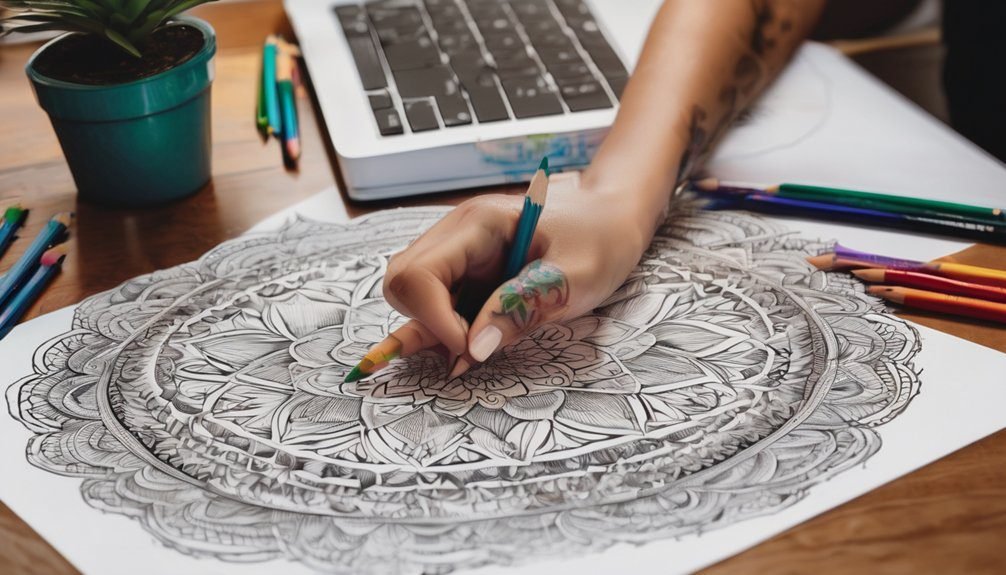
Although you may often find yourself caught up in the chaos of daily life, understanding mindful breathing can provide a simple yet powerful tool to regain your focus.
Mindful breathing involves paying attention to your breath, noticing each inhale and exhale without judgment. Start by finding a quiet space and sitting comfortably. Close your eyes, take a deep breath in through your nose, and feel your chest expand.
Mindful breathing invites you to focus on each breath, fostering calm and presence in your daily life.
Then, slowly exhale through your mouth, releasing tension. As thoughts arise, acknowledge them, then gently redirect your focus back to your breath.
Practicing this technique for just a few minutes daily can ground you, helping you connect with the present moment while promoting relaxation and clarity in your mind.

The Benefits of Coloring for Relaxation
As you explore ways to unwind, coloring can be a surprisingly effective tool for relaxation. Engaging in this creative activity allows your mind to focus on simple, repetitive tasks, which can help reduce anxiety and stress.
The act of choosing colors and filling in designs can become a meditative experience, drawing your attention away from daily worries. Plus, it stimulates your imagination, fostering a sense of accomplishment as you create something beautiful.
Coloring also encourages mindfulness, as you immerse yourself in the present moment. By dedicating time to this enjoyable pastime, you’ll not only release tension but also tap into your artistic side, making relaxation both fulfilling and enjoyable.
Embrace the calming power of coloring and feel your stress melt away.
How to Practice Mindful Breathing
How can you incorporate mindful breathing into your daily routine? Start by setting aside a few minutes each day, perhaps in the morning or before bed.
Find a comfortable position, either sitting or lying down. Close your eyes, and take a deep breath in through your nose, allowing your abdomen to expand. Hold that breath for a moment, then exhale slowly through your mouth.
As you breathe, focus on the sensation of the air entering and leaving your body. If your mind wanders, gently bring your attention back to your breath. You can practice this for five to ten minutes, gradually increasing the duration as you become more comfortable.
Consistency is key, so try to make it a daily habit.
Choosing the Right Coloring Materials
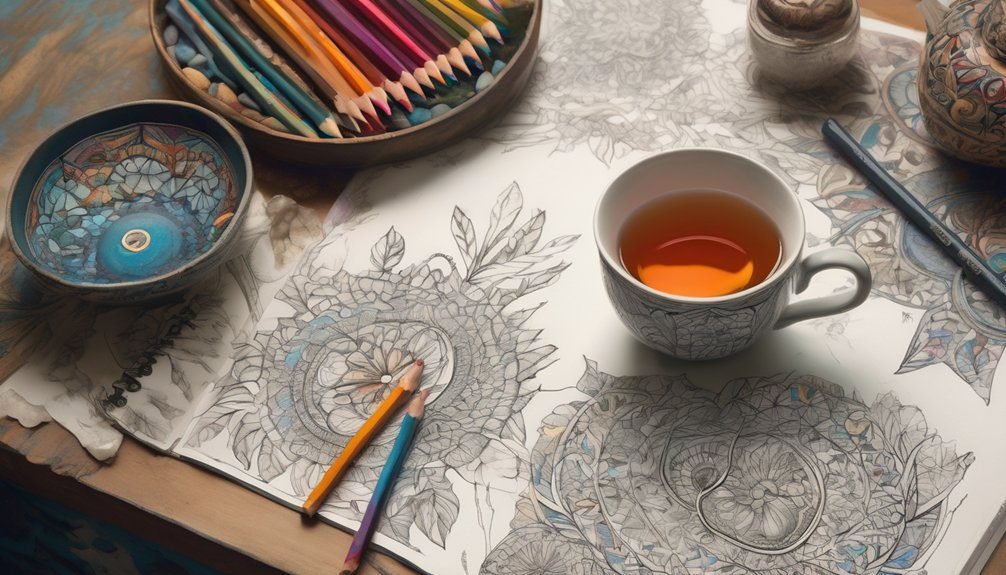
Selecting the right coloring materials can significantly enhance your creative experience. Start by choosing quality coloring books that resonate with you, whether they feature intricate designs or playful patterns.
Then, consider the coloring tools. Colored pencils offer precision, while markers provide bold, vibrant strokes. If you prefer a softer touch, pastels or gel pens can add a unique flair to your work.
Don’t forget about paper quality; thicker, textured paper can handle various mediums without bleeding through.
Lastly, gather a few additional tools like blending stumps or erasers for added versatility. By thoughtfully selecting your materials, you’ll create a more enjoyable and mindful coloring practice, allowing your creativity to flourish as you breathe deeply and color with intention.
Creating a Calm Space for Your Practice
Once you’ve gathered your coloring materials, the next step is to create a calm space for your practice.
Find a quiet area where you won’t be disturbed. Clear any clutter from your workspace, as a tidy environment promotes mental clarity.
Create a serene workspace by decluttering your area, fostering mental clarity and focus for your mindful coloring practice.
Dim the lights or use soft lighting to create a soothing atmosphere. You might want to play gentle, instrumental music or nature sounds to enhance relaxation.
Consider incorporating calming scents, like lavender or chamomile, through candles or essential oils.
Arrange your coloring tools within easy reach, so you can focus on your art.
Finally, take a moment to sit quietly, breathe deeply, and set your intention for this peaceful creative time.
This space will support your mindful practice beautifully.
Integrating Mindful Breathing With Coloring
As you settle into your coloring practice, integrating mindful breathing can enhance your experience and deepen your relaxation.
Begin by taking a few deep breaths, inhaling slowly through your nose and exhaling gently through your mouth. With each breath, let go of distractions and focus on the colors you’re using.
As you color, match your strokes with your breath—inhale as you lift your pencil and exhale as you make a stroke. This rhythmic connection helps you stay present and engaged.
Whenever your mind wanders, gently guide your focus back to your breathing and the colors on the page.
Tips for Enhancing Your Experience

Enhancing your coloring experience can elevate the benefits of mindful breathing. Start by creating a calming environment. Choose a quiet space with soft lighting and minimal distractions. Set a timer for your coloring session to keep you focused.
As you breathe deeply, let the rhythm of your breath guide your strokes. Use colors that resonate with your emotions—warm tones for comfort or cool shades for tranquility. Take breaks to close your eyes and reconnect with your breath, allowing any tension to melt away.
Consider playing soft background music or nature sounds to deepen your relaxation. Finally, remember to be gentle with yourself. Embrace the process without judgment, and let your creativity flow freely. Enjoy every moment of this mindful journey.
Exploring Different Coloring Techniques
Exploring different coloring techniques can add depth and variety to your mindful practice.
By trying out new methods, you can enhance your focus and creativity. Here are four techniques to consider:
- Layering: Start with a light color and gradually build up darker shades for a richer effect.
- Blending: Use a blending tool or your fingers to mix colors, creating smooth transitions and depth.
- Stippling: Apply color in small dots to produce a textured appearance, inviting a unique visual experience.
- Cross-hatching: Overlay lines in various directions to achieve shading and dimension, adding complexity to your artwork.
Experimenting with these techniques not only enriches your art but also deepens your mindful breathing experience, fostering relaxation and presence.
Frequently Asked Questions
Can Children Practice Mindful Breathing and Coloring Together?
Yes, kids can absolutely practice mindful breathing and coloring together. It helps them relax and focus, promoting creativity while calming their minds. You’ll see their stress decrease as they engage in this fun, therapeutic activity.
How Long Should Each Session of Mindful Breathing and Coloring Last?
Short sessions of mindful breathing and coloring should last about 10 to 15 minutes. This time frame keeps kids engaged while allowing enough space for soothing serenity and creative expression to flourish. Enjoy every moment!
What Age Is Appropriate for Starting Mindful Breathing Exercises?
You can start mindful breathing exercises as early as age three. At this age, kids can grasp simple techniques. Just keep it fun and engaging to help them enjoy the practice and develop focus.
Are There Specific Breathing Techniques to Use While Coloring?
Yes, you can use deep belly breathing or 4-7-8 technique while coloring. Inhale deeply through your nose for four counts, hold for seven, then exhale through your mouth for eight. It enhances focus and relaxation.
Can I Use Digital Coloring Apps for Mindful Coloring Practice?
Absolutely, you can use digital coloring apps for mindful practice. Isn’t it fascinating how vibrant colors can transform your emotions? Dive into the experience, focus on your breathing, and let your creativity flow freely.
Conclusion
In the gentle dance of your breath and the vibrant strokes of color, you’ll find a sanctuary for your soul. Embracing mindful breathing while coloring not only calms the storm of everyday life but also ignites your creativity. So, let your worries fade like old paint on a canvas and immerse yourself in this beautiful practice. With each inhale and exhale, you’re not just coloring; you’re painting your path to serenity and self-expression.