
When it comes to coloring, you’ve got options: tablet apps and traditional paper books. Each offers distinct benefits that cater to different preferences. Apps bring convenience and endless choices, while paper books provide a tactile experience that many cherish. But which one truly enhances your coloring journey? The answer might not be as straightforward as you think. Let’s explore the unique features of both to see what resonates with you.
Key Takeaways
- Tablet coloring apps offer convenience and portability, allowing users to color anytime without the mess associated with traditional mediums.
- Traditional paper coloring books provide a tactile experience and sensory engagement that digital platforms cannot replicate.
- Digital apps often feature unlimited color choices and easy undo options, while paper books allow for unique textures and effects with various materials.
- Cost considerations vary, with apps typically having lower upfront costs but potential in-app purchases, while paper books involve a one-time purchase for lasting use.
- Environmental impacts differ, as tablet apps reduce paper waste but create a digital footprint, while paper books contribute to deforestation and landfill waste.
The Appeal of Tablet Coloring Apps
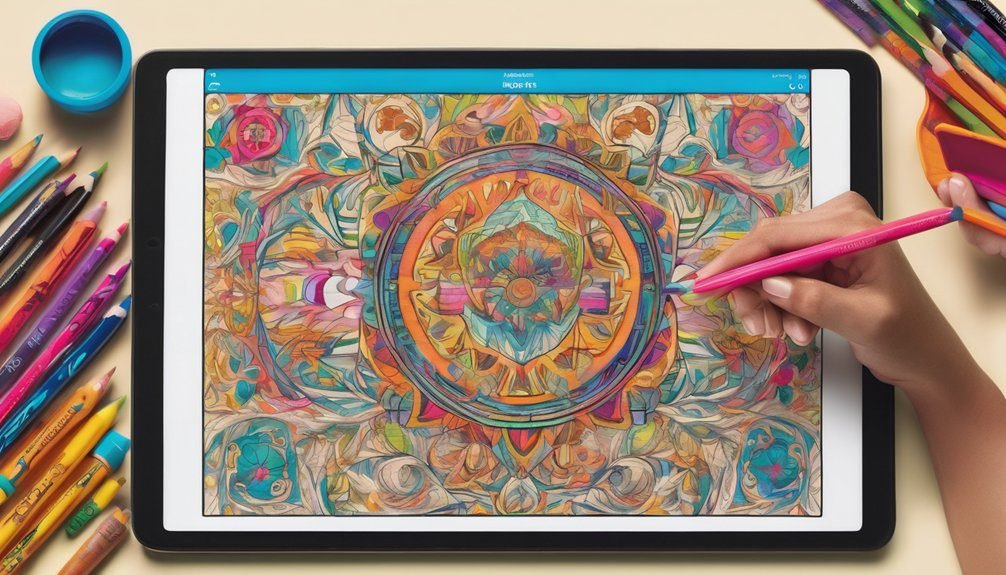
As technology evolves, many people find the appeal of tablet coloring apps hard to resist. You can dive into a vast world of colors and designs right at your fingertips.
With just a tap, you access countless illustrations that cater to your mood or style. It’s not just about coloring; it’s about convenience. No need to carry around heavy books or worry about messy supplies. You can color anytime, anywhere, whether you’re on the couch or commuting.
Access endless illustrations at your fingertips, allowing you to color conveniently anytime, anywhere—no mess, no fuss.
Plus, these apps often come with features like undo options and a variety of brushes, making your creations more dynamic. You might even enjoy sharing your masterpieces instantly on social media, connecting with fellow art enthusiasts.

It’s a modern twist on a classic pastime that many adore.
The Benefits of Traditional Paper Coloring Books
While tablet coloring apps offer convenience, traditional paper coloring books provide a tactile experience that many find irreplaceable. When you pick up a colored pencil and fill in the pages, you engage your senses in a way that screens can’t replicate. The smell of the paper, the sound of the pencil gliding, and the satisfaction of watching your artwork unfold create a deeper connection.
Here’s a quick comparison of some benefits:
| Benefits | Traditional Paper Coloring Books |
|---|---|
| Tactile Experience | Yes |
| No Screen Time | Yes |
| Creative Freedom | High |
| No Battery Needed | Yes |
| Collectible Artwork | Yes |
Choosing paper can enhance your creativity and mindfulness, making it a rewarding choice.
Comparing Features: Digital vs. Physical
The contrast between traditional paper coloring books and digital tablet apps becomes even clearer when you start comparing their features.
The differences between traditional paper coloring books and digital tablet apps highlight unique features and personal preferences in creativity.
With paper books, you enjoy a tactile experience, using various mediums like colored pencils, markers, or crayons. You can create unique textures and effects, giving each page a personal touch.
On the other hand, tablet apps offer endless color options and tools, like gradients and patterns, letting you experiment in ways that paper can’t. You can easily undo mistakes and save multiple versions of your work.
Plus, many apps provide interactive features, like animated elements or guided tutorials.
While both mediums have their charm, the choice often boils down to whether you prefer the physical sensation of coloring or the versatility of digital tools.
The Social Aspect of Coloring: Sharing Online vs. Personal Enjoyment
Coloring can be a deeply personal experience, offering a chance to unwind and express creativity. Whether you’re using a tablet app or traditional paper, the act of coloring can be therapeutic, allowing you to focus and escape daily stressors.
However, sharing your creations online adds a social layer that can enhance your enjoyment. You can connect with fellow enthusiasts, receive feedback, and share tips. On the flip side, some may prefer to keep their work private, savoring the solitude of their personal journey.
The choice between sharing online and enjoying coloring just for yourself depends on what you seek—community and interaction or peaceful reflection and self-expression. Ultimately, it’s about finding what brings you joy in your coloring experience.
Cost Considerations: Apps vs. Books
When choosing between tablet coloring apps and traditional paper books, cost plays a significant role in your decision. Apps often have a lower upfront cost or are even free, giving you access to a wide range of designs without breaking the bank.
You may also find in-app purchases that allow you to expand your collection, but these can add up over time. On the other hand, paper books typically come with a one-time price, but they can be more expensive, especially for high-quality editions.
Consider how often you’ll use each option; if you color frequently, an app might save you money in the long run. Ultimately, weigh the initial costs against your coloring habits to find the best fit for your budget.
Environmental Impact: Digital Footprint vs. Paper Waste
While both tablet coloring apps and paper books offer unique experiences, their environmental impacts differ significantly.
When you use tablet coloring apps, your digital footprint comes into play. Charging devices and maintaining servers consume energy, contributing to carbon emissions. However, the overall resource use is lower compared to paper products.
Using tablet coloring apps generates a digital footprint, but they typically have a lower overall resource use than paper products.
On the flip side, paper books require trees, water, and energy for production, leading to deforestation and waste. Once you finish with a paper book, it often ends up in landfills, where it takes years to decompose.
Ultimately, choosing between these options involves considering your values. If minimizing waste is important to you, tablet apps may be the way to go. If you cherish tangible experiences, just be mindful of the paper’s environmental cost.
Frequently Asked Questions
Can Tablet Coloring Apps Help Improve Fine Motor Skills?
Yes, tablet coloring apps can help improve your fine motor skills. They require precise movements, enhancing hand-eye coordination and dexterity as you navigate the screen, select colors, and fill in intricate designs.
Are There Any Age Restrictions for Using Coloring Apps?
There aren’t strict age restrictions for coloring apps, but younger kids might struggle with navigation. You’ll find apps suitable for all ages, so choose one that fits your child’s skills and interests!
How Do Tablet Coloring Apps Affect Screen Time for Children?
Tablet coloring apps can increase screen time for children, making it crucial to set limits. You can encourage breaks and balance activities to ensure their overall well-being while still enjoying creative expression through digital coloring.
Can Digital Coloring Be More Relaxing Than Traditional Methods?
Digital coloring can be more relaxing for you, offering endless color choices and easy corrections. You can enjoy soothing music or sounds while you color, creating a calming environment that traditional methods might not provide.
Are There Community Features in Coloring Apps for Connecting With Others?
Yes, many coloring apps include community features that let you connect with others. You can share your artwork, join challenges, and participate in discussions, creating a vibrant community where you can inspire and be inspired.
Conclusion
In the grand showdown between tablet coloring apps and traditional paper books, it’s like choosing between a futuristic rocket ship and a cozy, nostalgic treehouse. While apps whisk you away to a digital wonderland of endless colors, paper books wrap you in a warm, tactile embrace that feels like a hug from your childhood. Ultimately, whether you crave the sleek convenience of pixels or the heartwarming nostalgia of paper, one thing’s for sure: you can’t go wrong in this colorful adventure!