
Studies show that incorporating creative outlets in classrooms can boost student engagement by up to 30%. With such a significant impact, it’s worth considering how a calming coloring corner could transform your classroom environment. Imagine a space where students can unwind and express their creativity during the school day. What elements should you include to make this corner both inviting and effective? Let’s explore some ideas that can help you create that perfect nook.
Key Takeaways
- Choose a quiet, well-lit nook with comfortable seating to create an inviting atmosphere for students to relax and color.
- Stock the corner with high-quality coloring books, soft colored pencils, and a variety of markers and crayons for a diverse experience.
- Incorporate creative themes like nature, space, or fantasy to inspire students and enhance their coloring sessions.
- Establish mindfulness practices, such as deep breathing and gratitude reflections, to promote relaxation during coloring activities.
- Maintain organization and cleanliness by using labeled bins for supplies and rotating materials to keep the corner fresh and engaging.
Choosing the Right Location for Your Coloring Corner
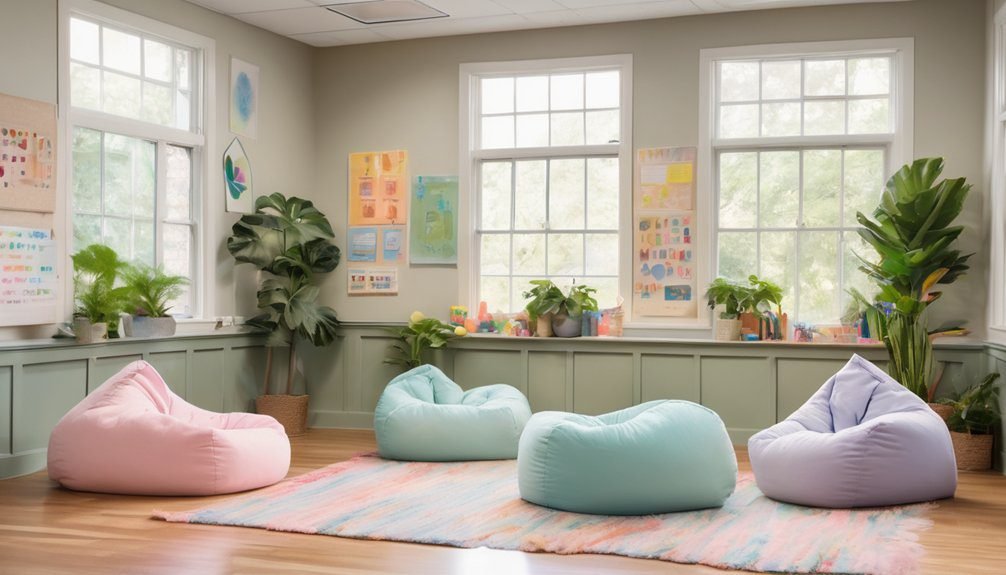
When you’re setting up a coloring corner in your classroom, consider choosing a location that minimizes distractions and maximizes creativity.
Look for a quiet spot away from high-traffic areas, like the door or windows. This helps students focus better on their artwork. Think about natural light, as it can enhance the coloring experience and create a warm atmosphere.

You might also want to use a cozy nook, like a corner with cushions or bean bags, to encourage relaxation and creativity. Ensure there’s enough space for students to spread out their materials without feeling cramped.
Lastly, consider adding a small divider or curtain to create a sense of privacy, allowing students to immerse themselves in their coloring activities without interruptions.
Essential Supplies for a Calming Coloring Experience
Creating a calming coloring experience goes hand in hand with selecting the right supplies. You want to ensure your students feel relaxed and inspired while they color.
Selecting the right supplies is key to fostering a relaxing and inspiring coloring experience for your students.
Here are some essential supplies you shouldn’t overlook:
- High-quality coloring books: Choose books with intricate designs that encourage creativity.
- Soft, colored pencils: Opt for pencils that glide smoothly, reducing frustration.
- Markers: Include both fine-tip and broad-tip markers for variety.
- Crayons: Select a range of soft pastels and vibrant colors for different moods.
- Comfortable seating: Provide cushions or bean bags to make the space inviting.
With these supplies, you’re setting the stage for a soothing and enjoyable coloring corner that’ll benefit all your students!
Creative Themes to Inspire Students
Inspiring students through creative themes can transform your coloring corner into a vibrant hub of imagination. You can spark creativity by choosing themes that resonate with your students’ interests. Here’s a quick table to help you brainstorm some ideas:
| Theme | Description | Suggested Colors |
|---|---|---|
| Nature | Focus on plants, animals, and landscapes | Greens, browns, blues |
| Space | Explore planets, stars, and galaxies | Dark blues, silvers, blacks |
| Underwater | Dive into oceans and sea creatures | Aquas, coral colors |
| Fantasy | Immerse in magical creatures and worlds | Purples, golds, pastels |
| Cultures | Celebrate diverse traditions and festivals | Vibrant, earth tones |
These themes can inspire students to express themselves and explore their artistic talents.
Incorporating Mindfulness Practices With Coloring
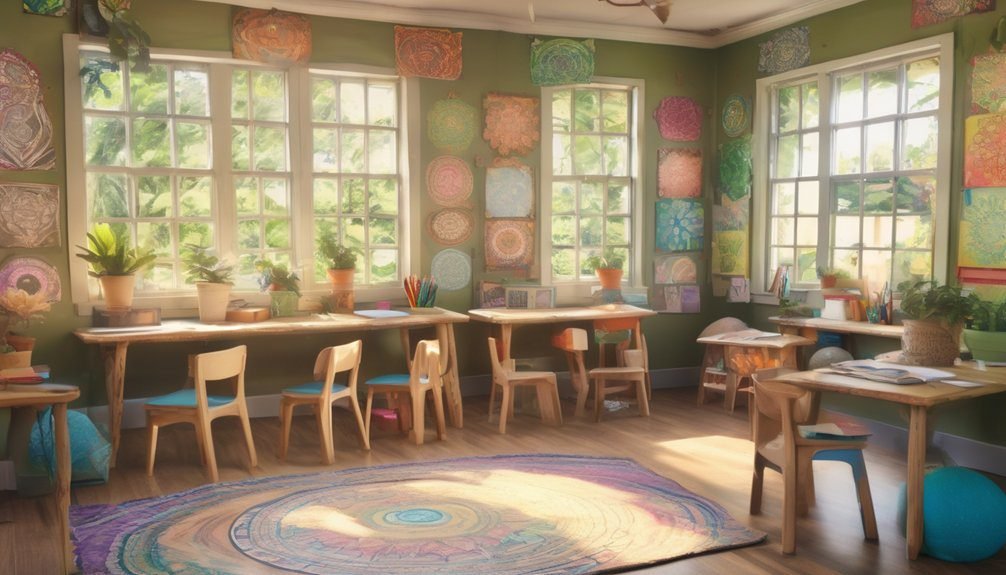
Coloring can be a powerful tool for mindfulness in the classroom, helping students focus and relax. By integrating mindfulness practices with coloring activities, you can create a serene environment that promotes well-being.
Here are some ways to incorporate mindfulness while coloring:
- Encourage deep breathing: Start with a few deep breaths to center the mind before coloring.
- Set an intention: Ask students to set a personal intention for their coloring session, like relaxation or creativity.
- Use calming music: Play soft instrumental music to enhance the peaceful atmosphere.
- Practice gratitude: Invite students to think of something they’re grateful for while they color.
- Reflect afterward: Have a short discussion about how coloring made them feel and what they experienced.
Tips for Maintaining an Effective Coloring Corner
While maintaining an effective coloring corner might seem simple, it requires thoughtful organization and regular updates to keep students engaged.
First, ensure your space is clean and well-organized. Use labeled bins for supplies like crayons, colored pencils, and paper to make access easy.
Ensure a clean, organized space with labeled bins for easy access to coloring supplies like crayons, colored pencils, and paper.
Rotate coloring materials frequently to introduce new themes or challenges, sparking interest. Encourage students to share their finished artwork, fostering a sense of community and accomplishment.
You can also set specific times for coloring to create a calming routine. Keep an eye on the supplies; restock items as needed to avoid frustration.
Lastly, involve students in the process by asking for their input on themes or materials, making them feel valued and invested in the coloring corner.
Frequently Asked Questions
How Can I Assess Student Interest in a Coloring Corner?
You can assess student interest by observing their engagement during coloring activities, asking for feedback on preferred themes, and conducting a simple survey. This’ll help you understand their preferences and enhance the coloring corner experience.
What Age Groups Benefit Most From Coloring Corners?
Kids from preschool to early elementary love coloring corners; they’re perfect for sparking creativity and reducing stress. Even tweens can find joy in them. You’ll see smiles and focus as they unleash their inner Picassos!
Can Coloring Corners Support Students With Special Needs?
Yes, coloring corners can support students with special needs. They provide a calming space, enhance focus, and improve fine motor skills. You’ll notice these students benefiting from the creativity and relaxation that coloring offers.
How Often Should I Change Coloring Materials?
Studies show that switching materials every two weeks keeps creativity flowing. You should change coloring materials regularly to maintain interest and engagement. Fresh supplies can inspire your students and help them express themselves more effectively.
What Are Some Quick Cleanup Strategies for Coloring Corners?
You can use trays to contain supplies, encourage kids to clean as they go, and set a timer for quick cleanups. Designate specific areas for each material to streamline the process and keep everything organized.
Conclusion
Transforming your classroom into a vibrant oasis with a calming coloring corner could be the secret weapon to unlocking your students’ creativity and tranquility! Imagine a space where stress evaporates faster than ice cream on a summer day, and inspiration flows like an endless river. With the right supplies and a sprinkle of mindfulness, you’ll create a magical haven that not only enhances focus but also turns every student into a mini Picasso. Let the coloring adventure begin!