
You might not know that rainy-day coloring can do more than fill time, it can help your child build focus, calm, and fine motor control. When you offer themed pages, simple prompts, or DIY sheets, you give them a chance to notice shapes, name colors, and tell their own stories. A few small supplies can turn a gray afternoon into something much more useful than it first seems…
Key Takeaways
- Try simple rainy-day pages like umbrellas, puddles, clouds, and cozy scenes to keep coloring fun and manageable.
- Use quick projects with big shapes, tiny animals, or striped patterns to build confidence and fine motor skills.
- Encourage kids to mix colors, layer shades, and notice how different colors feel calm or bright.
- Turn coloring into a story game by asking who is in the picture, what is happening, and how it ends.
- Make a ready-to-go coloring basket with crayons, markers, and printed templates for easy rainy-day creativity.
Quick Coloring Ideas for Rainy Days
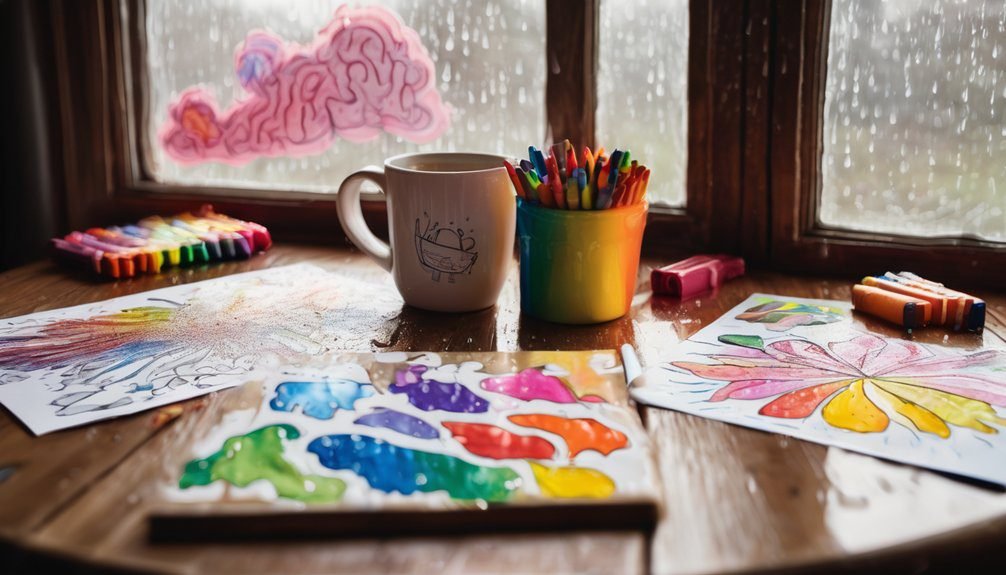
When a rainy day keeps kids indoors, you can turn the slowdown into a fun coloring break with simple, quick projects. Invite your child to color a big circle, a tiny animal, or a striped umbrella in just ten minutes.
You can model easy coloring techniques like staying inside lines, pressing lightly, and layering shades for depth. Try color mixing by blending crayons or markers to make new greens, purples, and oranges. Ask gentle questions: Which color feels calm? Which one pops? That keeps your child thinking while they create.
You can also choose one theme, like weather or puddles, so the page feels focused and doable. Short, playful sessions help build confidence, fine motor control, and joy without pressure.
Print Rainy Day Coloring Pages
Print a few rainy day coloring pages so you always have an easy, ready-to-go activity on hand. You can keep them in a folder, then pull them out when your child needs calm coloring fun.

Choose themed pages with umbrellas, puddles, clouds, and cozy scenes to match the rainy day mood. These printables give you simple creative prompts without overwhelming your child, and they help you guide skill-building in a gentle way.
You might invite your child to name colors, notice shapes, or add small details that make each page feel personal. When you keep a stack ready, you create a comforting routine that supports focus, imagination, and connection.
This little prep makes busy moments smoother and more enjoyable for both of you.
Try Nature-Inspired Coloring Pages
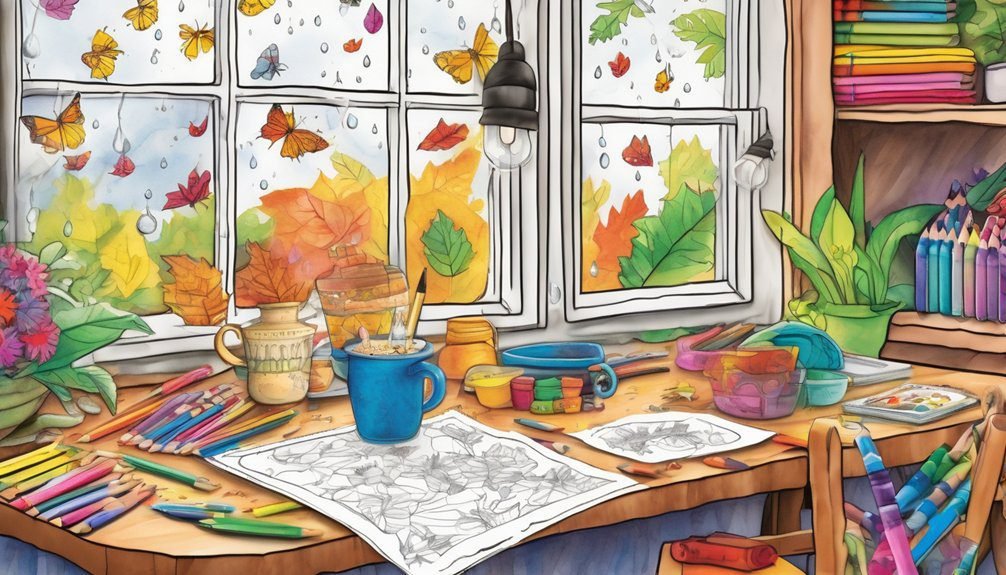
Nature-inspired coloring pages can help your child slow down and notice the world around them. You can invite them to explore flower patterns, animal silhouettes, and seasonal themes that build observation skills and creativity.
Choose underwater scenes for soothing blues, or forest landscapes that encourage earthy greens and browns. As your child colors celestial bodies, they practice fine motor control while learning about night skies.
Garden scenes can spark talk about pollinators, growth, and care, while whimsical creatures let imagination stretch in playful ways. You’ll also find that these pages support focus and emotional calm on a rainy day.
Offer gentle prompts, and let your child choose colors freely. This keeps the activity both nurturing and developmentally rich.
Make DIY Coloring Sheets at Home
If your child enjoys coloring flowers, animals, or starry skies, you can bring that creativity a step further by making custom coloring sheets at home.
Start with simple drawings on plain paper, then trace bold outlines so little hands can color with ease. You can also print free coloring templates and add your own touches, like bigger petals, friendly faces, or extra clouds.
Keep a small basket of art supplies nearby, such as markers, crayons, and colored pencils, so your child can choose what feels best.
This hands-on activity helps you support fine motor skills, creativity, and confidence while you share a calm, cozy moment together indoors.
Turn Coloring Into a Story Game
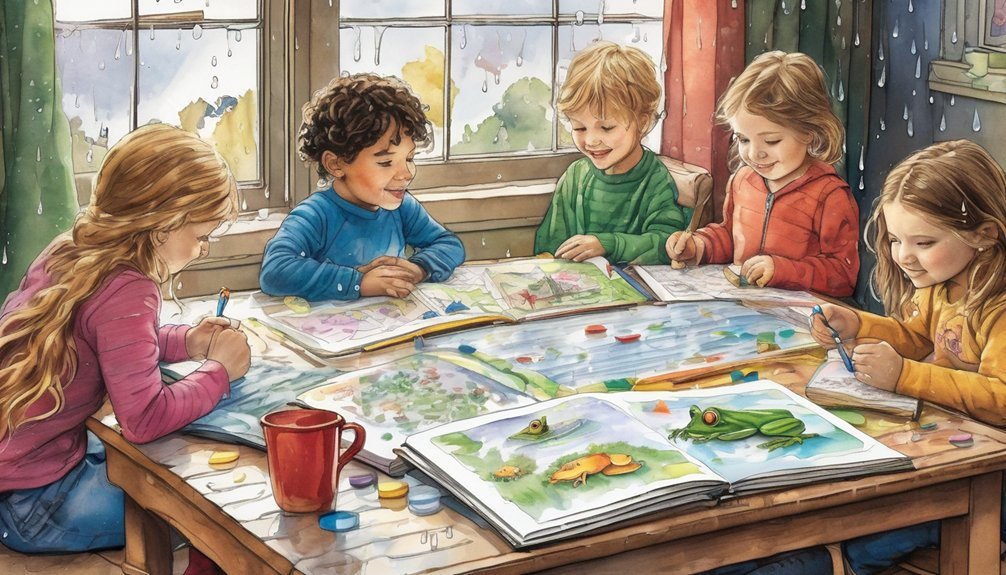
As your child colors each page, you can turn the picture into a simple story game by asking what’s happening, who the characters are, and what might happen next.
You help your child build language skills by offering gentle story prompts like, “Where are they going?” or “How do they feel?” This kind of character exploration invites your child to notice details and imagine motives, which supports thinking and speaking.
You can also ask your child to name the setting, create a problem, and share an ending. Keep your tone warm and curious so your child feels safe to invent ideas.
When you join in, coloring becomes a shared moment that strengthens attention, creativity, and confidence on a rainy day.
Add Texture With Fun Art Supplies
You can make coloring more exciting by adding textured art supplies like crayons with different tips, textured paper, stickers, cotton balls, sand, or scraps of fabric.
When you invite your child to touch and explore, you help them build sensory awareness and fine motor skills. Try letting them press textured tools into glue before coloring around them, or layer mixed media to create a picture that feels as interesting as it looks.
You can ask simple questions like, “Which surface feels bumpy?” or “How does this one change your drawing?” That kind of guided play supports curiosity and confidence.
Keep the activity open-ended so your child can experiment freely, discover new effects, and enjoy the process without worrying about perfection.
Create a Cozy Coloring Station
After exploring textures and mixed materials, set up a cozy coloring station where your child feels settled and ready to create.
Choose a small table, soft cushion, and good light so you can support focus and comfort. Keep crayons, markers, and paper within easy reach in bins or cups for colorful organization.
Add a blanket, a favorite stuffed animal, or calming music to build a cozy ambiance. When you prepare the space this way, you help your child feel secure, independent, and eager to begin.
You can also rotate supplies to keep interest fresh and encourage choice-making. A warm, inviting station turns rainy-day coloring into a soothing routine that nurtures creativity, attention, and confidence.
Frequently Asked Questions
What Age Is Best for Rainy Day Coloring Activities?
You’ll find rainy day coloring works best from ages 2 to 8, with simple age recommendations guiding you. Coloring benefits include focus, calm, and fine-motor growth, and you can adjust materials as your child develops.
How Can I Store Finished Coloring Pages Neatly?
You can store finished pages in a flat folder or binder for coloring storage, and label sections for easy page organization. You’ll protect artwork, find favorites fast, and keep your child’s creations proudly accessible.
What Non-Paper Surfaces Can Kids Color on Safely?
Try washable crayons on a shower tile, like Mia did, and you’ll keep coloring surfaces safe. Use safe materials such as window markers, reusable silicone mats, and laminated boards; they’re supportive, educational, and easy to clean.
How Do I Remove Crayon Marks From Furniture?
You can remove crayon marks with a soft cloth, warm water, and mild soap; for stubborn spots, try baking soda or a gentle eraser. Use crayon removal techniques and furniture protection tips to prevent future damage.
Can Coloring Activities Help Calm Energetic Children?
Yes, coloring can calm energetic children. You’ll see their racing thoughts soften as colors bloom across the page. Coloring benefits include focus and self-expression, while calming techniques like slow breathing help you nurture peaceful, centered moments.
Conclusion
So, when the rain taps at your window, you can turn a gray afternoon into a bright little garden of ideas. You’ve got umbrellas, flowers, animals, and homemade pages ready to bloom under your child’s crayons. With every color they choose, they’re building skills, calming their mind, and painting hope onto the page. Let coloring be the spark that turns puddles into possibilities and helps your home glow like sunshine after a storm.