
About 10 minutes of coloring can lower stress for many kids, according to child development research. When you hand a child crayons and a simple page, you give them a calm, low-pressure task that can settle busy thoughts and steady attention. The repeating motion feels safe and familiar, but there’s more to what coloring can do for focus, mood, and those tricky in-between moments…
Key Takeaways
- Coloring gives kids a calming, repetitive activity that helps them relax and feel emotionally comfortable.
- It keeps busy hands occupied, which can improve attention and reduce distractions.
- Choosing colors and completing sections gently builds focus and self-control.
- Coloring works well during transitions, after play, or before homework to settle energy.
- A quiet, accessible coloring space with gentle expectations helps kids stay engaged longer.
What Makes Coloring So Calming?

Coloring can feel soothing because it gives your brain a simple job to focus on. You choose a crayon, make a mark, and watch the page change. That steady rhythm can slow busy feelings and help your body settle.
Many coloring benefits come from this gentle, repeatable action: it feels safe, simple, and familiar. When you color, you also get a quiet way to show emotional expression without needing lots of words. You can pick bright colors when you feel happy or soft ones when you want calm.
Because the task is clear and there’s no right answer, you can relax and enjoy the moment. Coloring meets you where you are, and that can make it deeply comforting.

How Coloring Helps Kids Focus
When your hands are busy coloring, your mind can settle on one simple task at a time. You practice looking, choosing, and staying with the page, which supports focus improvement. Research shows that steady, low-pressure activities can help the brain filter distractions. That’s one of the coloring benefits you can trust.
| Action | What You Do | Focus Result |
|---|---|---|
| Pick colors | Choose one shade | Stay engaged |
| Trace lines | Color carefully | Build attention |
| Notice spaces | Check small areas | Slow rushing |
| Finish sections | Complete one part | Feel control |
You don’t need to be perfect. You just need to keep going, and each small choice gently trains your attention.
Best Coloring Activities for Relaxation
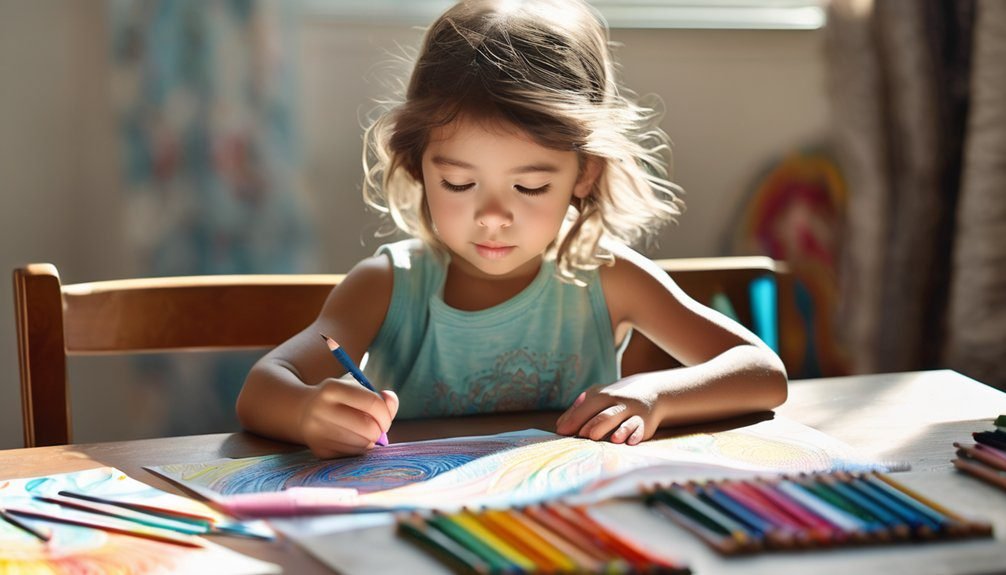
Quiet, simple coloring pages can help you relax because they give your mind an easy, steady task to follow. You can choose big shapes, gentle animals, or nature scenes, and let your hand move slowly.
These calm coloring activities work best when you use soft coloring techniques, like filling one area at a time or tracing the edges carefully. Your color choices matter, too; cool blues, greens, and purples often feel soothing, while warm colors can make a page feel cheerful.
Research shows that repeating a simple creative task can lower stress and help you settle down. If you want extra comfort, sit with someone you trust and color side by side.
Just keep going at your own pace, and let the page feel safe.
How to Make Coloring Time Mindful
To make coloring time mindful, start by slowing down and noticing what you can see, hear, and feel while you color. You can guide your child to take one gentle breath before each page. Research shows mindful breathing and sensory engagement can help calm busy minds and support attention.
| Notice | Breathe | Color |
|---|---|---|
| Bright crayons | In slowly | Small shapes |
| Paper texture | Out softly | One area |
| Quiet sounds | Again | Another spot |
You can whisper, “What do you feel in your hand?” or “What color feels nice today?” Keep your tone warm and easy. When you stay present with your child, coloring becomes a shared, soothing moment that invites focus without pressure.
When Kids Benefit Most From Coloring
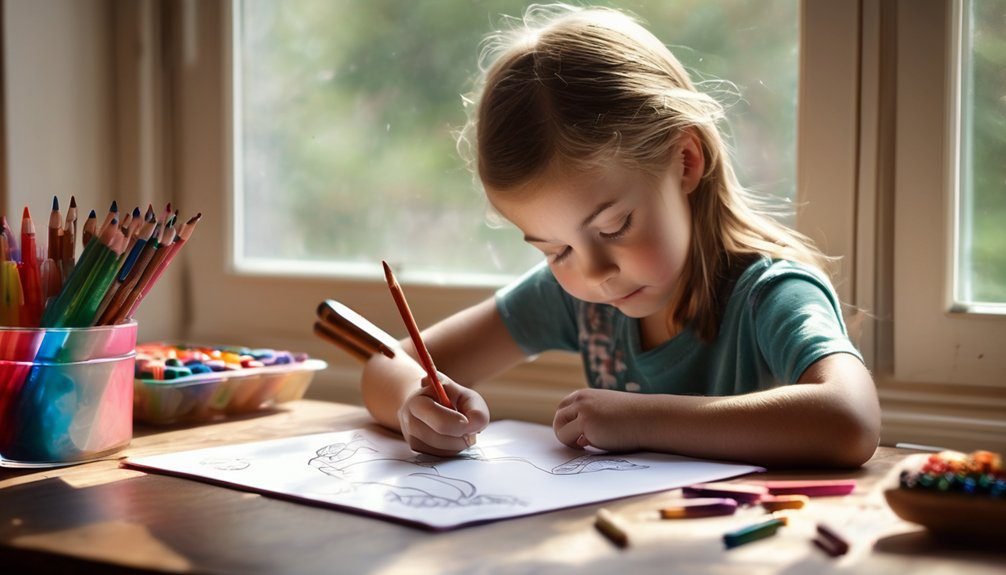
Coloring can help kids most when they need a calm, low-pressure break, especially after busy play, before homework, or during transitions like waiting for dinner or winding down for bed. You’ll often notice the biggest benefits when your child feels overstimulated, tired, or unsure what to do next.
Coloring gives their mind a gentle anchor and supports emotional expression without a lot of words.
- After recess or active play, it can settle busy energy.
- Before homework, it can help your child shift focus.
- During quiet waits, it can ease frustration and build patience.
Short coloring schedules work best because they feel safe and manageable. When you offer this simple pause, you’re helping your child reset, breathe, and return to the day with a steadier heart and clearer focus.
Simple Ways to Keep Kids Coloring
Keeping kids interested in coloring often comes down to making it easy and inviting. You can leave coloring materials within reach, like crayons, washable markers, and sturdy paper, so kids don’t have to ask for help every time.
Rotate pictures and give a few choices, because small decisions help them feel in control. Set a calm spot with good light and a flat surface, and join them for a few minutes to show that coloring matters.
You can also add group activities, like coloring side by side with siblings or friends, to make the routine feel warm and social. Research suggests children stay engaged longer when tasks feel simple, familiar, and supported, so keep your tone gentle and your expectations low.
Creative Benefits of Coloring for Kids
A box of crayons can do more than keep kids busy—it can help them think in new ways. When you give your child coloring pages, you support artistic expression and spark fresh ideas.
Kids try coloring techniques like blending, shading, and choosing bold colors, which builds confidence and problem-solving skills. Research shows creative play helps children connect feelings with actions, and coloring gives them a safe way to do that.
- They can invent their own color stories.
- They practice making choices with each crayon.
- They learn that mistakes can turn into new designs.
You may notice your child feels proud after finishing a picture. That small win can grow imagination, patience, and joy, one page at a time.
Frequently Asked Questions
Can Coloring Help Children Sleep Better at Night?
Yes, you can use coloring before bed to help your child sleep better. It fits a bedtime routine and offers calming techniques that slow busy thoughts, reduce stress, and make bedtime feel safe and soothing.
What Materials Make Coloring Safer for Younger Kids?
You’ll keep coloring safer by choosing non toxic markers, washable crayons, and blunt colored pencils, then pairing them with sturdy paper types. You can relax, knowing these kid-friendly supplies reduce mess and exposure risks.
How Long Should a Child Color in One Sitting?
You can aim for 10 to 20 minutes, then check your child’s attention span. Coloring duration should match age and interest, so you’ll keep it fun, calm, and easy to enjoy.
Does Coloring Work Better Alone or With Others?
You’ll usually find coloring works best whichever way suits your coloring preferences; one study found 68% of kids relax more with a friend. Coloring alone can calm you, while groups add social bonding.
Can Screen-Based Coloring Apps Offer the Same Benefits?
Yes, you can get similar benefits from screen-based coloring apps. You’ll still enjoy digital engagement and creative expression, but choose calm, ad-free apps and balance them with breaks, since research shows screens can overstimulate some kids.
Conclusion
Coloring can feel like a tiny superpower for your child. When they pick up crayons, their busy brain can slow down, their body can settle, and their attention can zoom in like a spotlight. Even a few minutes of coloring can turn a squirmy, wiggly moment into a calm, focused one. You’re not just giving them an activity—you’re giving them a simple, soothing tool they can use anytime they need to relax and reset.