
Coloring might seem like a simple pastime, but it holds significant potential for reducing daily stress. Engaging both hemispheres of your brain, this activity promotes mindfulness and focus, effectively lowering cortisol levels linked to stress. As you immerse yourself in the repetitive motions of coloring, you may find yourself shifting away from daily stressors. But what exactly makes this creative outlet so effective in enhancing emotional well-being? Let’s explore the nuances behind its therapeutic benefits.
Key Takeaways
- Coloring activates both hemispheres of the brain, promoting mindfulness and reducing stress through creative engagement.
- The repetitive motion of coloring encourages deep breathing, which lowers heart rate and alleviates anxiety.
- Engaging in coloring shifts focus away from stressors, providing a calming distraction and enhancing relaxation.
- Completing a coloring project offers a sense of accomplishment, boosting self-esteem and emotional well-being.
- Coloring serves as a therapeutic outlet, allowing for emotional expression and processing of difficult feelings.
The Science Behind Coloring and Mental Health
While you might think of coloring as a simple childhood pastime, research shows it significantly impacts mental health by reducing stress and anxiety. Engaging in this creative activity activates both hemispheres of your brain, promoting a state of mindfulness that encourages relaxation.
Studies indicate that the repetitive motion of coloring can lower cortisol levels, a hormone linked to stress. This process not only shifts your focus away from daily worries but also fosters a sense of accomplishment as you complete each piece.
The coloring benefits extend beyond mere distraction; they enhance emotional well-being by providing a therapeutic outlet. So, next time you pick up those colored pencils, remember you’re not just having fun—you’re actively investing in your mental health through effective stress reduction.
How Coloring Engages the Mind and Body
When you engage in coloring, you’re not just filling in shapes; you’re practicing mindfulness that anchors your thoughts in the present moment.
This activity enhances your focus and concentration, allowing your mind to quiet distractions.

Additionally, the repetitive motions can promote physical relaxation, helping you release tension stored in your body.
Mindfulness Through Coloring
Engaging in coloring can transform a mundane activity into a powerful mindfulness practice that connects both mind and body.
By focusing on the act of coloring, you cultivate a sense of presence, reducing stress and enhancing emotional well-being.
Here are three ways coloring promotes mindfulness:
- Coloring Techniques: Utilizing various techniques like shading or blending helps you concentrate, drawing your attention away from stressors.
- Color Symbolism: Choosing colors based on their symbolic meanings can deepen your emotional connection to the artwork, fostering self-reflection.
- Flow State: The repetitive nature of coloring can induce a flow state, allowing you to lose track of time and worries.
Incorporating these elements into your coloring practice can enhance your mindfulness experience, making it a valuable tool for stress reduction.
Enhancing Focus and Concentration
Coloring serves as a unique tool for enhancing focus and concentration, tapping into the brain’s natural inclination for creativity and structure. By engaging in specific coloring techniques, you stimulate both hemispheres of your brain, leading to improved focus. This process can create a state of flow, where distractions fade, and your mind becomes wholly absorbed in the activity.
| Coloring Technique | Benefits | Focus Improvement Level |
|---|---|---|
| Mandala Coloring | Encourages symmetry | High |
| Gradient Blending | Develops patience | Moderate |
| Color Blocking | Enhances decision-making | High |
| Pattern Filling | Improves attention to detail | Moderate |
| Freeform Expression | Boosts creative thinking | High |
Physical Relaxation Techniques
Although you mightn’t realize it, the act of coloring can profoundly engage both your mind and body, promoting physical relaxation. When you immerse yourself in coloring, you activate techniques that foster calmness and well-being.
Here are three ways coloring aids in physical relaxation:
- Deep Breathing: Focusing on the colors and patterns encourages you to take slow, deep breaths, which lowers your heart rate and reduces anxiety.
- Muscle Relaxation: The repetitive motion of coloring helps release tension in your hands and arms, promoting overall muscle relaxation.
- Mindfulness: Engaging in coloring shifts your thoughts away from stressors, allowing you to be present in the moment, further enhancing relaxation.
The Therapeutic Benefits of Coloring for Adults
Coloring offers a unique way to cultivate mindfulness and sharpen your focus, allowing you to escape the chaos of daily life.
Engaging in this creative process also serves as an outlet for self-expression, helping you process emotions and thoughts.
Mindfulness and Focus
Engaging in coloring can significantly enhance your mindfulness and focus, as it demands your full attention and immerses you in the present moment.
By incorporating mindful breathing and focused attention into your coloring practice, you can reap therapeutic benefits. Here are three ways coloring promotes mindfulness:
- Reduces Distractions: As you concentrate on coloring, it naturally pushes aside racing thoughts, allowing you to focus on the task at hand.
- Encourages Relaxation: The repetitive motion of coloring can promote a calming effect, lowering anxiety levels and enhancing your ability to relax.
- Boosts Creativity: By engaging your mind, coloring can stimulate creative thinking, further enhancing your focus and awareness in other areas of life.
Ultimately, coloring serves as a powerful tool for cultivating mindfulness and sharpening your focus.
Creative Expression Outlet
When you pick up a coloring tool, you’re not just filling in shapes; you’re tapping into a profound form of creative expression that can be incredibly therapeutic for adults.
Engaging in coloring allows you to explore artistic freedom, giving you the chance to choose colors and patterns that resonate with your emotions. This process isn’t just about aesthetics; it can also lead to an emotional release.
Research shows that creating art, even in simple forms like coloring, activates brain regions linked to pleasure and relaxation. This means you’re not just relieving stress; you’re also fostering a deeper connection with your inner self.
In this way, coloring becomes a powerful outlet, helping you navigate daily challenges while promoting mental well-being.
Choosing the Right Coloring Materials
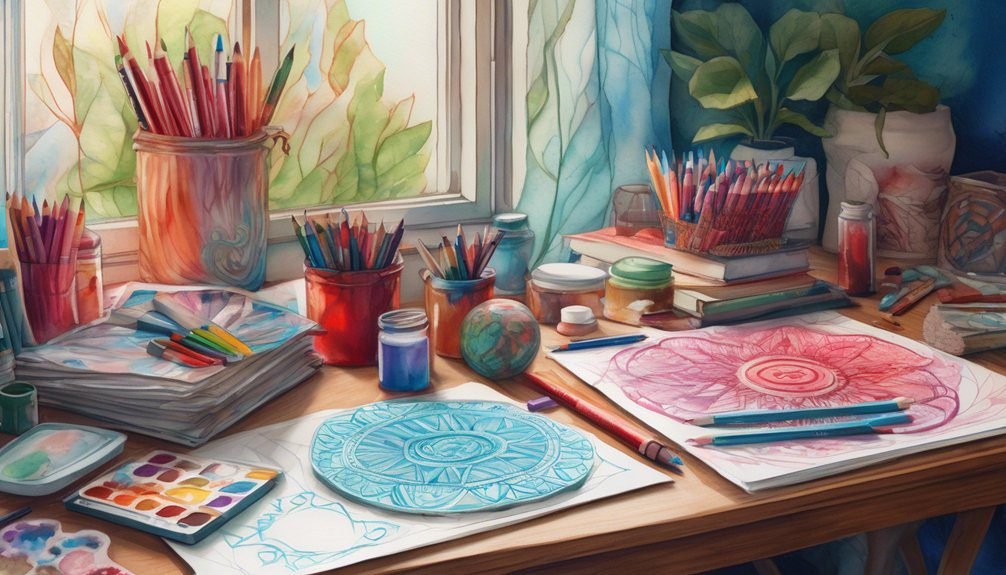
Many people overlook the importance of selecting the right coloring materials, yet this choice can significantly influence your stress-reduction experience.
When you choose optimal coloring tools and color palettes, you enhance your ability to unwind and express creativity. Here are three key considerations:
- Type of Coloring Tools: Opt for high-quality colored pencils or markers that glide smoothly across the page. This tactile pleasure can elevate your mood.
- Diverse Color Palettes: Select palettes that resonate with your emotions. Warm colors might energize you, while cool tones can promote calmness.
- Paper Quality: Use thick, textured paper that can handle various mediums without bleeding. This ensures a satisfying coloring experience.
Choosing wisely can transform coloring into a therapeutic escape, helping you manage daily stress effectively.
Tips for Incorporating Coloring Into Your Routine
Incorporating coloring into your daily routine can be a simple yet powerful way to manage stress and enhance your well-being. Start by identifying moments in your daily schedule when you can dedicate just 10-15 minutes to coloring. Morning breaks or winding down before bed are ideal.
Experiment with various coloring techniques, such as mandalas or abstract patterns, to find what resonates with you. Keep your materials easily accessible, so you’re more inclined to pick them up when you need a mental break.
You might also consider joining a coloring group, as social interaction can further alleviate stress. By making coloring a consistent part of your life, you can cultivate a calming habit that positively impacts your mental health.
Creative Expression and Its Role in Stress Relief
Creative expression serves as a vital outlet for managing stress, allowing you to channel your emotions and thoughts into tangible forms. Engaging in activities like coloring not only fosters creativity but also provides an opportunity for reflection.
Creative expression is essential for stress management, transforming emotions into tangible forms through activities like coloring, which encourages reflection and creativity.
Here are three ways coloring techniques promote stress relief:
- Emotional Release: You can express feelings that might be hard to articulate, creating a sense of relief.
- Focus and Mindfulness: Coloring requires concentration, which helps divert your mind from stressors, promoting a meditative state.
- Artistic Freedom: You have the power to choose colors and patterns, enhancing your sense of control and individuality.
Coloring as a Mindfulness Practice
Although life’s pressures can often feel overwhelming, engaging in coloring can serve as a powerful mindfulness practice that fosters presence and awareness.
When you focus on the act of coloring, you naturally redirect your attention away from stressors, allowing your mind to enter a state of flow. This deep concentration is one of the key coloring benefits, as it promotes relaxation and reduces anxiety.
By using mindfulness techniques—like deep breathing or setting intentions—you can enhance your coloring experience, turning it into a meditative ritual. The repetitive motion of coloring creates a soothing rhythm, grounding you in the moment.
Ultimately, this simple activity not only unleashes creativity but also cultivates a sense of peace and mental clarity in your daily life.
Success Stories: Real-Life Experiences With Coloring Therapy
Coloring therapy has emerged as a transformative outlet for many individuals seeking relief from daily stressors.
You’ve likely heard numerous success stories that highlight the effectiveness of this practice. Here are a few compelling examples:
- Healing through Community Projects: Participants in community coloring projects report increased social connection, reducing feelings of isolation and anxiety.
- Growth in Coloring Workshops: Many individuals find that structured coloring workshops not only provide relaxation but also foster creativity, leading to improved mental well-being.
- Personal Transformations: People share how dedicating time to coloring has helped them cope with grief, enhancing their emotional resilience.
These narratives underscore the practical benefits of coloring therapy, demonstrating its ability to cultivate calmness and community in daily life.
Frequently Asked Questions
Can Children Benefit From Coloring as a Stress Relief Tool?
Yes, children can benefit from coloring as a stress relief tool. Engaging in coloring fosters child creativity, allowing them to express emotions and process feelings, ultimately enhancing their overall well-being and reducing anxiety.
What Types of Coloring Books Are Best for Stress Reduction?
Adult coloring books featuring nature themes, mandala designs, and intricate patterns enhance stress reduction. Using quality coloring supplies fosters mindfulness practices, while color psychology and artistic expression deepen your relaxation experience, promoting emotional balance and tranquility.
How Long Does It Take to Feel Stress Relief From Coloring?
Like a gentle breeze easing a storm, you’ll often feel stress relief from coloring within just 10 to 20 minutes. This brief coloring duration can significantly lower your stress response, promoting calm and focus.
Is There a Specific Coloring Technique That Enhances Relaxation?
Yes, mindful coloring techniques, like focusing on patterns or using specific color palettes, can enhance relaxation. Engaging fully in the process helps you connect with your emotions and promotes a sense of calm and clarity.
Can Group Coloring Sessions Amplify Stress Relief Effects?
Yes, group coloring sessions can amplify stress relief effects. The positive group dynamics and social interaction foster a supportive environment, encouraging creativity and connection, which enhances relaxation and collective well-being beyond individual coloring experiences.
Conclusion
Incorporating coloring into your routine can be a transformative experience for stress relief. For instance, consider Sarah, a busy executive who turned to coloring during her lunch breaks. Over time, she found that dedicating just 15 minutes to this creative outlet significantly reduced her anxiety and improved her focus. By engaging both your mind and body, coloring not only promotes relaxation but also fosters a sense of accomplishment, making it a valuable tool for enhancing your mental well-being.