
Coloring isn’t just a childhood pastime; it holds significant benefits for senior adults. Engaging in this simple activity can enhance cognitive function and improve fine motor skills, making everyday tasks easier. It also serves as a calming outlet, reducing stress and anxiety. Moreover, coloring fosters creativity and encourages social interactions. As we explore these aspects, you’ll discover how a few strokes of color can meaningfully impact the lives of seniors.
Key Takeaways
- Coloring enhances cognitive function, improving memory retention and decision-making skills in senior adults.
- It refines fine motor skills, promoting better grip and hand-eye coordination through precise coloring activities.
- Engaging in coloring reduces stress and anxiety, fostering relaxation and boosting overall happiness.
- The activity encourages creativity and self-expression, allowing seniors to explore emotions through color choices.
- Group coloring promotes social interaction, helping seniors form meaningful connections and alleviate feelings of loneliness.
Enhancing Cognitive Function
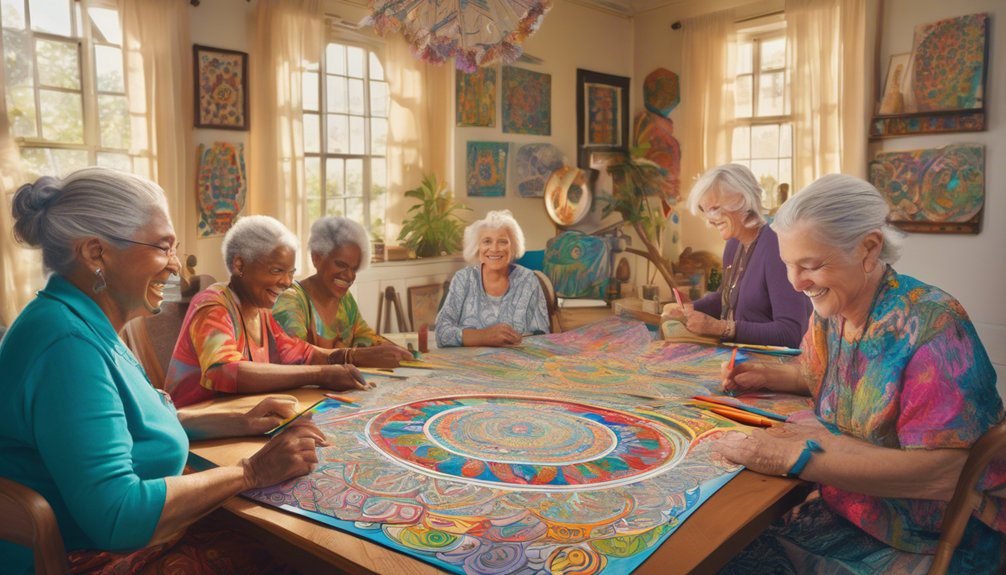
As you engage in coloring, you mightn’t realize how this simple activity can significantly enhance your cognitive function. By immersing yourself in vibrant colors and intricate patterns, you stimulate your brain, promoting better memory retention.
This is especially important as we age, as cognitive decline can become a concern. Coloring requires focus and decision-making, which exercises your brain and sharpens your mental acuity. It also encourages mindfulness, allowing you to connect with your thoughts and emotions.

This mental engagement fosters brain stimulation, keeping your cognitive pathways active and resilient. So, while you’re enjoying the therapeutic benefits of coloring, you’re also giving your brain a workout, enhancing your overall cognitive health in the process.
Improving Fine Motor Skills
Coloring can significantly improve your fine motor skills, making it a valuable activity for seniors. Engaging in this creative pursuit enhances your hand-eye coordination and promotes dexterity improvement, helping you maintain independence in daily tasks.
Coloring enhances fine motor skills and hand-eye coordination, supporting seniors in maintaining their independence in daily activities.
Here are some key benefits:
- Grip Strength: Holding crayons or colored pencils strengthens your grip.
- Control: Coloring within lines improves precision and control.
- Coordination: The repetitive motion enhances hand-eye coordination.
- Focus: Concentrating on coloring helps refine motor skills over time.
Reducing Stress and Anxiety
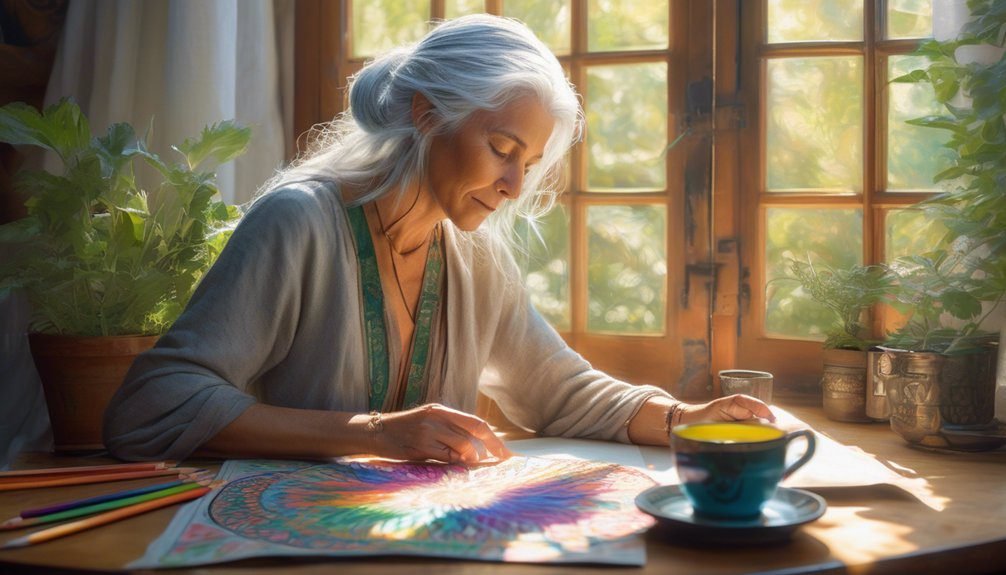
While many activities can help alleviate stress, coloring stands out as a particularly effective option for seniors. This engaging mindfulness practice allows you to focus on the present moment, drawing your attention away from worries. As you fill in the colors, you may experience an emotional release, making it easier to cope with daily anxieties.
| Benefits | Emotional Impact | Mindfulness Practice |
|---|---|---|
| Lowers heart rate | Promotes relaxation | Enhances focus |
| Boosts creativity | Reduces negative emotions | Encourages presence |
| Increases happiness | Fosters a sense of calm | Improves mental clarity |
| Provides enjoyment | Enhances well-being | Strengthens resilience |
Incorporating coloring into your routine can significantly contribute to reducing stress and anxiety, creating a peaceful space in your daily life.
Fostering Creativity and Self-Expression
Engaging in creative activities can spark a sense of joy and fulfillment, especially for seniors seeking to express themselves.
Coloring provides a unique avenue for artistic exploration and emotional release. Here are four ways it fosters creativity:
- Personal Expression: You can choose colors and designs that resonate with your feelings.
- Imagination Enhancement: Coloring encourages you to think outside the box, igniting your creativity.
- Stress Relief: As you immerse yourself in coloring, you might find a soothing way to process emotions.
- Skill Development: Experimenting with different techniques can enhance your artistic abilities over time.
Promoting Social Interaction and Bonding
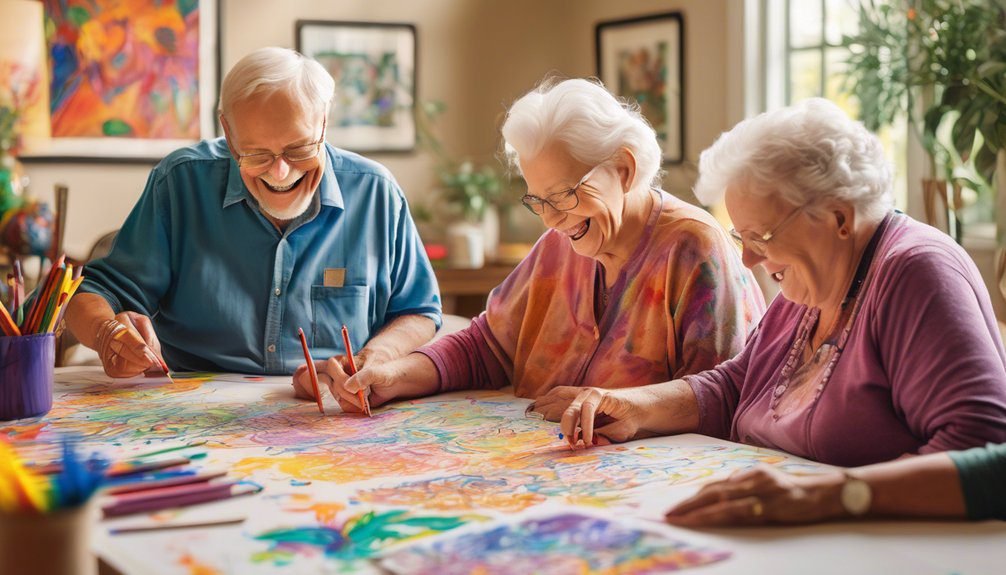
When seniors gather to color together, they not only enjoy a creative outlet but also foster meaningful connections. Engaging in group activities, like coloring sessions or art classes, encourages interaction and helps break down social barriers.
You’ll find that sharing thoughts about colors, techniques, or inspirations can lead to deeper conversations, building camaraderie among participants. This shared experience can alleviate feelings of loneliness, as you bond over a common interest.
Plus, working alongside others promotes teamwork, enhancing social skills that may have waned over time. Ultimately, coloring isn’t just about art; it’s a powerful way to connect, laugh, and create lasting friendships, enriching the lives of seniors in a supportive environment.
Frequently Asked Questions
How Often Should Seniors Color to See Benefits?
You should engage in daily practice, aiming for an optimal duration of 20 to 30 minutes. This consistency not only enhances your creativity but also promotes relaxation and mental clarity, benefiting your overall well-being.
What Types of Coloring Materials Are Best for Seniors?
You’ll find that colored pencils, markers, and gel pens are best for seniors. These materials enhance various coloring techniques, allowing for creativity while providing therapeutic benefits that improve focus and reduce stress in a fun way.
Can Coloring Help With Memory Retention in Seniors?
Absolutely, coloring can boost memory retention. By employing creative coloring techniques, you stimulate cognitive benefits, enhancing focus and recall. It’s a fun, engaging way for you to keep your mind sharp and active.
Are There Coloring Books Specifically Designed for Seniors?
Yes, there are coloring book styles specifically designed for seniors, featuring larger images and simpler patterns. These promote senior creativity, allowing you to express yourself while enjoying a relaxing and fulfilling activity tailored to your needs.
Is There a Recommended Time of Day for Coloring?
There’s no strict rule, but many find coloring in the morning routine energizes them, while evening relaxation provides a calming end to the day. Experiment with both times to see what works best for you.
Conclusion
Incorporating coloring into your routine can be like planting seeds in a garden; with time and care, you’ll nurture your mind and spirit. Not only does it sharpen your cognitive skills and enhance fine motor abilities, but it also serves as a soothing balm for stress and anxiety. Embracing this creative outlet fosters connections with others, enriching your life in profound ways. So, grab those crayons and let your imagination flourish—your well-being will thank you.