
Imagine walking through a vibrant market in Oaxaca, where the intricate patterns of woven textiles tell stories of the Zapotec community. Each color and shape reflects deep-rooted beliefs and natural inspirations, creating a visual dialogue with the past. As you observe these designs, questions about their meanings and the cultural narratives they convey arise. What do these patterns reveal about identity and heritage? Exploring this rich tapestry invites a deeper understanding of our shared human experiences.
Key Takeaways
- Cultural coloring patterns reflect community identity and beliefs, using colors and shapes to convey stories and emotions.
- Nature-inspired motifs are prevalent in traditional designs, symbolizing the deep connection between culture and the natural world.
- Urban street art revitalizes cultural narratives, incorporating indigenous patterns to engage communities and reflect diverse urban identities.
- Color symbolism varies across cultures, influencing the interpretation of patterns and enhancing their cultural significance in artistic expressions.
- Cultural exchanges foster collaboration among artists, encouraging the evolution of coloring patterns and promoting appreciation for diverse artistic traditions.
The Significance of Patterns in Indigenous Cultures

When you explore the intricate patterns found in indigenous cultures, you quickly realize they’re not just decorative; they carry deep meanings and stories. Each design you encounter reflects the pattern significance that resonates with the community’s identity and beliefs.
You might notice how certain shapes symbolize life cycles, while colors convey emotions or historical events. This indigenous symbolism serves as a visual language, linking the past to the present.
As you observe the details, you understand that these patterns act as a narrative device, communicating values and traditions that transcend generations. By engaging with these cultural expressions, you gain insight into the rich tapestry of human experience, allowing you to appreciate the profound connections between art, culture, and community.
The Influence of Nature on Traditional Designs
As you delve into traditional designs, you’ll notice how profoundly nature influences these artistic expressions. Nature motifs, such as leaves, flowers, and animals, emerge as central themes, reflecting the environment’s beauty and complexity.
You can see how artisans use organic forms to create patterns that resonate with their surroundings, weaving a narrative of harmony and respect for the natural world. Each stroke and color choice captures the essence of flora and fauna, illustrating a deep connection to the earth.

These elements not only embellish but also serve as cultural symbols, communicating values and beliefs. By observing these designs, you appreciate how nature shapes creativity, forming a bridge between the physical and spiritual realms in traditional artistry.
Street Art: A Modern Canvas for Cultural Expression

As you stroll through city streets, vibrant murals and graffiti catch your eye, transforming dull walls into expressions of urban identity.
Each piece reflects not just artistic skill, but also social commentary, sparking conversations about culture and community.
In this modern canvas, street art becomes a powerful medium for voices often unheard.
Urban Aesthetics and Identity
While wandering through urban landscapes, you can’t help but notice the vibrant murals and intricate graffiti that breathe life into once-sterile environments.
These artistic displays serve as powerful aesthetic expressions, reflecting the diverse urban identity of the community. Each stroke of paint tells a story, encapsulating cultural narratives and personal experiences that resonate with passersby.
You might observe how these works transform forgotten spaces into dynamic canvases, inviting you to engage with the surroundings in a new way.
As you pause to admire the creativity, it becomes clear that street art isn’t just decoration; it’s a vital part of the urban fabric, shaping how people perceive and connect with their environment and each other.
Social Commentary Through Art
Street art often serves as a powerful vessel for social commentary, transforming public spaces into platforms for dialogue and reflection.
As you walk through urban landscapes, you’ll encounter vibrant murals that challenge societal norms and provoke thought. Each piece acts as a form of artistic expression, conveying messages about inequality, identity, and resistance. The bold colors and striking imagery catch your eye, inviting you to engage with the narrative behind the artwork.
Through these visual statements, artists provide a cultural critique, addressing pressing issues like poverty and racism. You can’t help but feel a connection to the community, as their voices resonate through the streets.
This blend of creativity and activism makes street art a vital part of contemporary cultural discourse.
Symbolism in Color: Meanings Across Cultures
Colors transcend mere aesthetics; they embody a rich tapestry of meanings that vary dramatically across cultures. As you explore color psychology, you’ll notice how hue symbolism can evoke different emotional resonance depending on cultural interpretations. This visual language shapes social narratives and personal identities.
Consider these chromatic associations:
- Red – In many Western cultures, it’s a symbol of love, while in China, it signifies luck and prosperity.
- White – Often associated with purity in the West, it symbolizes mourning in some Asian cultures.
- Green – Revered in Islam as a color of paradise, it can also represent jealousy in Western contexts.
These color traditions reflect unique aesthetic values, emphasizing the need for cultural sensitivity in artistic expression.
The Role of Patterns in Rituals and Ceremonies
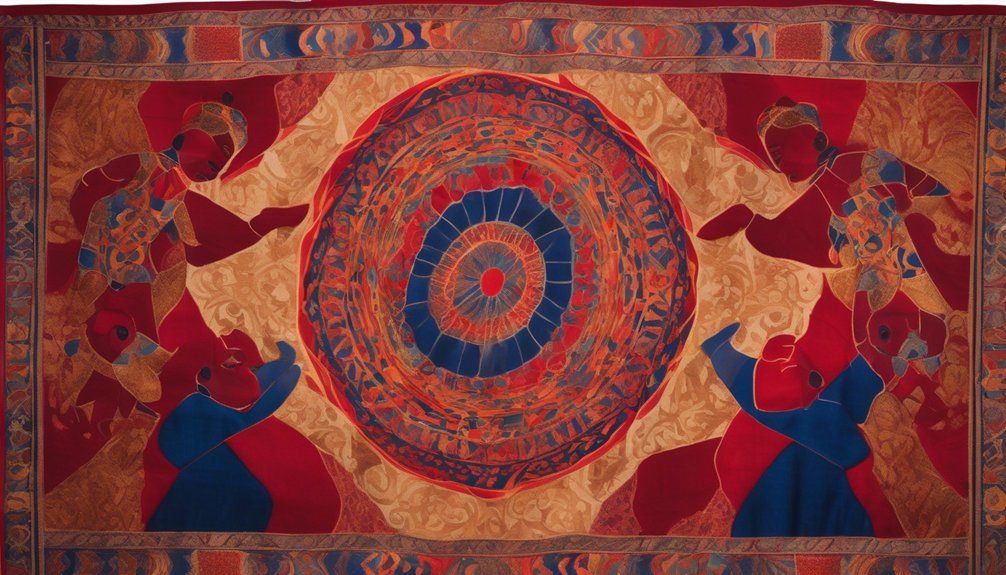
In rituals and ceremonies, patterns often serve as a visual language, conveying deep symbolism that connects participants to their cultural roots.
You’ll notice how intricate designs reflect identity, telling stories of heritage and shared beliefs.
These patterns don’t just decorate; they embody the essence of community and tradition, elevating the significance of each gathering.
Symbolism in Patterns
Patterns often weave a rich tapestry of meaning in rituals and ceremonies, serving as visual language that communicates cultural values and beliefs. You’ll notice how they often incorporate mythical motifs and geometric symbolism, enhancing the significance of the event.
- Mythical motifs: These designs connect participants to their cultural narratives, embodying stories of creation, ancestry, or spirituality.
- Geometric symbolism: Shapes and forms can represent harmony, balance, and the universe’s order, inviting participants to reflect on their place within it.
- Color choices: Each hue often conveys specific emotions or spiritual states, enriching the overall ceremonial experience.
Patterns and Cultural Identity
While participating in cultural rituals, you might notice how the intricate patterns adorning garments and ceremonial objects serve as a profound expression of identity.
These designs, deeply rooted in cultural heritage, often tell stories of ancestry, beliefs, and communal values. As you observe, you’ll see how colors and shapes evoke a sense of belonging, connecting individuals to their heritage.
Each motif can symbolize specific identity expressions, reflecting personal and collective narratives. In ceremonies, patterns enhance the atmosphere, creating a visual language that transcends words.
They invite participants to engage with their history and foster a deeper understanding of their place within the community. Ultimately, these patterns aren’t just decorative; they’re vital threads in the fabric of cultural identity.
Cross-Cultural Exchanges: Blending Artistic Traditions
As artists traverse borders, they often find themselves at the intersection of diverse cultural influences, where unique artistic traditions meld into vibrant new forms.
This cultural fusion sparks exciting artistic collaboration, challenging preconceived notions and enriching the creative landscape.
You’ll notice three key aspects:
- Technique Exchange: Artists adopt methods from different cultures, enhancing their skillsets and broadening their perspectives.
- Symbolism Integration: By incorporating symbols from various traditions, they create pieces that resonate on multiple levels, inviting deeper engagement.
- Narrative Blending: Stories from different backgrounds intertwine, resulting in artwork that speaks to universal themes while celebrating individuality.
These exchanges not only redefine aesthetics but also foster understanding and appreciation among diverse communities, creating a richer artistic dialogue.
Preserving Heritage Through Contemporary Art Forms

Cultural exchanges not only reshape artistic practices but also serve as a vital means of preserving heritage in contemporary art forms.
You’ll notice how artists today weave traditional motifs into modern canvases, creating contemporary adaptations that resonate with both old and new audiences. This fusion of styles often highlights the richness of cultural preservation, showcasing techniques passed down through generations.
For instance, you might see indigenous patterns reimagined in urban street art, breathing new life into historical narratives. These artworks tell stories that bridge the gap between past and present, inviting viewers to reflect on their roots.
Frequently Asked Questions
How Can I Learn to Create Cultural Coloring Patterns?
To create cultural coloring patterns, start by studying cultural symbolism and experimenting with digital design tools. Observe traditional designs, analyze their meanings, and practice blending colors and shapes to express your unique interpretations.
What Materials Are Commonly Used in Traditional Pattern-Making?
You’ll find diverse fabric types like cotton and silk, paired with intricate design techniques such as block printing and embroidery. Each material and method brings a unique texture, color, and storytelling to traditional pattern-making.
Are There Workshops for Cultural Pattern Design?
Yes, you’ll find workshops available that focus on cultural pattern design. These sessions often incorporate diverse cultural influences, allowing you to explore various techniques while enhancing your understanding of intricate design elements and their significance.
How Do Patterns Influence Fashion Trends Today?
Patterns shape fashion trends today, blending global influences with historical significance. You see vibrant prints reflecting cultures, while subtle textures echo past styles, creating a dynamic interplay that captivates and inspires your wardrobe choices.
Can I Incorporate Cultural Patterns Into My Own Art?
Absolutely, you can incorporate cultural patterns into your art! Embrace cultural fusion as a means of personal expression, blending vibrant motifs that resonate with you, creating unique pieces that celebrate diversity and your artistic voice.
Conclusion
As you explore the vibrant world of cultural coloring patterns, you uncover not just art but the stories and values that shape identities. These intricate designs invite you to reflect on the question: how do these patterns connect us to our shared humanity? By appreciating the symbolism and heritage woven into each stroke, you foster a deeper understanding of diverse cultures, enriching your perspective on the world around you and the artistry that binds us all.