
When you start coloring with watercolors, it’s essential to grasp the basics first. Understanding techniques like wet-on-wet and wet-on-dry can transform your approach to painting. Selecting the right materials also plays a crucial role in your success. As you experiment with color mixing, you’ll discover how to create captivating blends. But what about those common pitfalls that can hinder your progress? Let’s explore these key aspects to elevate your watercolor journey.
Key Takeaways
- Start with basic techniques like wet-on-wet and wet-on-dry to build confidence and control in your watercolor painting.
- Use high-quality materials, such as 200 lb paper and a reliable watercolor palette, to enhance your painting experience.
- Experiment with color mixing using primary colors to create a harmonious palette that suits your artwork.
- Plan your composition and sketch a basic layout to ensure visual balance and clarity in your design.
- Embrace mistakes and practice regularly to improve your skills and develop a unique watercolor style over time.
Understanding the Basics of Watercolor
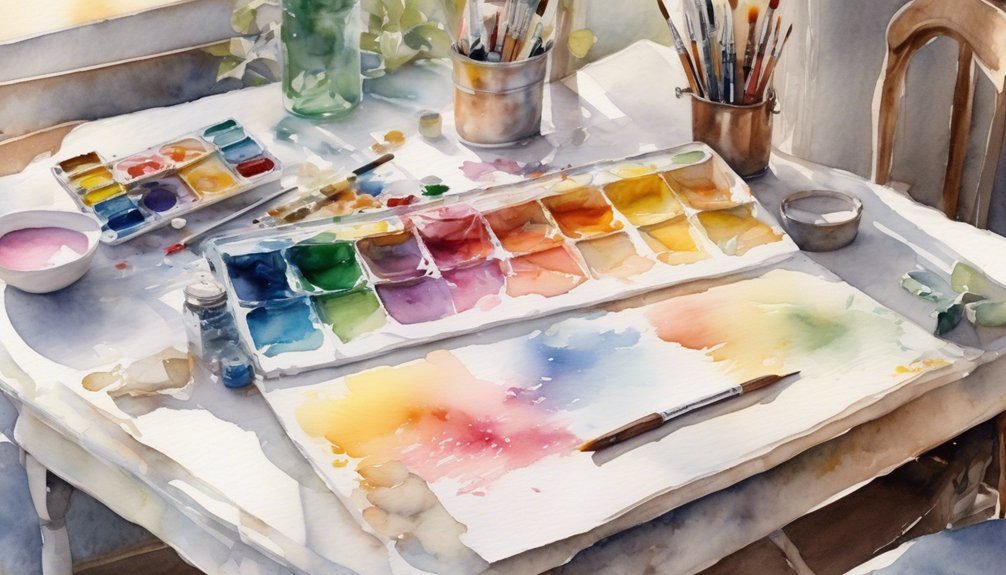
When you dive into the world of watercolor, you’ll quickly discover that mastering the fundamentals can elevate your artwork. Understanding watercolor fundamentals, like wet-on-wet and wet-on-dry techniques, is essential for achieving stunning effects. You’ll learn how to control water and pigment to create depth and texture.
Color theory plays a vital role in your watercolor journey. Familiarizing yourself with the color wheel helps you mix harmonious colors and understand complementary shades. Experimenting with color mixing will give you a broader palette, allowing your creativity to flow.
As you practice these basics, don’t be afraid to make mistakes; they’re part of the learning process. Embrace the journey, and you’ll find your unique style emerging in no time!
Choosing the Right Materials
When it comes to watercolor painting, choosing the right materials is crucial for achieving the best results.
You’ll want to consider essential supplies like paint, the type of paper you’re using, and the brushes that suit your style.
Essential Watercolor Supplies
Choosing the right materials is crucial for your watercolor journey, and having the right supplies can make all the difference. Start with a quality watercolor palette, as it’ll help you mix colors easily and maintain paint consistency.

Look for palettes that offer a variety of wells and a smooth surface for mixing.
Next, invest in good watercolor paints. Tube or pan paints both work well, but ensure they’re high-quality for vibrant results.
Remember, the consistency of your paint affects your final artwork; too thick can lead to muddiness, while too thin can wash out your colors.
Lastly, don’t forget brushes! Choose a few different sizes to help you create various effects.
With the right supplies, you’re on your way to beautiful watercolor paintings!
Paper Type Matters
The foundation of any great watercolor painting lies in the paper you use. Choosing the right paper can significantly enhance your artistic experience. Look for a paper weight of at least 200 lb for optimal water absorption, which helps prevent warping. Thicker paper allows for layered washes and bold brushstrokes without damage.
Additionally, consider the surface texture. Hot-pressed paper offers a smooth finish, ideal for fine details, while cold-pressed paper has a more textured surface, perfect for creating vibrant washes and soft blends.
Each type brings out different qualities in your paint, so experimenting with various papers can lead to exciting discoveries. Ultimately, the right paper elevates your watercolor projects, making them more enjoyable and successful.
Brush Selection Tips
Selecting the right brushes can make all the difference in your watercolor experience. Start by exploring various brush shapes, like round, flat, and fan brushes. Each shape serves a unique purpose; for instance, round brushes are perfect for detail work, while flat brushes excel at washes.
Next, consider bristle types. Natural bristles, like sable or squirrel, hold more water and pigment, providing a smooth application. Synthetic bristles are more affordable and durable, making them great for beginners.
Don’t hesitate to experiment with different combinations to find what works best for you. Remember, the right brush can enhance your creativity and help you achieve the results you desire in your watercolor paintings. Happy painting!
Essential Techniques for Beginners
To get started with watercolor, mastering color mixing and brush control is essential.
You’ll learn how to create vibrant hues and smooth washes that bring your artwork to life.
Let’s explore these fundamental techniques to boost your confidence and skills.
Color Mixing Basics
While diving into the world of watercolor, mastering color mixing is essential for creating vibrant and harmonious artwork. Start with the primary colors: red, blue, and yellow. Understanding the color wheel helps you see how to blend these to create secondary colors.
Experiment with warm colors like red and yellow to evoke energy, or cool colors like blue and green for calming effects. Complementary colors, situated opposite each other on the wheel, can enhance each other’s vibrancy.
Pay attention to opacity levels; mixing water with your paint creates different tint shades. Adjust saturation levels by adding more color or water, allowing you to achieve the desired intensity.
Practice these techniques, and soon you’ll create stunning watercolor pieces with confidence!
Brush Control Techniques
Mastering brush control is crucial for any watercolor artist, especially beginners. Start by experimenting with brush pressure; light pressure creates soft washes, while firm pressure yields bold strokes. Practice varying your pressure to see how it affects color intensity and texture.
Next, focus on stroke direction. Use long, sweeping motions for broad areas and short, quick strokes for detailed work. Try tilting your brush at different angles to achieve diverse effects.
Don’t forget to keep your wrist relaxed, allowing for fluid movement. As you gain confidence, you’ll notice how these techniques enhance your control, enabling you to bring your artistic vision to life.
Color Mixing and Blending
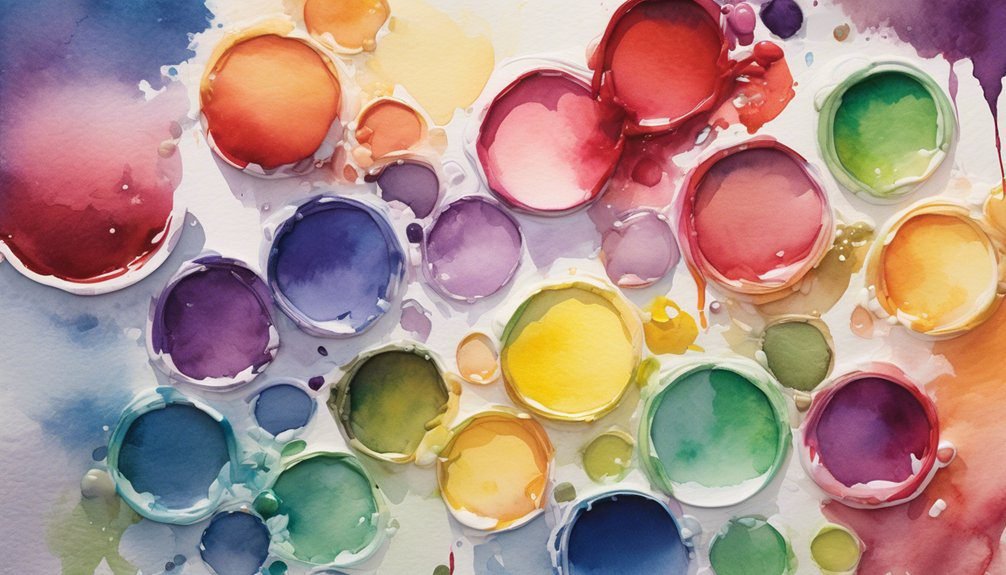
Color mixing and blending can transform your watercolor artwork into vibrant masterpieces. By understanding color harmony and color temperature, you can create stunning effects. Start by experimenting with primary colors and observe how they interact. Use the table below to guide your mixing journey:
| Color A | Color B | Resulting Color |
|---|---|---|
| Yellow | Blue | Green |
| Red | Yellow | Orange |
| Blue | Red | Purple |
| Yellow | Red | Warm Yellow |
As you mix, pay attention to how colors relate to one another. Warm colors evoke energy, while cool colors provide calm. Embrace these principles, and watch your watercolor pieces come alive through effective blending. Enjoy the process!
Creating Texture and Effects
Understanding how to mix and blend colors sets the stage for exploring texture and effects in your watercolor artwork.
You can elevate your pieces by incorporating various texture techniques. Try using a sponge, salt, or plastic wrap to create unique patterns. Each method offers different results, so don’t hesitate to experiment!
In addition, layering your washes can produce stunning effects—allowing one layer to dry before adding another can enhance depth and richness.
Tips for Planning Your Composition
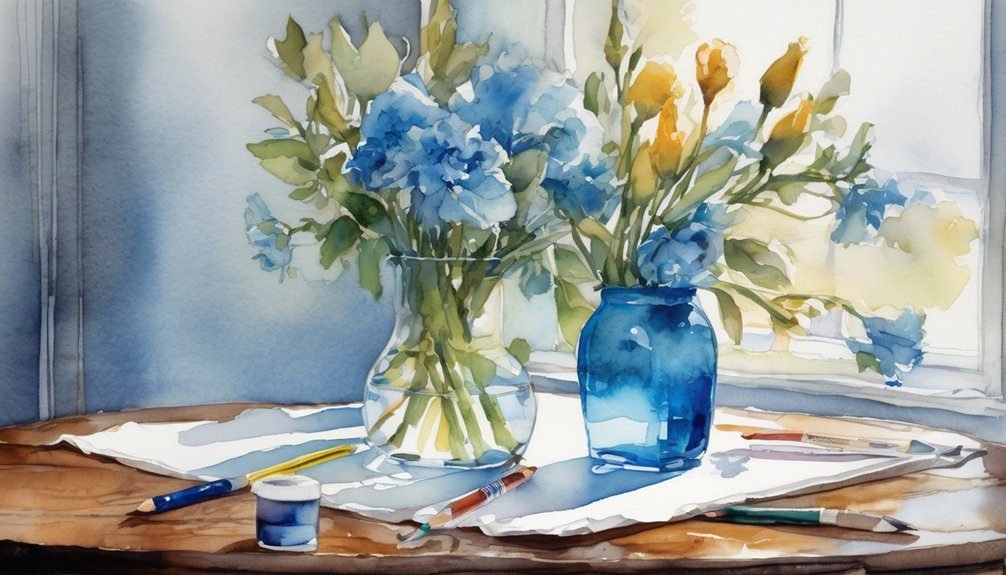
When you start planning your composition, it’s crucial to visualize how the elements will interact on the page.
Begin by sketching a basic composition layout that outlines where each component will sit. Think about the visual balance—distributing elements evenly to create harmony.
Consider the rule of thirds: place focal points along these lines for a more engaging design. Don’t overcrowd your piece; give each element room to breathe, enhancing clarity and focus.
Experiment with scale and contrast to guide the viewer’s eye throughout your artwork.
Remember, planning isn’t about restricting creativity; it’s about laying a solid foundation for your watercolor masterpiece.
With a thoughtful approach, you’ll achieve a captivating composition that resonates with your audience.
Common Mistakes to Avoid
After carefully planning your composition, it’s important to stay aware of common pitfalls that can undermine your watercolor efforts. One major mistake is overloading your brush with too much water or pigment, which often leads to muddy colors. Instead, aim for a balanced mix for better control.
Another common error is neglecting to plan your color palette; random choices can create discord in your artwork. Also, remember to let layers dry before adding more; rushing this step can cause unwanted blending.
Lastly, don’t forget to practice. Embrace the learning curve and give yourself grace if things don’t turn out as expected. By avoiding these watercolor errors, you’ll enhance your skills and enjoy a more satisfying creative process.
Inspiration and Ideas for Your Projects

Where do you find inspiration for your watercolor projects? It can come from various sources, sparking creativity and encouraging you to explore different styles.
Here are some ideas to jumpstart your imagination:
Explore diverse sources for inspiration and watch your creativity blossom in every watercolor project you undertake!
- Nature Scenes: Capture the beauty of landscapes, flowers, or animals. Take a walk outside and observe the colors and shapes around you.
- Abstract Designs: Experiment with shapes and colors without a specific objective. Let your emotions guide your brushstrokes.
- Photography: Use your favorite photos as references. They can provide a solid foundation for your watercolor creations.
- Artworks of Others: Visit galleries or browse online to see how other artists approach watercolor.
Embrace these ideas and let your creativity flow with every brushstroke!
Frequently Asked Questions
Can I Use Regular Paper for Watercolor Painting?
You can use regular paper for watercolor painting, but it’s not ideal. Watercolor paper, with higher paper weight, absorbs water better, preventing warping and ensuring vibrant colors. Invest in it for the best results!
How Do I Clean My Watercolor Brushes Properly?
To clean your watercolor brushes properly, rinse them under lukewarm water, using gentle cleaning techniques. Swirl the bristles in your palm to remove paint, and reshape them for optimal brush maintenance. Enjoy painting with refreshed tools!
What Is the Best Way to Store Watercolor Paintings?
“An ounce of prevention is worth a pound of cure.” For best results, store your watercolor paintings in a portfolio, using archival techniques to protect them from light and moisture. This keeps your artwork vibrant and safe.
Can I Mix Watercolor With Other Mediums?
Yes, you can mix watercolor with other mediums! Experimenting with mixed media can enhance your artwork. Try combining watercolor techniques with ink, pastels, or acrylics for unique textures and effects that elevate your creative expression.
How Long Does It Take for Watercolor to Dry?
Watercolor dries like a gentle breeze fades. Typically, drying time ranges from a few minutes to several hours, depending on environmental factors like humidity and temperature. Be patient; your masterpiece will soon shine!
Conclusion
In conclusion, diving into watercolor painting can be both fun and rewarding, even if you feel intimidated at first. Remember, every artist starts somewhere, and it’s through practice that you’ll discover your unique style. Don’t let mistakes discourage you; instead, view them as stepping stones to improvement. With the right materials and techniques, you’ll find yourself creating beautiful works of art in no time. So grab your brushes, embrace the journey, and let your creativity flow!