
If you’re choosing coloring books for homeschool activities, you want options that teach as well as entertain. The best ones match your child’s age, support subjects like math, science, and history, and keep pages clear enough for focused work. You’ll also want books that build fine motor skills and fit your lesson goals. Some choices work better than others, and the key differences matter more than you might expect.
Key Takeaways
- Choose coloring books with clear lines, simple layouts, and age-appropriate images for focused homeschool learning.
- Pick subject-based books like history, science, geography, art, or nature to reinforce homeschool lessons.
- Use letters, numbers, shapes, and counting books to support early literacy and math skills.
- Select nature and animal coloring books with labels and facts to encourage observation and independent work.
- Match detail levels to age and skill, starting with easier pages to build confidence and fine motor control.
What Makes a Great Homeschool Coloring Book
A great homeschool coloring book does more than keep your child busy—it supports learning in a focused, age-appropriate way. You want pages with clear lines, simple layouts, and room for your child to practice coloring techniques without frustration.
Strong books invite steady hand control, attention to detail, and quiet concentration. They also offer educational benefits by reinforcing shapes, letters, numbers, or key ideas in a way your child can enjoy.
Strong books build steady hands, focused attention, and quiet confidence while reinforcing shapes, letters, numbers, or key ideas.
Choose books with durable paper so markers or crayons won’t bleed through, and pick content that matches your child’s skill level.
When you guide your child through each page, you create a calm, intimate learning moment that feels personal while still building confidence, knowledge, and fine motor skills.

Best Homeschool Coloring Books by Subject
Once you know what makes a strong homeschool coloring book, you can narrow your choices by subject to support specific lessons.
You’ll get the best results when you match pages to history, science, geography, art, or nature study. History books help you visualize people, places, and events, while science titles can reinforce anatomy, animals, weather, or space.
Geography-themed books let you explore maps and landmarks, and art books improve color recognition and coloring techniques. Nature books invite careful observation of plants and habitats.
For each subject, look for clear illustrations, accurate details, and age-appropriate difficulty. These choices boost educational benefits because they connect hands-on work with your lessons, making learning feel personal, organized, and memorable.
Coloring Books for Letters and Early Math
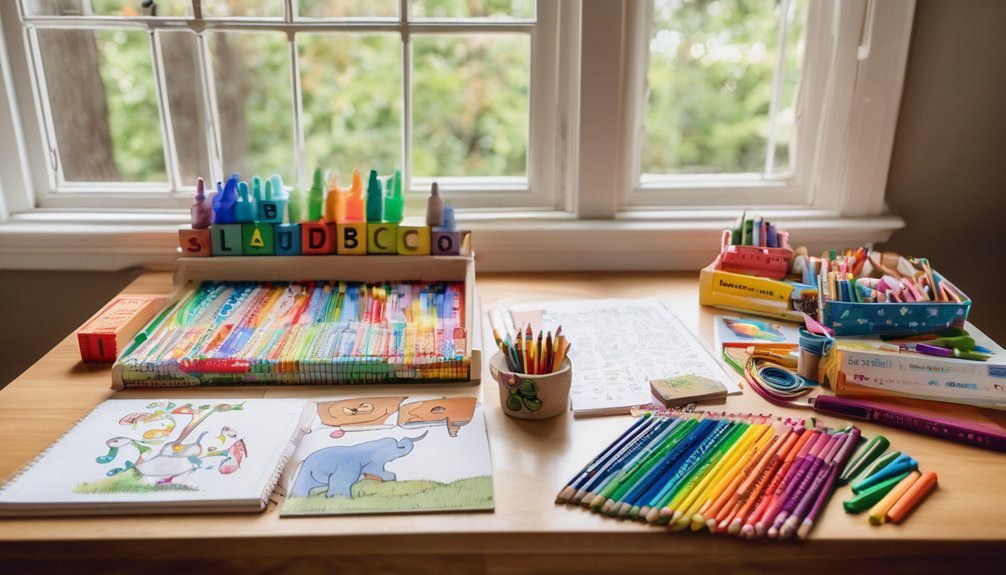
Letter by letter, math step by step, the right coloring books can turn early skills into simple, hands-on practice. You can use them to build letter recognition and reinforce math concepts without pressure. Choose pages that pair each letter with a clear image and each number with counting or simple sums.
| Focus | What you gain |
|---|---|
| Letters | Faster recognition |
| Numbers | Counting practice |
| Shapes | Visual sorting |
| Colors | Attention to detail |
| Patterns | Early problem-solving |
When you sit beside your child, you guide gently and keep learning warm. Ask them to trace, color, and name what they see. Short sessions work best, because they help you keep momentum and make each lesson feel achievable.
Nature and Animal Coloring Books Kids Love
Wildflowers, forest animals, and ocean scenes can make coloring time feel like a mini nature lesson. You can choose books with nature themes that help your child notice leaves, shells, feathers, and habitats while building focus.
Look for pages with clear outlines and simple labels, so you can weave in animal facts as you color together. Ask short questions like, “Where does this animal live?” or “What does it eat?” to keep learning active.
You’ll also find that these books support fine motor skills and calm, independent work. Rotate between mammals, birds, insects, and sea life to keep interest fresh.
If you add a few crayons, pencils, and reference cards, you’ll create a warm, hands-on homeschool activity that feels personal and memorable.
History and Geography Coloring Books

If your child enjoys coloring nature scenes, you can keep that same hands-on energy going with history and geography coloring books. You can use them to spark talks about historical timelines and geographical landmarks while your child colors. These books help you turn quiet time into a simple lesson that feels personal and engaging.
| Focus | What You’ll Explore | Homeschool Benefit |
|---|---|---|
| Ancient cultures | Artifacts, clothing, symbols | Builds curiosity |
| World maps | Continents, borders, oceans | Strengthens location skills |
| Landmarks | Famous buildings, monuments | Connects place and history |
| Timelines | Events in order | Supports sequencing |
You can sit together, ask brief questions, and let each page guide your discussion. This keeps learning steady, warm, and easy to follow.
How to Match Coloring Books to Age and Skill Level
Choosing the right coloring book starts with your child’s age, fine motor skills, and attention span. For younger learners, pick large images, bold outlines, and simple scenes that support age appropriateness without frustration.
If your child is developing control, choose books with moderate detail, varied shapes, and clearer boundaries to encourage skill development.
Older children often enjoy intricate designs, smaller spaces, and more realistic subjects that challenge precision. You can also check whether the book matches your child’s interests, because engagement matters too.
Start with easier pages, then move to harder ones as confidence grows. When you match complexity to ability, you help your child stay calm, focused, and proud of each completed page.
Creative Ways to Use Coloring Books in Lessons
Once you’ve matched a coloring book to your child’s age and skill level, you can use it as more than a quiet activity. You can turn each page into a mini lesson by linking it to reading, science, history, or art.
Ask your child to narrate what they see, label parts, or compare details across pages. Then guide them to practice coloring techniques like shading, blending, or patterning while they reinforce the concept.
For example, use animal pages for habitat study or holiday pages for thematic lessons that connect facts to images. You can also pause midway to ask questions, make predictions, or review vocabulary.
This keeps your child engaged, helps ideas stick, and makes learning feel personal, interactive, and fun.
Features That Matter Most in Homeschool Coloring Books
The right coloring book should do more than fill time—it should support real learning. When you choose one for homeschool, look for pages that match your child’s age, attention span, and skill level.
Clear lines help younger learners practice control, while varied details invite older kids to explore coloring techniques. You’ll also want educational themes that reinforce science, history, nature, or math without feeling forced.
- Simple, sturdy illustrations
- Age-appropriate complexity
- Built-in learning topics
- Space for creative choices
- Prompts that encourage discussion
A strong book keeps your lessons focused and your child engaged. It should invite you both to talk, notice, and connect ideas naturally.
Choose materials that feel useful, not busy.
Where to Buy Homeschool Coloring Books Online
After you know which features matter most, you can shop with more confidence and find homeschool coloring books online that fit your goals.
Start with your favorite online retailers, where you can compare prices, reviews, and shipping options in minutes. Then check specialty education stores for curriculum-friendly sets and age-appropriate coloring book themes.
Marketplaces can offer more variety, but you should read descriptions closely to confirm paper quality, subject accuracy, and bundle value. If you want hands-on learning, look for shops that organize books by grade, season, or topic.
You’ll save time when you bookmark a few trusted sites, sign up for alerts, and track discounts. That way, you can build a useful homeschool library without overspending.
Frequently Asked Questions
How Can Coloring Books Support Reluctant Learners?
You can support reluctant learners by making coloring books an easy entry point; they offer artistic expression, stress relief, creativity boost, and emotional connection, while you build confidence, attention, and willingness to learn.
Are Digital Coloring Books Useful for Homeschooling?
Yes, you can use digital coloring books for homeschooling. They offer digital advantages like instant access and easy revisions, while supporting creative expression. You’ll save paper, customize lessons, and keep your child engaged.
Can Coloring Books Help With Fine Motor Skills?
Yes, coloring books can help you build fine motor skills by strengthening hand muscles, improving pencil control, and supporting motor development. These coloring benefits show when you practice gripping, staying within lines, and coloring regularly.
What Materials Work Best With Coloring Book Pages?
You’ll get the best results with wax crayons, colored pencils, and fine-tip markers; they bloom like spring petals on sturdy paper types. Match coloring mediums to thicker pages, and you’ll reduce bleed-through while boosting control.
How Often Should Homeschoolers Use Coloring Books?
You should use coloring books a few times weekly, depending on goals. Regular use supports coloring book benefits and creative expression, but you’ll also want varied activities. Balance them with reading, writing, and hands-on learning.
Conclusion
You can make homeschool lessons more engaging by choosing coloring books that match your child’s age, interests, and skill level. For example, if your child loves animals, a nature coloring book can reinforce science while building focus and fine motor skills. Look for clear lines, simple instructions, and themes tied to your curriculum. When you use coloring books purposefully, you’ll turn quiet time into meaningful learning that supports both creativity and foundational academic growth.