
Coloring pages that teach emotions can be an effective way for you and your child to explore feelings in a creative manner. By using colors to represent different emotions, you can enhance emotional vocabulary and awareness. This process not only provides a fun activity but also opens the door to meaningful conversations about feelings. Curious about how these pages can transform emotional understanding and foster connections?
Key Takeaways
- Emotion-themed coloring pages can help children recognize and articulate their feelings through color representation and guided prompts.
- Coloring activities enhance emotional vocabulary, enabling discussions about personal experiences and feelings in a creative manner.
- Using coloring pages as a tool, children can explore complex emotions like jealousy or pride in a safe and engaging environment.
- Collaborative coloring sessions can foster sharing and support among peers, strengthening emotional connections and resilience.
- Incorporating storytelling with coloring prompts can deepen understanding of emotions and stimulate imaginative expression during the activity.
The Importance of Emotional Intelligence in Children
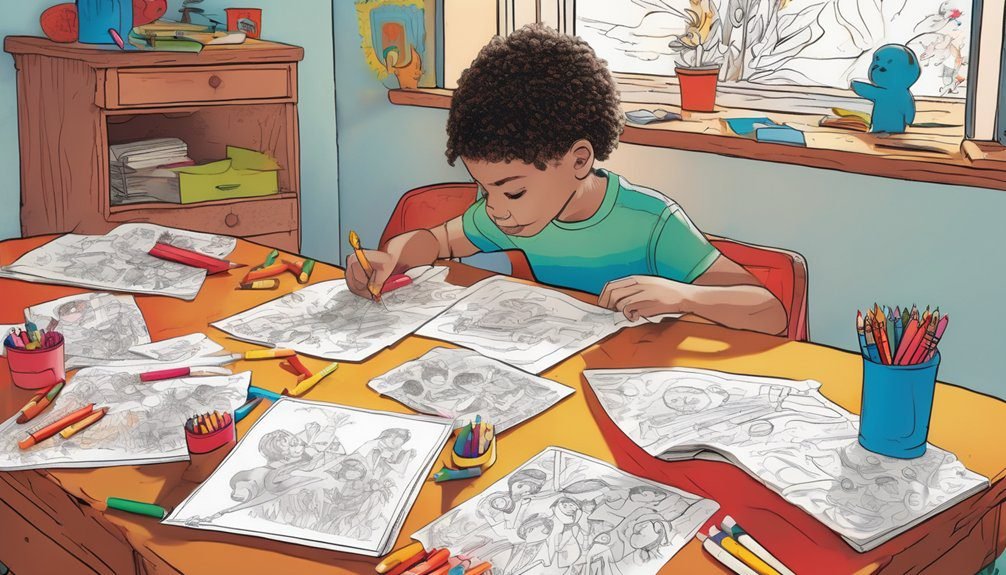
While you might focus on academic skills, emotional intelligence is just as crucial for your child’s development. It helps them recognize, understand, and manage their emotions, which builds resilience and fosters positive relationships.
When kids develop emotional intelligence, they become more empathetic, improving their ability to connect with others. This skill set also aids in conflict resolution, allowing them to navigate social situations effectively.
Moreover, emotionally intelligent children are likely to perform better academically, as they can manage stress and stay motivated. Encouraging emotional awareness from an early age shapes a well-rounded individual.

How Coloring Pages Help Kids Understand Emotions
Coloring pages can be a powerful tool for helping kids understand and express their emotions. When you give your child a coloring page that features different emotions, it encourages them to think about what those feelings look like.
As they color, they can reflect on their own experiences and relate to the characters or scenes depicted. This activity not only fosters creativity but also opens up conversations about feelings. You can ask them questions like, “How does this character feel?” or “Have you ever felt this way?”
These discussions enhance emotional vocabulary and awareness. By engaging in this creative process, kids learn to identify and articulate their emotions, making it easier for them to navigate their feelings in real life.
Different Emotions to Explore Through Coloring
Exploring various emotions through coloring can be both fun and enlightening for kids. By using coloring pages that depict different feelings, you can help them understand and express emotions like happiness, sadness, anger, and fear.
For instance, bright colors might represent joy, while cooler shades can illustrate calmness or sadness. Kids can also explore complex emotions like jealousy or pride through creative coloring choices.
Each page can serve as a conversation starter, allowing you to discuss what each emotion feels like and when they might experience it. This hands-on approach not only reinforces emotional recognition but also encourages your child to reflect and share their feelings in a safe and engaging way.
Coloring becomes a powerful tool for emotional exploration.
Creative Ideas for Using Emotion-Themed Coloring Pages

How can you make the most of emotion-themed coloring pages? Here are some creative ideas to enrich your experience:
- Emotion Journals: Use the coloring pages as prompts. After coloring, write about a time you felt that emotion.
- Group Activities: Host a coloring party where everyone shares their feelings about the emotions represented.
- Decorative Displays: Frame your completed pages to create a colorful gallery wall that sparks conversation about emotions.
- Mindfulness Moments: Set aside time to color mindfully, focusing on how each color makes you feel and reconnecting with your emotions.
These activities not only enhance creativity but also deepen your understanding of emotions in a fun and engaging way!
Incorporating Storytelling With Coloring Activities
While coloring can be a relaxing activity, weaving storytelling into the process can transform it into a powerful emotional exploration.
Start by creating a narrative around the characters or scenes in your coloring pages. For instance, as you color a brave little lion, you can tell a story about courage and overcoming fears.
Encourage kids to imagine the lion’s adventures and how it feels in different situations. You can even ask them to create their own characters and stories as they color.
This approach not only makes coloring engaging but also helps you both connect emotions with creativity.
Encouraging Conversations About Feelings
Coloring pages can be a great starting point for conversations about feelings, as they provide a visual and interactive way to express emotions. Here are some tips to encourage those important discussions:
- Choose Emotion-Focused Pages: Pick pages that depict a range of emotions, like happiness, sadness, or anger, to spark dialogue.
- Ask Open-Ended Questions: Use questions like, “What do you think this character feels?” to encourage deeper thinking.
- Share Your Feelings: Model vulnerability by sharing your own feelings related to the colors or scenes you’re coloring.
- Create a Safe Space: Ensure your environment feels safe, allowing everyone to express themselves without judgment.
Resources for Finding Emotion-Focused Coloring Pages
Finding emotion-focused coloring pages can be easy if you know where to look. Start with online platforms like Pinterest, where you can find a variety of free resources by searching for “emotion coloring pages.”
Websites dedicated to educational materials often have printable options, too. Check out sites like Teachers Pay Teachers, where creators share unique designs for a small fee.
Don’t overlook social media; many artists share their work on Instagram or Facebook. You can also explore children’s books about emotions, as they sometimes include coloring pages in the back.
Lastly, local libraries or community centers may have workshops or resources that provide emotional learning activities, including coloring pages.
Happy coloring!
Frequently Asked Questions
What Age Is Appropriate for Using Emotion-Themed Coloring Pages?
You can use emotion-themed coloring pages for kids as young as three. They help children express feelings and understand emotions better. Tailor the complexity of the pages to their developmental stage for the best experience.
Can Coloring Pages Improve My Child’s Emotional Expression?
Yes, coloring pages can enhance your child’s emotional expression. They provide a creative outlet for feelings, encourage conversation about emotions, and help your child process their experiences while having fun. It’s a valuable tool for emotional development.
How Can I Assess My Child’s Emotional Understanding Through Coloring?
You can assess your child’s emotional understanding by observing their color choices and reactions during coloring. Ask questions about their feelings and connect those emotions to the colors they use, encouraging deeper reflection and expression.
Are There Digital Options for Emotion-Themed Coloring Pages?
Yes, there are plenty of digital options for emotion-themed coloring pages! You’ll find engaging designs online that help your child explore feelings creatively. Just wait until you see their expressions as they color!
How Often Should We Do Coloring Activities Focused on Emotions?
You should engage in coloring activities focused on emotions at least once a week. Regularly practicing helps reinforce emotional understanding and expression, making it easier for you to manage feelings and communicate effectively.
Conclusion
By using coloring pages to explore emotions, you’re not just filling in shapes with colors; you’re also unlocking a deeper understanding of yourself and others. Coincidentally, as you blend hues and express feelings, you may find that the very emotions you’re coloring resonate with someone else nearby. This simple act can spark conversations, foster connections, and enhance emotional intelligence, reminding you that expressing feelings is a shared journey. Embrace the colors of your emotions and see where they lead you.