
When it comes to coloring, choosing between markers and pencils can significantly impact your artwork. Markers deliver bold, vibrant colors quickly, perfect for large areas, but they come with risks like bleeding and limited paper options. On the other hand, pencils offer precision and control for detailed shading, yet they demand more time and effort. Understanding the strengths and weaknesses of each medium is essential for achieving your artistic vision. Which one will best suit your next project?
Key Takeaways
- Markers offer vibrant, bold colors and quick application, making them ideal for fast and colorful projects.
- Pencils allow for precise control and detailed blending, perfect for intricate shading and artistic techniques.
- Markers can bleed through paper, limiting choice of materials, while pencils are more forgiving and easily erasable.
- The drying time for markers can lead to smudging, while pencils provide immediate results without such concerns.
- Choosing between markers and pencils depends on the desired artistic effect, project requirements, and personal creative style.
Advantages of Coloring With Markers
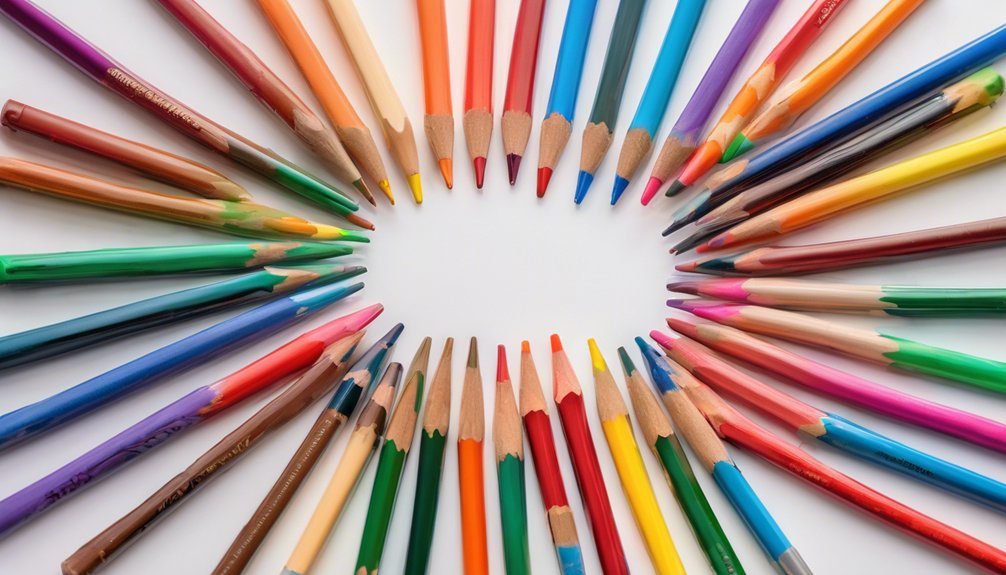
When it comes to coloring, markers offer distinct advantages that can elevate your creative experience.
First off, you’ll love the vibrant colors that markers provide. They can easily bring your artwork to life, making your designs pop with intensity. You won’t have to spend hours layering colors to achieve that bold look.
Plus, the quick application is a game-changer; you can fill in large spaces quickly and efficiently. Whether you’re working on a detailed project or just doodling, markers save you time without sacrificing quality.

Additionally, many markers are designed to be blendable, allowing you to experiment with gradients and shading effortlessly.
In short, markers are a fantastic choice for anyone seeking a fast, colorful, and engaging coloring experience.
Disadvantages of Coloring With Markers
While markers offer vibrant colors and quick application, they also come with several disadvantages that can impact your coloring experience.
One major drawback is bleed issues; markers can easily bleed through paper, ruining the artwork on the other side. This can limit your choice of paper and may force you to use thicker sheets, which aren’t always convenient.
Markers can bleed through paper, potentially ruining artwork on the reverse side and restricting your paper choices.
Additionally, drying time can be a concern. Unlike pencils, which allow for immediate blending and layering, markers can take longer to dry, leading to smudging if you’re not careful.
If you’re looking to achieve precise details, markers may not provide the control you need. Weighing these disadvantages against their benefits is essential for a fulfilling coloring experience.
Advantages of Coloring With Pencils
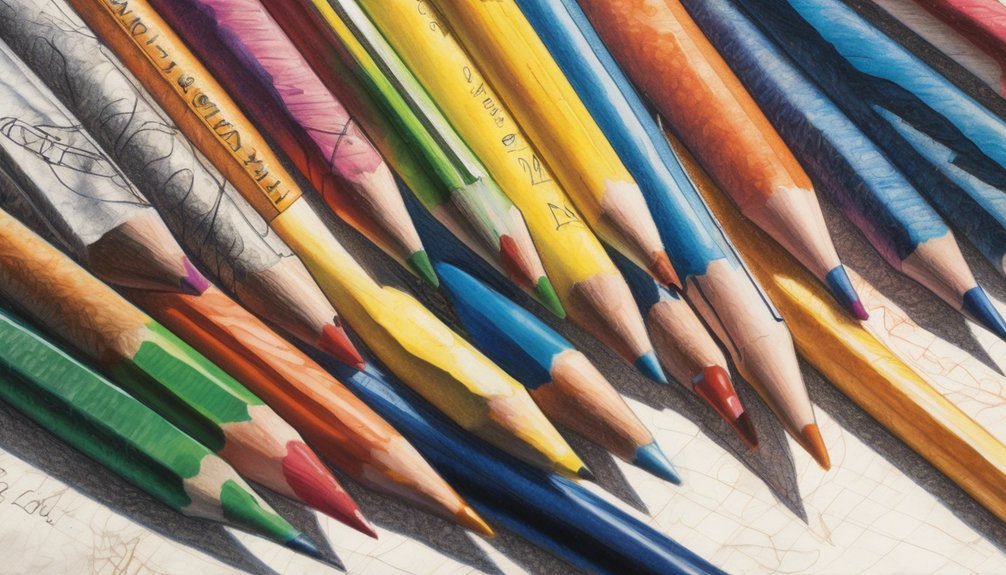
Coloring with pencils offers numerous advantages that can enhance your artistic experience. One of the main benefits is the ability to master blending techniques. You can layer colors smoothly, creating depth and dimension in your artwork. Pencils allow you to mix hues seamlessly, achieving a more nuanced look that markers often struggle to provide.
Additionally, pencils are fantastic for achieving intricate shading effects. With varying pressure, you can create soft gradients or bold contrasts, giving your work a professional finish. This versatility makes it easier to adapt your style to different projects.
Plus, pencils are easy to erase, offering you the freedom to experiment without the fear of permanent mistakes. Overall, coloring with pencils empowers your creativity and skill development.
Disadvantages of Coloring With Pencils
Although pencils offer great control and versatility, they do come with some disadvantages that can impact your coloring experience. One major drawback is the shading limitations that pencils impose. Unlike markers, pencils can struggle to achieve vibrant colors and smooth transitions.
| Disadvantage | Explanation | Impact on Coloring |
|---|---|---|
| Blending Techniques | Pencils require more effort for blending. | Can lead to uneven tones. |
| Shading Limitations | Limited depth and richness of color. | May appear flat or dull. |
| Wear and Tear | Pencil tips can dull quickly. | Requires frequent sharpening. |
These factors can frustrate your creative process, making it challenging to achieve the desired effects. Consider these limitations before diving into your next coloring project.
Choosing the Right Medium for Your Project
When deciding between markers and pencils for your coloring project, it’s important to assess the specific requirements of your artwork and your personal style.
Consider the medium selection: markers offer vibrant colors and smooth application, ideal for bold designs, while pencils provide control and subtle shading, perfect for intricate details.
Think about project suitability; if you’re working on a piece that requires blending and layering, pencils might be the better choice. On the other hand, if quick, striking results are what you seek, markers shine.
Ultimately, reflect on your vision and the techniques you plan to use. The right medium can elevate your artwork, so choose wisely to enhance your creative expression and achieve the desired outcome.
Frequently Asked Questions
Can I Blend Colors With Markers and Pencils?
Yes, you can blend colors with both markers and pencils. Using various blending techniques, you can achieve different color intensities, enhancing your artwork’s depth and vibrancy. Experiment to find what works best for your style.
Are There Specific Papers for Markers or Pencils?
Yes, there are specific papers for each. For markers, choose smooth textures to minimize ink bleed. Pencils work best on slightly textured paper, which allows for better grip and blending without smudging.
How Do I Clean up Marker Stains?
To remove marker stains, act quickly! Blot the stain with rubbing alcohol or hand sanitizer. For fabric cleaning tips, wash the item in cold water afterward, and avoid heat until the stain’s completely gone.
Which Medium Is Better for Detailed Artwork?
If you’re aiming for precision, markers can’t compete with pencils. Their bold strokes lack the subtlety needed for intricate details, while pencil shading offers depth and nuance, transforming your artwork into a mesmerizing masterpiece.
Can I Mix Markers and Pencils in One Project?
Absolutely, you can mix markers and pencils! Use marker layering techniques for vibrant bases, then apply pencil shading methods to add depth and texture. This combination enhances your artwork, creating stunning effects that stand out beautifully.
Conclusion
In the end, choosing between markers and pencils is like picking between a sprint and a marathon; each has its unique rhythm and rewards. Markers deliver bold, vibrant results quickly, while pencils offer precision and control for more detailed work. Your choice depends on the project’s demands and your artistic goals. Embrace the strengths of each medium, and you’ll find that blending both can elevate your artwork, creating a dynamic harmony that captivates and inspires.