
Did you know that designing your own coloring book can unlock a therapeutic outlet for both you and your audience? As you embark on this creative journey, you’ll find that each choice—from theme to illustration style—shapes the experience. Imagine the satisfaction of seeing your unique designs come to life on the page. What could your first theme be, and how will it resonate with those who pick up your book?
Key Takeaways
- Choose a captivating theme that resonates with your target audience and reflects your artistic vision.
- Gather inspiration from nature, art history, and cultural textiles to guide your creative process.
- Sketch illustrations with attention to detail, considering user engagement and various artistic styles.
- Digitize artwork using high-resolution scans and vector graphics for optimal quality and versatility.
- Format the layout with appropriate page dimensions, grid systems, and typography for a balanced coloring book experience.
Choosing Your Theme

When you embark on the journey of designing a coloring book, choosing your theme can feel like opening a treasure chest of possibilities. Think about what resonates with your audience—do they crave whimsical gardens, intricate mandalas, or soothing ocean scenes?
Each theme carries its own vibe, influenced by color psychology. For instance, vibrant hues can spark joy and creativity, while softer tones may evoke calm. Consider your audience’s preferences; kids might enjoy playful animals, while adults may lean towards more sophisticated patterns.
Dive deep into what captivates their imagination, allowing your theme to become a delightful escape. The right choice won’t only reflect your artistic vision but also invite your audience to engage and explore with every stroke of color.

Gathering Inspiration
With your theme in mind, it’s time to gather inspiration that brings your vision to life. Dive into the world around you, exploring various artistic styles and color palettes that resonate with your theme.
Gather inspiration from the world around you, exploring artistic styles and color palettes that align with your creative vision.
Here are four sources to spark your creativity:
- Nature’s Palette: Observe the colors of flowers, landscapes, and wildlife; they can ignite your imagination.
- Art History: Study different artistic movements like Impressionism or Surrealism for unique styles to incorporate.
- Cultural Textiles: Look at patterns and color schemes in traditional fabrics from around the world.
- Photography: Browse stunning images that evoke emotions and capture the essence of your theme.
Let these inspirations guide your creative process and set the stage for your coloring book!
Sketching Your Illustrations

As you plunge into the exciting process of sketching your illustrations, let your imagination run wild, bringing your gathered inspirations to the page. Experiment with various sketching techniques, like loose lines and detailed shading, to capture the essence of your ideas.
Use bold strokes for dynamic scenes or delicate curves for whimsical characters. Explore different illustration styles, from intricate mandalas to playful doodles, ensuring each sketch reflects your unique voice.
Remember to keep the end-user in mind; create images that invite colorists to fill them with life. Don’t shy away from revising your sketches—refining them can lead to unexpected brilliance.
Embrace each mark you make, transforming your vision into a tangible coloring experience.
Digitizing Your Artwork
Once your sketches are ready, it’s time to bring them into the digital realm. Start by choosing the right scanning techniques; a high-resolution scan captures every exquisite detail.
Transform your sketches into the digital world with high-resolution scans that preserve every intricate detail.
Next, use software to convert your images into vector graphics, allowing for flexibility and scalability. This process ensures your artwork remains crisp and clean, no matter the size.
Here are four steps to consider:
- Scan at 300 DPI for optimal quality.
- Adjust contrast to make lines pop.
- Trace with vector tools to enhance precision.
- Save in multiple formats for versatility.
As you digitize, visualize how your illustrations will come alive in your coloring book, inviting others to fill them with color and creativity!
Formatting and Layout
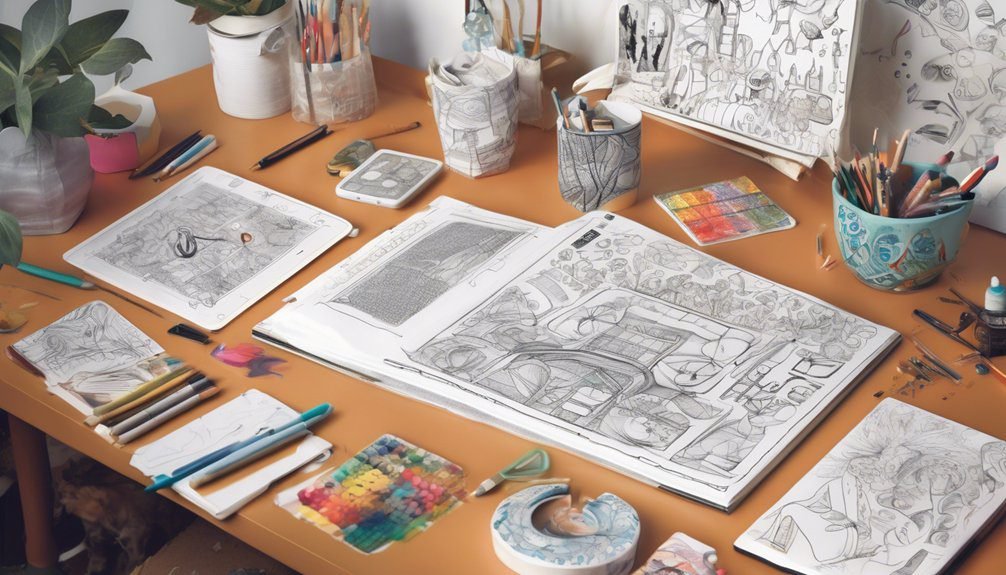
While you might be eager to jump into coloring, the formatting and layout of your book play a crucial role in enhancing the overall experience.
Start by deciding on your page dimensions; larger sizes invite detailed artistry, while smaller ones are portable and convenient. Use grid systems to organize your images, ensuring balance and harmony across pages.
Select typography choices that complement your style—playful fonts can enhance whimsy, while elegant scripts evoke sophistication. Pay attention to image resolution; crisp lines make coloring more enjoyable.
Choose color palettes that inspire creativity, and set appropriate margin settings to prevent any designs from being cut off.
With these elements in place, you’ll create a visually appealing and user-friendly coloring book.
Printing and Publishing Options
With your formatting and layout in place, it’s time to consider how to bring your coloring book to life through printing and publishing options. You can explore vibrant avenues that resonate with your artistic vision. Here’s what you can do:
- Self-publishing platforms: Choose platforms like Amazon Kindle Direct Publishing to reach a wider audience effortlessly.
- Print on demand services: Use services like IngramSpark or Blurb, ensuring you print only when needed, saving costs and storage space.
- Local printing shops: Collaborate with nearby printers for a personal touch and to support your community.
- E-book versions: Consider digital formats to cater to tech-savvy colorists, broadening your reach.
These choices empower you to see your creation flourish, sharing joy and creativity with others!
Frequently Asked Questions
How Do I Market My Coloring Book Effectively?
You’ll market your coloring book effectively by leveraging social media platforms and engaging with influencers. Create vibrant visuals and share sneak peeks. Collaborate with artists to reach wider audiences and spark enthusiasm around your book.
What Are the Best Platforms for Selling My Coloring Book?
Imagine selling your vibrant coloring book on Etsy, where creative souls flock. Pair it with print-on-demand services for effortless fulfillment. Don’t forget to showcase your art on social media platforms and online marketplaces to maximize visibility!
Can I Use Copyrighted Images in My Coloring Book?
You can’t use copyrighted images without permission. Copyright laws protect creators, but fair use might apply in some cases. Always seek original art or licenses to avoid legal troubles while showcasing your creativity in your coloring book.
How Do I Price My Coloring Book Competitively?
To price your coloring book like a seasoned chef crafts a dish, blend cost analysis with competitor research. Taste the market’s flavors, then season your price just right to entice customers without losing your profit.
What Are Common Mistakes to Avoid When Creating a Coloring Book?
Avoid clutter and ensure design simplicity; it keeps your pages inviting. Prioritize image clarity, too—detailed designs can overwhelm. Remember, you want to inspire creativity, not frustration, in those who’ll color your book.
Conclusion
As you wrap up your coloring book adventure, remember that creating art is like riding a unicorn through a rainbow—full of magic and possibility! Embrace your unique style, let your imagination run wild, and don’t shy away from experimenting with colors. With your theme, sketches, and designs in place, you’re ready to share your masterpiece with the world. So grab that digital pen, and let your creativity flow like a river of vibrant hues!