
When you explore unique coloring techniques, you open up a world of creative possibilities. Using watercolor pencils allows you to blend colors effortlessly, while alcohol markers offer vibrant hues and layering options. Gel pens can introduce eye-catching glitter and metallic effects to your work. As you experiment with these mediums, you’ll find exciting ways to add depth and texture. Ready to discover how to elevate your art even further? Let’s dive into these techniques together.
Key Takeaways
- Experiment with watercolor pencils by layering colors and using a wet brush to create soft gradients and blends.
- Utilize alcohol markers through a flicking technique to achieve smooth color transitions and vibrant shades.
- Enhance your artwork with gel pens by incorporating glitter and metallic effects for eye-catching highlights and dynamic gradients.
- Apply colored pencils with thin, even strokes to build up layers and smooth out harsh lines for a polished look.
- Combine various media, such as ink, watercolor, and fabric scraps, to create unique textures and visual interest in mixed media projects.
Watercolor Pencils: Blending Colors With Ease
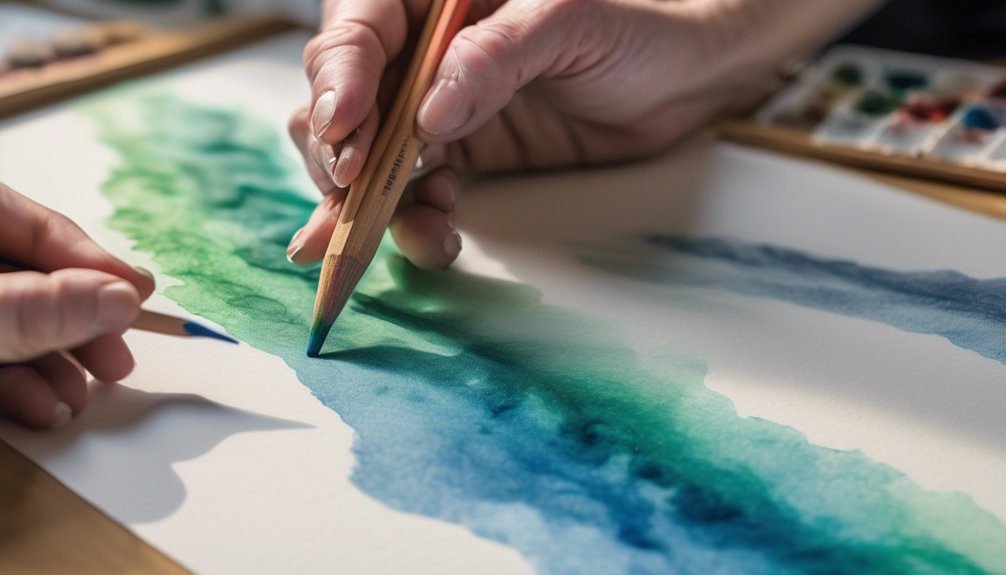
Watercolor pencils are a fantastic tool for artists of all skill levels, allowing you to blend colors with ease and create stunning effects.
To master watercolor techniques, start by lightly sketching your design. Then, apply your chosen colors in layers, using a light hand for initial pencil blending.
Once you’re satisfied, wet a brush and gently apply water over the colored areas. Watch as the colors blend seamlessly, creating soft gradients.

You can also experiment by layering different colors before wetting them for unique effects.
Remember, practice is key to finding your style. Don’t hesitate to explore various techniques and discover what works best for you.
Dive into the world of watercolor pencils and unleash your creativity!
Alcohol Markers: Vibrant Shades and Layering Techniques
Alcohol markers are a popular choice among artists seeking vibrant shades and smooth application. To make the most of these tools, start by mastering color blending. Layering different shades can create depth and dimension.
Begin with light colors as your base, then gradually add darker shades. Use the flicking technique to blend the colors seamlessly, allowing the alcohol to evaporate and the pigments to mix.
Experiment with different marker techniques, like stippling or cross-hatching, to enhance texture in your artwork.
Don’t be afraid to use the colorless blender to soften edges or lighten areas as needed. With practice, you’ll develop your unique style, making your pieces truly stand out.
Enjoy the journey of discovering what alcohol markers can achieve!
Gel Pens: Adding Glitter and Metallic Effects
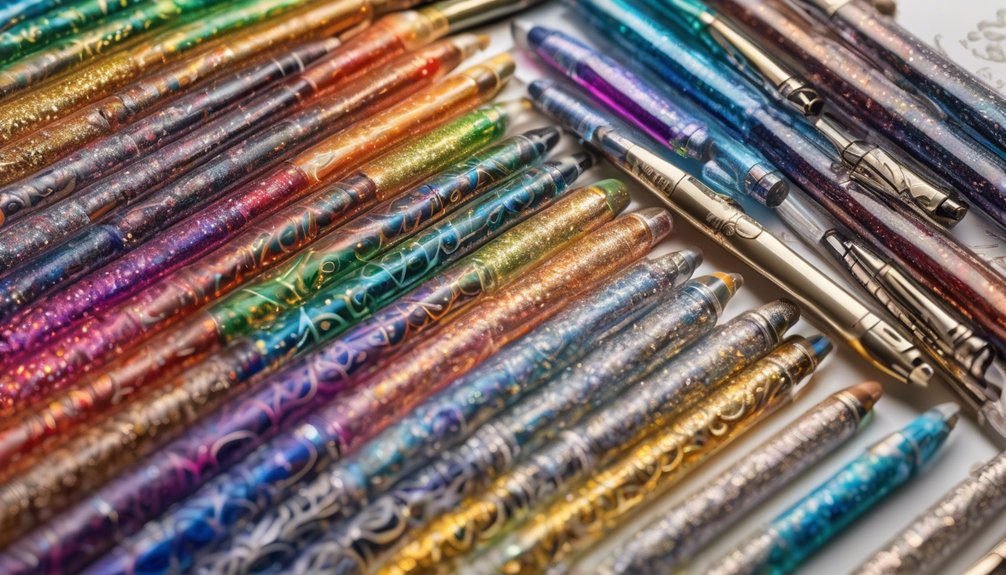
Gel pens are a fantastic way to introduce glitter and metallic effects into your artwork, elevating your designs with eye-catching details.
With various gel pen techniques, you can achieve stunning results in your coloring projects. Here’s how to effectively incorporate glitter application and metallic hues:
- Layering: Apply a base color first, then use glitter gel pens for highlights.
- Blending: Mix metallic and glitter pens to create a dynamic color gradient.
- Detailing: Use fine-tipped gel pens for intricate patterns and accents.
Experiment with these ideas, and watch your artwork come to life!
Whether you’re doodling, coloring, or creating mixed media, gel pens can add that special sparkle and shine, making your designs truly stand out.
Colored Pencils: Exploring Shading and Texture
Colored pencils are a versatile tool that can transform your coloring projects through shading and texture techniques.
To achieve depth, try layering techniques by applying multiple colors in thin, even strokes. Start with lighter shades and gradually build up to darker tones, allowing each layer to dry slightly between applications. This method not only enhances the richness of your colors but also creates smooth transitions.
Achieve depth in your artwork by layering colors gradually for rich, smooth transitions.
For a seamless look, use color blending techniques; you can achieve this by overlapping colors and using a blending pencil or even your finger to smooth out harsh lines.
Experimenting with these approaches will add dimension and life to your artwork, making it truly stand out. Happy coloring!
Mixed Media: Combining Different Art Supplies for Unique Results
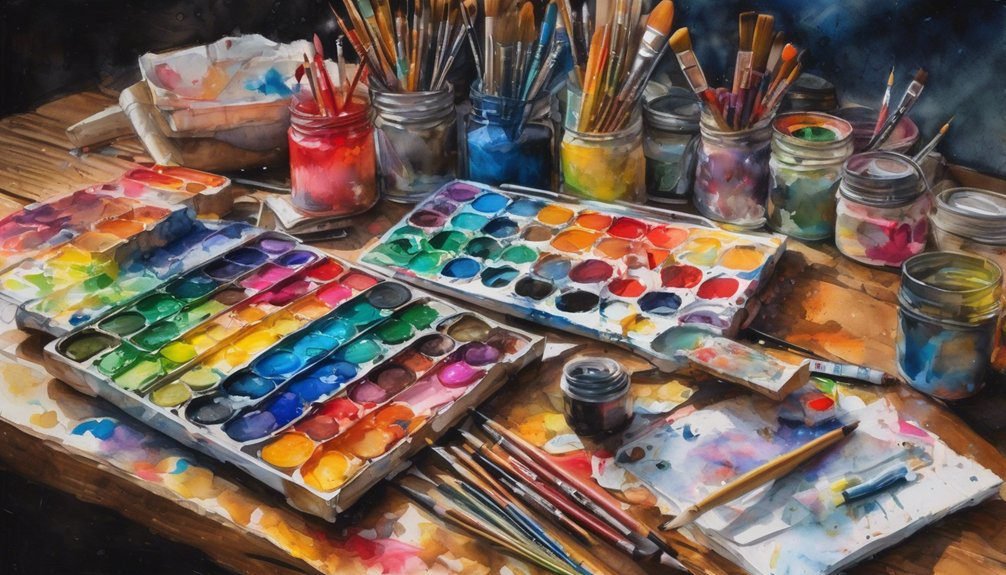
While exploring different art supplies, mixing media can open up a world of creative possibilities that elevate your projects.
By combining various materials, you can create stunning collage art that captures attention and adds depth. Here are some ideas to get you started:
- Watercolor and Ink: Use ink to outline your designs, then apply watercolor for a vibrant touch.
- Acrylics and Pastels: Layer acrylic paint as a base, then add soft pastel details for rich texture layering.
- Fabric and Paper: Incorporate fabric scraps into your collage art to create unique textures and visual interest.
Experimenting with these combinations not only broadens your artistic skills but also invites endless creativity.
Don’t be afraid to mix and match; your next masterpiece awaits!
Frequently Asked Questions
What Paper Is Best for Watercolor Pencil Techniques?
For watercolor pencil techniques, use high-quality watercolor paper. Its texture allows for smooth pencil blending, enhancing your artwork. Look for 200gsm or heavier paper to prevent warping and achieve vibrant, rich colors in your work.
How Can I Fix Mistakes Made With Alcohol Markers?
You can fix mistakes with alcohol markers by using blending techniques to soften harsh lines. For color correcting, apply a lighter shade or use a colorless blender to seamlessly blend and adjust your colors.
Are Gel Pens Suitable for All Coloring Surfaces?
Sure, gel pens aren’t magical wands for every surface! While some gel pen types work wonders on paper, others might cringe on glossy or textured coloring surfaces. Always test before you dive in!
What Is the Best Way to Sharpen Colored Pencils?
To sharpen colored pencils effectively, use a quality sharpener designed for pencil types like soft or hard leads. Manual sharpeners work great, but for precision, consider a mechanical sharpener. Avoid excessive pressure to prevent breakage.
Can Mixed Media Be Used in Digital Coloring Projects?
Absolutely! You can use mixed media in digital coloring projects by incorporating digital textures and layering techniques. Experiment with brushes and overlays to create depth, and watch your artwork come alive with vibrant details.
Conclusion
As you dive into these unique coloring techniques, remember that 70% of artists say experimenting with different mediums boosts their creativity. So, grab your watercolor pencils, alcohol markers, and gel pens, and start blending, layering, and adding textures. Don’t shy away from mixing media—it’s where the magic happens! Embrace the process, let your imagination run wild, and watch as your artwork transforms into something truly extraordinary. Your creative journey is just beginning!