
You can turn coloring into a simple family activity that works for toddlers, teens, and adults alike. When you choose pages and supplies that match each age, everyone can join in without feeling left out. A few easy adjustments can make the experience more creative, calm, and connected, but the best part often comes from how you set it up together.
Key Takeaways
- Use simple shapes for toddlers and detailed patterns for older kids and adults.
- Try chunky crayons, dot stickers, or watercolor crayons for hands-on variety.
- Add family coloring games like timed challenges or themed pages for older children.
- Choose calming nature scenes and short sessions for relaxing adult coloring.
- Host a family coloring night with snacks, good lighting, and space for sharing.
Why Family Coloring Works for All Ages
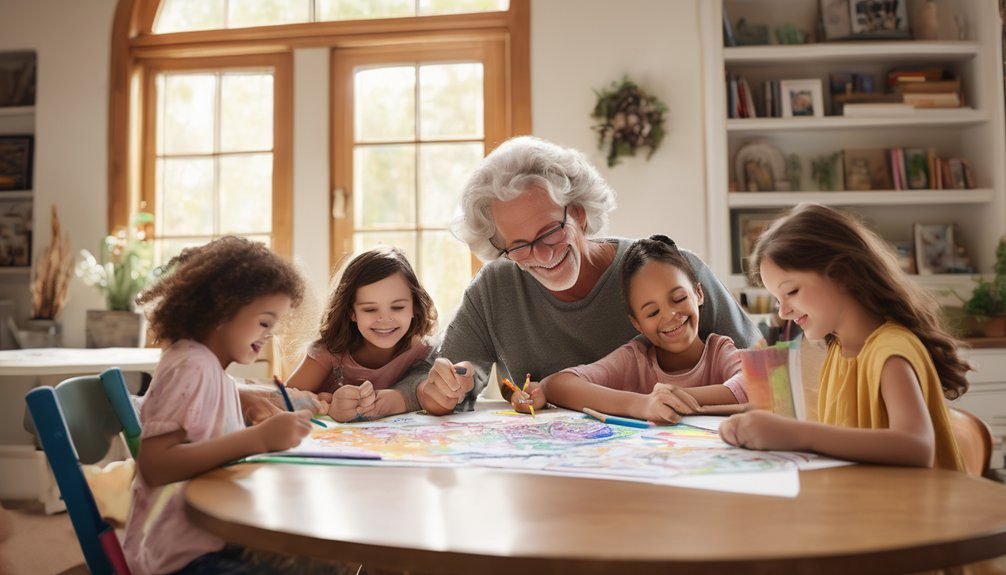
Family coloring works for all ages because it meets people where they are, from simple shapes for young children to detailed patterns that challenge older kids and adults. You can enjoy coloring benefits without needing special skills, and that makes it easy to relax together.
As you color side by side, you build creative bonding through quiet conversation, shared choices, and gentle encouragement. You also create a low-pressure space where everyone can participate at their own pace. That balance helps you connect, teach color awareness, and support focus.

Because the activity is flexible, you can adapt it to your family’s mood, time, and energy. In that way, coloring becomes more than a craft; it becomes a warm, shared ritual.
Coloring Activities for Toddlers and Preschoolers
For toddlers and preschoolers, keep coloring simple, short, and hands-on so little ones can stay engaged without frustration. You can offer chunky crayons, big pictures, and thick paper to support fine motor skills and toddler creativity. These coloring benefits grow when you sit nearby, name colors, and celebrate every scribble.
| Activity | Why it helps |
|---|---|
| Big shapes | Builds color recognition |
| Dot stickers | Strengthens finger control |
| Watercolor crayons | Adds sensory fun |
| Trace-and-color pages | Guides easy success |
Let your child choose familiar objects, like apples or animals, so the page feels safe and inviting. Keep sessions brief, and stop while they still feel proud. Your calm presence helps them relax, learn, and enjoy each bright moment together.
Family Coloring Games for Older Kids
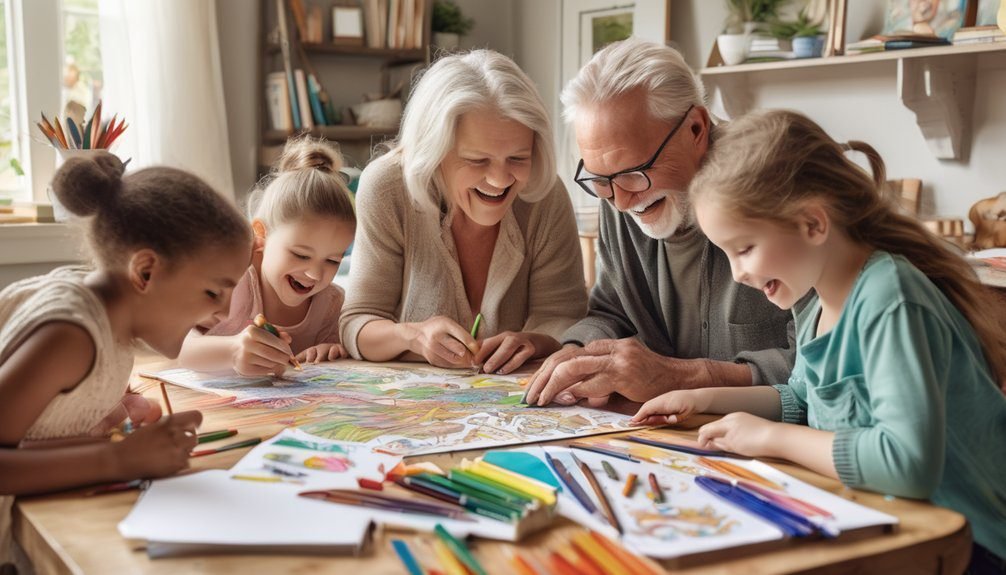
As kids get older, you can turn coloring into a shared game that keeps them interested and challenged. Give each child the same page and set a timer, then compare how they use color, detail, and creativity.
You can also create coloring challenges like using only cool tones, hiding symbols in the design, or finishing a section before a family member does. Try themed pages for holidays, animals, or favorite stories, and invite your child to add small clues or patterns that others must spot.
This keeps the activity playful while building focus, patience, and visual problem-solving. When you praise effort and imagination, you help older kids feel proud, connected, and eager to join in again.
Relaxing Coloring Ideas for Adults
When you want to unwind, choose coloring pages with soft patterns, nature scenes, or simple mandalas that let your mind settle without too much effort. You’ll notice coloring benefits quickly: your breathing slows, your thoughts quiet, and stress relief starts to feel natural. Use colored pencils or gel pens, and keep your pressure light so your hand stays relaxed.
- Pick a quiet spot with gentle light.
- Start with cool colors for calm.
- Color for 10 to 20 minutes.
- Let mistakes stay; they add character.
As you fill each space, stay present with each stroke. You don’t need perfection—just a small, soothing ritual that helps you reconnect with yourself and ease the day’s tension.
How to Host a Family Coloring Night
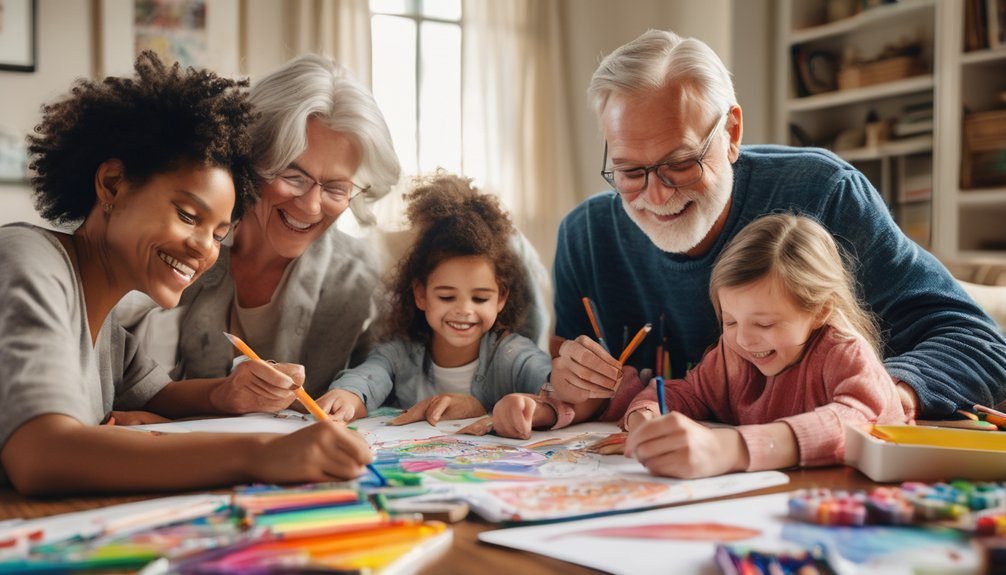
Set up a family coloring night by choosing a simple theme, gathering supplies, and making the space comfortable so everyone can relax and join in.
You can lay out coloring supplies like crayons, colored pencils, markers, and scrap paper for test shades. Add themed printables that match your topic, such as animals, seasons, or holidays, so each person finds a page they love.
Keep the lighting bright, the table clear, and snacks easy to reach. Invite everyone to pick a page, set a timer for focused coloring, and pause for short chats or color-sharing tips.
You’ll create a calm ritual that helps your family connect, learn color choices, and enjoy unhurried time together. Encourage gentle praise and playful creativity throughout.
Ways to Display and Share Finished Pages
Once the coloring pages are finished, you can turn them into a small family gallery that celebrates everyone’s work. Try taping pages along a hallway, clipping them to string, or framing favorites for rotating coloring showcases. You can also make seasonal creative displays on the fridge, mantel, or a bedroom door.
- Use washi tape so you can switch pages easily.
- Mix sizes and styles to keep the display lively.
- Add names and dates to honor each artist.
- Photograph pages before storing them in a family album.
When you share finished pages with relatives, you give children pride and invite warm conversation. Send photos by text, email, or a shared folder, and let your family admire the effort together.
Frequently Asked Questions
What Coloring Materials Are Safest for Toddlers?
You’ll want non toxic crayons and washable markers for toddlers; they’re safer, easier to clean, and support fine motor skills. Always check age labels, avoid small parts, and supervise closely during coloring time.
How Can We Prevent Coloring Supplies From Staining Furniture?
Keep stains at bay by covering tables and using washable mats. You’ll want coloring supply storage in lidded bins, plus furniture protection tips like trays, aprons, and quick wipe-ups, so spills don’t become headaches.
What Themes Work Best for Multi-Age Family Coloring Sessions?
You’ll do best with animal adventures, seasonal scenes, favorite characters, and abstract patterns; these themes let you simplify or add detail, so everyone can color together, learn, and share warm, creative moments.
How Do I Organize Coloring Pages by Difficulty?
Sort your coloring pages into coloring page categories by simple, medium, and detailed; studies show kids engage 20% longer with age appropriate designs. You’ll help everyone choose confidently, reduce frustration, and keep sessions calm, creative, and connected.
Can Coloring Activities Help Improve Hand-Eye Coordination?
Yes, coloring activities can improve your hand-eye coordination by helping you guide crayons within lines, which strengthens motor skills. You’ll notice coloring benefits as you practice control, focus, and steady movements together.
Conclusion
You can turn one table into two worlds: tiny hands filling bold shapes, and older hands tracing intricate lines. That contrast makes family coloring work so well, because everyone joins the same activity at their own level. Keep crayons, pencils, and markers ready, set a simple theme, and let the pages grow with your family. When you finish, display the art together. You’ll see more than color—you’ll see connection, confidence, and shared memories.