
When you pick up a coloring book and choose a blue sun or a purple tree, you’re doing more than filling space—you’re testing ideas, much like a child in a lab of safe experiments. Research shows that small creative choices strengthen flexible thinking, and coloring gives you that practice in a calm way. You’ll soon see how those quiet decisions can shape bigger imagination in ways you might not expect.
Key Takeaways
- Coloring books provide a safe space to experiment with color, patterns, and personal style.
- Choosing colors and techniques builds flexible thinking and creative decision-making.
- Open-ended pages help people turn simple images into original visual stories.
- Color choices let emotions, moods, and symbolism shape imaginative expression.
- Coloring supports creativity at any age by encouraging play, confidence, and self-expression.
How Coloring Books Spark Creative Thinking

Coloring books can spark creative thinking by giving you a structured space to experiment with color, pattern, and personal expression. When you choose hues, you practice decision-making and flexible thinking, skills research links to creative development.
Each page invites you to test coloring techniques, notice contrast, and adjust as you go, which helps you build confidence without pressure. You’re not aiming for perfection; you’re learning to trust your instincts and refine them.
That quiet repetition can deepen focus, support problem-solving, and make artistic expression feel safe and personal. As you explore different combinations, you train your mind to see possibilities instead of limits, and that gentle shift can strengthen creativity in everyday life, too.
How Imagination Shows Up on the Page
Imagination often appears on the page in the small choices you make as you color. You turn lines into visual expression, and researchers note that this kind of focused creation supports flexible thinking.

As you move through imaginative landscapes, you may add narrative elements that suggest a story, or shape character creation with tiny details that feel uniquely yours. Your personal themes emerge when you repeat forms, blend abstract designs, or echo playful patterns across the page.
This process invites emotional color, helping you notice what feels calm, lively, or tender. You’re not just filling space; you’re practicing how ideas grow, connect, and become visible.
In that quiet exchange, your imagination can feel close, safe, and wonderfully alive.
How Color Choices Build Original Ideas

Once you’ve shaped a scene with your own details, the colors you choose can push that idea further and make it truly yours. Research on color psychology shows that hue affects mood influence, so your palette can deepen artistic expression.
Through choice exploration, you test color symbolism: warm tones may feel lively, while cool tones can soften a page. That’s where personal interpretation grows. You begin to trust your instincts, and your work gains visual storytelling power without copying anyone else.
Try design experimentation with small changes:
- a golden sky for energy
- blue shadows for calm
- green accents for balance
Each choice builds original ideas by teaching you how color shifts feeling. Over time, you’ll create with more confidence and tenderness.
Why Coloring Books Encourage Storytelling
As you color, you naturally start deciding what’s happening in the scene, and that decision-making strengthens storytelling skills. You read story prompts in the artwork, then shape narrative development by choosing who the characters are, what they want, and where they belong.
Each page invites character creation and plot exploration as you connect details into a simple arc. Imaginative settings give you space to test visual storytelling, while theme integration helps you notice how colors can support mood and meaning.
This process also encourages emotional expression, because you often color scenes in ways that reflect feeling. Research on child development shows that guided open-ended play like this can deepen language, sequencing, and story understanding.
In that way, coloring becomes a warm, intimate practice of making stories feel alive and personal.
How Coloring Books Help Kids Think Freely
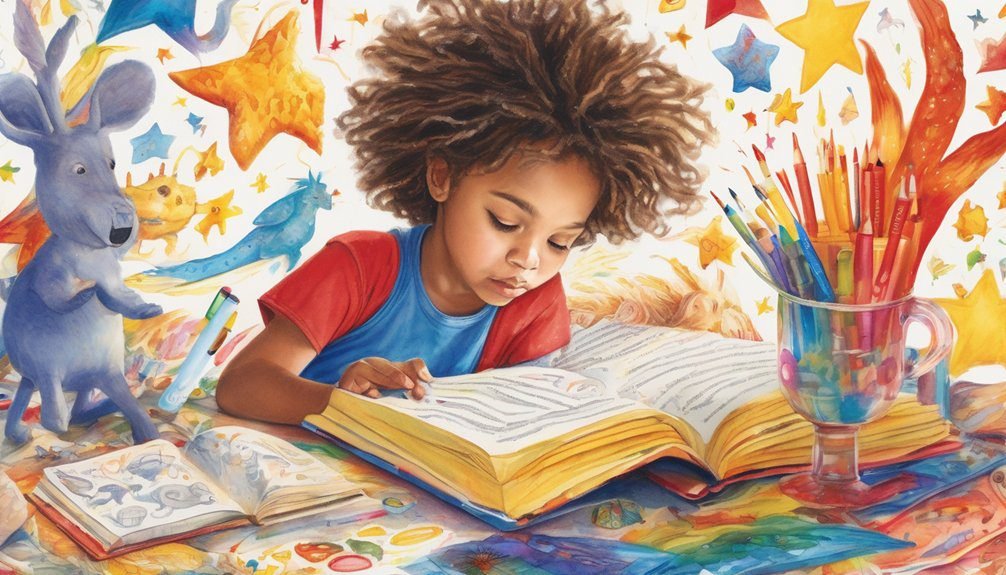
When kids color without a fixed “right answer,” they practice flexible thinking by making small choices about color, space, and meaning on their own. You support free expression as they test ideas, revise them, and trust their own judgment.
That kind of artistic exploration strengthens cognitive development because it asks them to compare options, notice patterns, and stay open minded. Coloring also offers emotional release, letting feelings move safely onto the page.
Artistic exploration strengthens thinking, inviting kids to compare choices, notice patterns, and safely release feelings onto the page.
- Bright skies over purple grass invite playful discovery
- A red cat or blue tree shows choice
- Open spaces become rooms for imagination
When you encourage this process, you help kids think freely and feel capable. They learn that creativity grows through simple decisions, gentle risk, and curiosity.
How Adults Use Coloring for Creative Relief
Even as an adult, coloring can give you a simple, low-pressure way to reset your mind and spark fresh ideas. You can use it as a mindful escape that softens stress relief and invites artistic expression without judgment.
Research shows repetitive color choices can support attention, calm the nervous system, and offer cognitive benefits by easing mental clutter. When you color after work or before bed, you create room for emotional release and steady personal growth.
You might also share pages with friends or family, turning the practice into gentle social interaction. Over time, a small creative routine can help you feel more centered, more playful, and more connected to your own imagination, even on demanding days.
Simple Ways to Make Coloring More Imaginative
To make coloring feel more imaginative, start by changing the rules a little: try unusual color pairings, layer shades instead of filling spaces evenly, or invent a theme before you begin, such as “ocean at night” or “garden in winter.”
These small shifts can stimulate divergent thinking and help you engage more deeply with the page. You can also choose themed pages, then add mixed media for texture and surprise.
- Turn nature scenes into dreamlike settings with color mixing.
- Follow interactive prompts to give imaginative characters a voice.
- Use collaborative projects to build personal narratives together.
When you treat each page as an experiment, you give yourself room to explore, notice, and grow.
That gentle freedom can strengthen flexible thinking while keeping the experience warm, playful, and close to your own imagination.
Why Coloring Books Support Everyday Creativity
Those playful choices do more than make a page feel fresh—they build habits that support everyday creativity. When you color regularly, you practice noticing patterns, making decisions, and trusting your instincts.
Research on skill-building shows that small, repeated acts of creative expression can strengthen flexible thinking and reduce mental strain. You’re not just filling space; you’re learning to experiment without fear of mistakes. That’s one of the key coloring benefits: it invites you to explore color, shape, and mood in a low-pressure way.
Over time, this gentle practice can spill into journaling, decorating, problem-solving, and other daily choices. Each page gives you a private moment to create, reflect, and grow with confidence.
Frequently Asked Questions
How Do Coloring Books Improve Fine Motor Skills?
You improve fine motor skills by gripping crayons, controlling pressure, and staying inside lines. These coloring techniques strengthen hand muscles, coordination, and precision, while creative expression keeps practice engaging, calm, and development-focused.
What Materials Work Best for Coloring Books?
You’ll find the best coloring books bloom with quality coloring tools and thick paper types—it’s like your creativity can soar a thousand miles. You can choose colored pencils, markers, or crayons for smoother, kinder results.
Can Coloring Books Be Used in Classrooms?
Yes, you can use coloring books in classrooms to boost classroom engagement and support color selection. You’ll nurture fine motor skills, focus, and self-expression, while giving students a calming, research-backed activity that’s developmentally appropriate.
Are Digital Coloring Books as Effective as Paper Ones?
Digital coloring books can be as effective as paper ones, but you’ll often find digital vs. traditional user experience differs; paper may boost fine-motor development, while digital offers soothing flexibility, instant feedback, and gentle engagement.
How Often Should Children Color for Benefits?
For example, if your 6-year-old colors 15 minutes daily, you’ll likely support steady creative expression. Aim for coloring frequency most days, or 3–5 times weekly, to nurture focus, motor skills, and imagination.
Conclusion
You can think of coloring books as more than a quiet pastime—they give you a simple, research-backed way to practice creativity and imagination. Even if you worry that coloring is “just for kids,” each color choice helps you make decisions, tell a story, and explore new ideas. As you fill the page, you’re building flexible thinking and confidence. Over time, those small creative moments can support richer imagination in everyday life.