
Just as artists have long used their canvases to express complex emotions, you can harness the power of coloring to enhance your mental health. This simple activity not only promotes relaxation but also offers an opportunity to explore your feelings in a tangible way. By picking up those colored pencils, you might find more than just a way to pass the time; you could unlock pathways to greater emotional well-being. What could this mean for you?
Key Takeaways
- Coloring fosters self-expression, allowing teens to explore and convey their emotions creatively.
- Engaging in coloring provides a calming effect, helping to reduce anxiety and stress levels.
- The repetitive motions involved in coloring promote relaxation and can create a meditative state.
- Coloring enhances focus and concentration, training the brain to block out distractions effectively.
- As an affordable and accessible activity, coloring serves as a convenient emotional outlet for teens anywhere.
The Therapeutic Benefits of Coloring
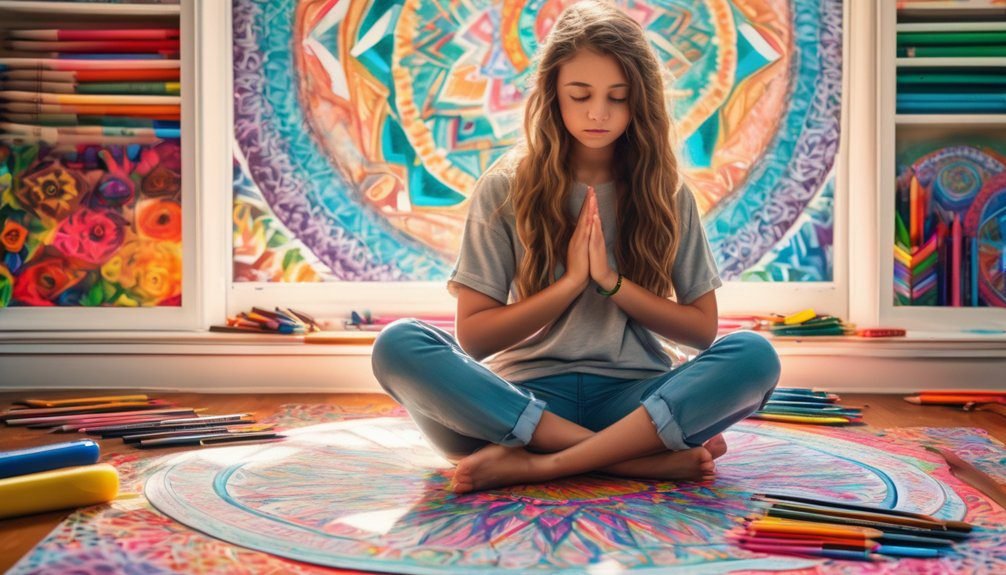
Coloring can be more than just a fun activity; it offers genuine therapeutic benefits that can significantly enhance your mental well-being. When you pick up those colored pencils or markers, you engage in a creative process that encourages self-expression. This act can help you tap into your emotions and explore thoughts that might be hard to articulate.
As you focus on colors and patterns, you shift your attention away from daily stressors, allowing your mind to relax. The repetitive motions of coloring can also create a calming effect, promoting mindfulness.
You’ll find that it’s not just about filling in shapes; it’s a way to foster relaxation, improve concentration, and boost your overall mood, making it a valuable tool for your mental health.

Reducing Anxiety and Stress Through Art
While many activities can help alleviate anxiety and stress, art stands out as a unique outlet for emotional release. When you engage in coloring, you immerse yourself in a creative process that lets your worries fade away.
As you focus on choosing colors and filling in patterns, your mind shifts away from stressors, providing a calming effect. The repetitive motions involved in coloring can also create a meditative state, helping you to relax and breathe more deeply.
Moreover, expressing yourself through art allows you to process emotions that might be hard to articulate. By dedicating time to this creative activity, you not only find joy but also build resilience, making it easier to cope with daily challenges.
Enhancing Focus and Concentration
Studies show that engaging in creative activities like coloring can significantly enhance your focus and concentration. When you immerse yourself in coloring, you direct your attention to the task at hand, which helps train your brain to concentrate better.
Engaging in coloring enhances focus and concentration, training your brain to block out distractions and improve attention span.
This focused state allows you to block out distractions, making it easier to complete homework or other tasks that require mental effort. The repetitive motion of coloring can also create a calming rhythm, further aiding your ability to hone in on what you’re doing.
As you practice this skill, you’ll find that your overall attention span improves, benefiting not just your creative pursuits but also your academic performance and daily activities.
Give it a try—you might be surprised by the results!
Fostering Creativity and Self-Expression
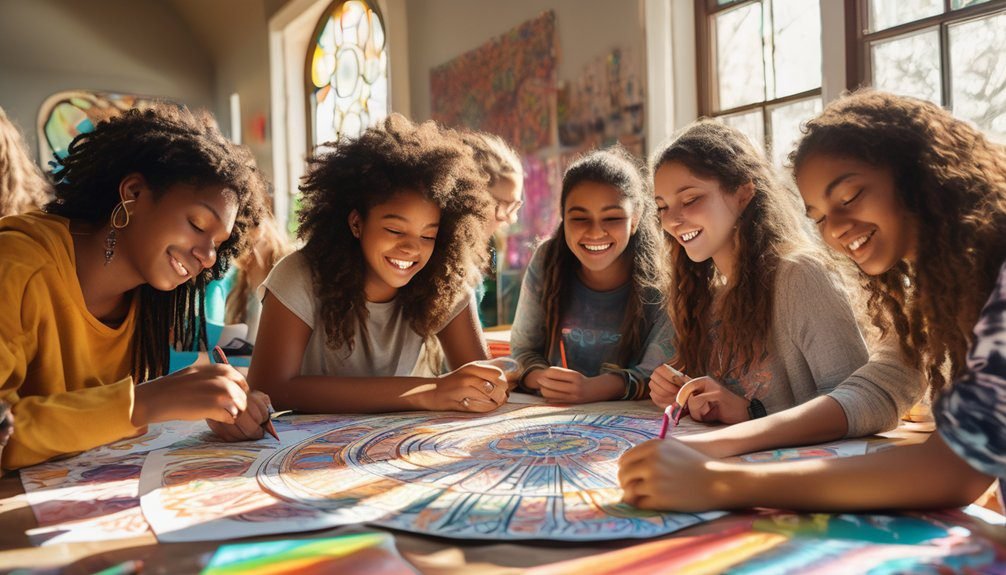
When you pick up a coloring book and let your imagination flow, you unlock a powerful avenue for creativity and self-expression. Each stroke of color allows you to convey your feelings, ideas, and personality in a unique way.
You can experiment with different palettes and techniques, creating a visual representation of what’s inside you. This freedom to choose colors and shapes helps you break away from the constraints of everyday life, giving you a sense of control and individuality.
As you color, you might find your thoughts wandering, leading to new inspirations and insights. This process not only boosts your creative skills but also encourages you to embrace and celebrate your uniqueness.
Building Mindfulness and Presence
As you immerse yourself in coloring, you naturally cultivate mindfulness and presence. Each stroke of your colored pencil or marker pulls your focus away from distractions, grounding you in the moment.
You’ll find that the simple act of choosing colors and filling in designs engages your senses and quiets your mind. This focused attention allows you to observe your thoughts and feelings without judgment, fostering a sense of calm.
As you concentrate on the patterns and colors, you create a mental space where anxiety can fade. In this way, coloring becomes a meditation, helping you develop awareness of the present.
Accessible and Affordable Emotional Outlet
Coloring isn’t just a tool for mindfulness; it’s also an accessible and affordable emotional outlet for teens. You don’t need expensive supplies or a fancy studio to get started—just a coloring book and some crayons or colored pencils.
This simple activity allows you to express feelings that might be hard to put into words. When you immerse yourself in coloring, you can channel stress and anxiety into creativity, offering a healthy release.
Plus, it’s something you can do anywhere, whether at home, in a park, or with friends. The best part? It’s a low-cost way to prioritize your mental health, making it easier to find time for self-care in your busy life.
Frequently Asked Questions
Can Coloring Help With Symptoms of Depression in Teens?
Yes, coloring can help with symptoms of depression in teens. It engages your mind, promotes relaxation, and provides a creative outlet, allowing you to express emotions and reduce stress in a calming way.
What Types of Coloring Materials Are Most Beneficial?
Imagine a painter’s palette, vibrant and full. You’ll find colored pencils, markers, and gel pens most beneficial. Each tool brings unique texture and richness, inviting your creativity to flow freely, transforming blank pages into expressive masterpieces.
How Often Should Teens Engage in Coloring Sessions?
You should aim for coloring sessions at least two to three times a week. Consistency helps you unwind, express creativity, and enjoy the calming benefits, making it a valuable addition to your routine.
Are There Specific Coloring Books Recommended for Mental Health Benefits?
Yes, look for coloring books featuring mandalas, nature scenes, or positive affirmations. These themes often promote relaxation and mindfulness, helping you engage creatively while benefiting your mental well-being. Choose what resonates with you for the best experience.
Can Group Coloring Activities Enhance Social Connections Among Teens?
Yes, group coloring activities can enhance social connections among teens. You’ll share creativity, spark conversations, and build friendships while enjoying a relaxing environment. It’s a fun way to bond and express yourselves together.
Conclusion
In a world swirling with chaos, imagine finding serenity in a simple box of colored pencils. As you fill in each intricate design, let the vibrant hues wash over your worries, transforming anxiety into art. You’re not just coloring; you’re crafting a sanctuary for your thoughts, nurturing your creativity, and embracing the present moment. So, grab those colors and let your imagination soar—you hold the power to brighten not just the page, but your mental well-being.