
Isn’t it fascinating how something as simple as coloring can sharpen a child’s focus? Engaging both hemispheres of the brain, coloring fosters creativity while enhancing structured thinking. This balance not only reduces distractions but also encourages children to maintain their attention. As you explore how this creative activity impacts cognitive development, you might uncover surprising benefits that extend far beyond the page.
Key Takeaways
- Coloring engages both hemispheres of the brain, balancing creativity and structured thinking to enhance focus.
- It reduces distractions by stimulating dual engagement, helping kids concentrate on the task at hand.
- The attention to detail required in coloring improves cognitive control, enabling children to stay on task longer.
- Repetitive coloring actions can enhance attention spans over time, promoting sustained focus.
- Completing coloring projects boosts feelings of accomplishment, reinforcing motivation and concentration in future tasks.
The Science Behind Coloring and Focus

While you might think of coloring as just a fun activity, research shows it actually plays a significant role in enhancing focus. Engaging in this creative process can help your brain enter a state of flow, allowing you to concentrate better.
When you color, you stimulate both the right and left hemispheres of your brain, balancing creativity with structured thinking. This dual engagement not only boosts attention but also reduces distractions.
Studies suggest that the repetitive motions and decision-making involved in choosing colors can lead to improved cognitive control, making it easier for kids to stay on task.
Enhancing Fine Motor Skills Through Coloring
Coloring not only sparks creativity but also plays a crucial role in enhancing fine motor skills in children. As your child colors, they’re developing essential hand-eye coordination and dexterity. This activity helps strengthen their grip and control over writing instruments, laying the groundwork for future skills like writing and typing.

Coloring fosters creativity while enhancing children’s fine motor skills, essential for future writing and typing abilities.
Here are some key benefits of coloring for fine motor skill enhancement:
- Grip Strength: Holding crayons or markers builds finger strength.
- Coordination: Moving the coloring tool across the page improves hand-eye coordination.
- Control: Staying within lines develops precision and control.
- Confidence: Completing a coloring project boosts a child’s self-esteem.
Encouraging coloring in your child’s routine can significantly benefit their fine motor development!
Encouraging Creativity and Self-Expression
As children dive into the world of coloring, they unleash their imagination and express their unique perspectives. This creative outlet allows them to choose colors, mix shades, and create their own artistic narratives.
By making decisions about their artwork, kids learn to think independently and feel a sense of ownership over their creations. Each stroke of the crayon is a step toward personal expression, encouraging them to explore different styles and techniques.
When you provide a variety of coloring materials, you spark further creativity, inviting them to experiment and innovate. This freedom to create fosters confidence, helping children understand that their ideas matter.
Ultimately, coloring cultivates a rich environment where imagination thrives, promoting a lifelong appreciation for self-expression and creativity.
Reducing Stress and Anxiety in Children

A calming activity like coloring can significantly reduce stress and anxiety in children. When kids immerse themselves in coloring, it offers them a chance to express their emotions and unwind.
Here’s how coloring helps:
- Focus on the present: Engaging with colors keeps their minds occupied, diverting attention from anxious thoughts.
- Encourages relaxation: The repetitive motion of coloring can have a soothing effect, similar to meditation.
- Boosts confidence: Completing a coloring project gives a sense of accomplishment, which can alleviate feelings of inadequacy.
- Fosters creativity: As they choose colors and designs, children explore their imagination, promoting a positive mindset.
Incorporating coloring into your child’s routine can be a simple yet effective way to help them manage stress.
Building Patience and Persistence
Engaging in coloring not only helps children manage stress but also teaches them valuable life skills like patience and persistence. When kids focus on completing a coloring page, they learn to take their time and see a task through to the end. This process encourages them to stay committed, even when they face challenges, like staying within the lines or choosing the right colors.
Here’s a quick look at how coloring fosters these traits:
| Skill | Definition | Benefit |
|---|---|---|
| Patience | Waiting for the right moment | Improves decision-making |
| Persistence | Continuing despite difficulties | Builds resilience and confidence |
| Focus | Concentrating on one task | Enhances overall attention span |
Developing Hand-Eye Coordination
While coloring, kids naturally develop their hand-eye coordination, a crucial skill for many everyday activities. This skill involves the ability to use visual input to guide hand movements, which is essential for tasks like writing, sports, and even typing.
Coloring helps children enhance their hand-eye coordination, vital for everyday tasks like writing and sports.
When you provide coloring activities for your child, you’re helping them strengthen this skill in a fun way.
Here are some benefits of improved hand-eye coordination through coloring:
- Enhanced fine motor skills: Gripping and maneuvering crayons or markers strengthens hand muscles.
- Improved focus: Concentrating on staying within the lines keeps kids engaged.
- Boosted confidence: Completing a coloring page gives a sense of accomplishment.
- Creative expression: Kids learn to control their tools while exploring their artistic side.
Creating a Calm and Focused Environment
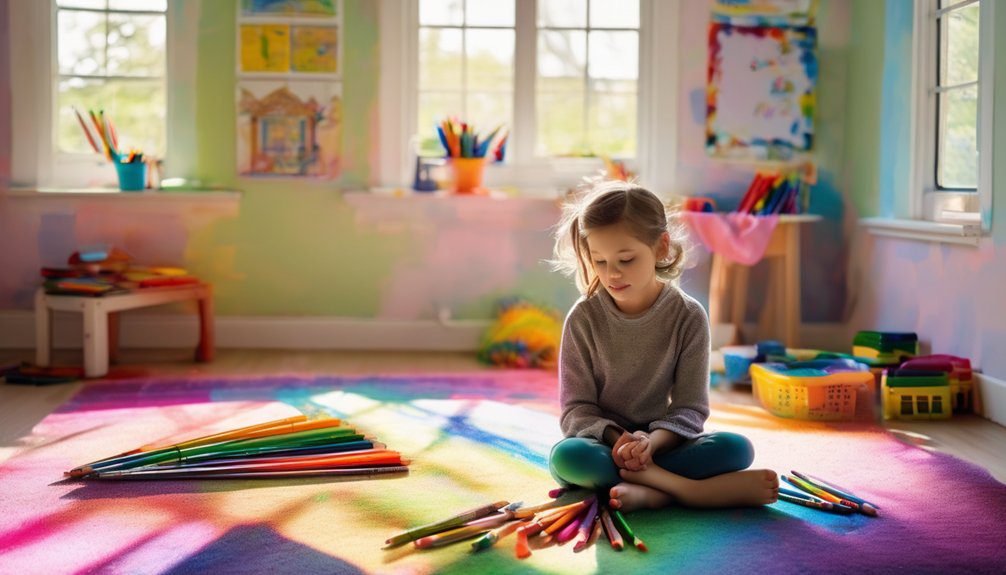
Coloring not only helps develop hand-eye coordination but also sets the stage for a calm and focused environment.
When you create a designated coloring space, you give your child a retreat that promotes concentration. Choose a quiet area, free from distractions, where they can immerse themselves in their artwork. Soft lighting and comfortable seating can enhance the atmosphere, making it inviting for creative expression.
Keep supplies organized and easily accessible, so they can focus on their coloring without interruptions. Encourage breaks to stretch and relax, reinforcing the idea that it’s okay to pause.
Using Coloring as a Mindfulness Tool
As you guide your child through the coloring process, you can introduce it as a mindfulness tool that fosters presence and awareness. Coloring encourages them to focus on the present moment, helping them release distractions and stress. By engaging in this creative activity, your child can develop essential mindfulness skills.
- Breathing Awareness: Encourage them to take deep breaths while coloring, enhancing relaxation.
- Color Choice: Ask them about their color selections, prompting them to express feelings and thoughts.
- Mindful Observation: Invite them to notice shapes and patterns in their coloring pages, sharpening their attention.
- Reflection Time: After coloring, discuss what they created, promoting self-reflection and awareness of their emotions.
Using coloring as a mindfulness tool can deepen your child’s focus and emotional understanding.
Incorporating Coloring Into Daily Routines
Incorporating coloring into your child’s daily routine can transform ordinary moments into opportunities for focus and creativity. Start by setting aside a specific time each day for coloring—perhaps after school or during quiet time. This helps create a sense of structure and anticipation.
You can also integrate coloring into activities like storytelling; encourage your child to color scenes from their favorite books. Consider using coloring as a reward after completing chores or homework.
Don’t forget to provide a variety of coloring materials, from crayons to markers, to keep things exciting. Lastly, join in the fun! Coloring together not only strengthens your bond but also models focus and creativity, making it a shared experience that both you and your child can enjoy.
Frequently Asked Questions
What Age Is Best to Introduce Coloring to Children?
You can introduce coloring to children as early as 18 months. At this age, they’ll enjoy scribbling and exploring colors, setting the stage for creativity and fine motor skills development as they grow.
Can Coloring Help With ADHD Symptoms?
Yes, coloring can help with ADHD symptoms. It encourages focus and creativity, providing a calming effect. You’ll notice improvements in attention and fine motor skills as your child engages in this enjoyable activity.
What Materials Are Best for Kids to Color With?
You might wonder what materials spark creativity in kids. Crayons, colored pencils, and washable markers are all fantastic choices. They’re vibrant, easy to handle, and safe, making coloring enjoyable and accessible for children of all ages.
How Often Should Children Color for Optimal Focus?
You should encourage your child to color daily, aiming for 15 to 30 minutes each session. This routine helps strengthen focus and creativity, making coloring an enjoyable yet beneficial part of their day.
Are Digital Coloring Apps Effective for Improving Focus?
Yes, digital coloring apps can boost focus. Imagine your child immersed in vibrant colors, each stroke sharpening their concentration. The interactive nature keeps them engaged, turning quiet moments into a canvas of creativity and mindfulness.
Conclusion
Incorporating coloring into your child’s daily routine is a simple yet powerful way to boost focus and cognitive skills. As the saying goes, “A picture is worth a thousand words,” and each stroke of color helps your child express themselves while honing their concentration. By fostering creativity and reducing stress, you’re not just providing an activity; you’re nurturing their development. So grab those crayons and watch how this engaging pastime transforms their ability to focus and thrive!