
Have you ever wondered why some coloring projects just seem to pop while others fall flat? The key often lies in the paper you choose. Different types of paper can dramatically affect the vibrancy and texture of your colors. Understanding the nuances of weight, thickness, and finish can elevate your artwork. So, how do you find the perfect paper that complements your style and medium? Let’s explore some essential factors to consider.
Key Takeaways
- Consider the paper type: smooth paper allows for easy color application, while textured paper offers depth and requires more blending effort.
- Choose the right weight: thicker paper enhances color saturation and withstands layering, while lighter paper may buckle or bleed.
- Assess the texture and finish: smooth finishes yield crisp lines, while textured surfaces allow for varied shading and unique patterns.
- Evaluate absorbency levels: low absorbent paper maintains vibrant colors, while high absorbency can create muted effects and soft gradients.
- Test different options: experiment with various papers to discover which type best suits your coloring style and desired effects.
Understanding Paper Types
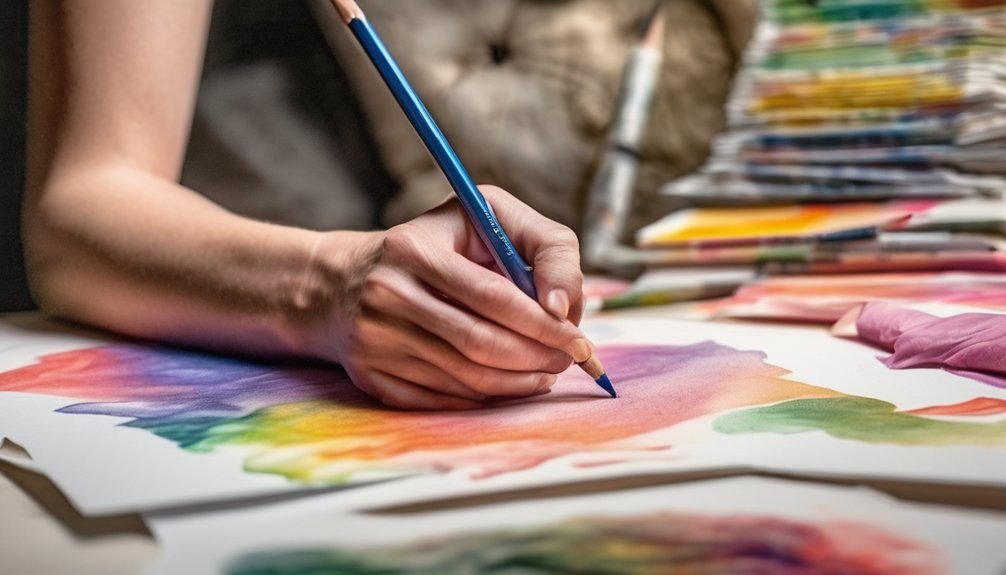
When it comes to coloring, choosing the right paper can make all the difference. You’ll find various types of paper, each with unique characteristics that affect your coloring experience.
For instance, smooth paper works well for markers and colored pencils, allowing colors to glide effortlessly. Textured paper, on the other hand, can add depth to your artwork but may require more effort to blend colors.

Watercolor paper is perfect for wet mediums, as it can absorb moisture without buckling. Make sure to consider the paper’s finish, weight, and intended medium before making your choice.
Experimenting with different types will help you discover what best suits your style and enhances your coloring journey.
Importance of Weight and Thickness
Weight and thickness play a crucial role in your coloring experience. Choosing the right paper can make a significant difference in how your colors appear and how your colors interact with the paper.
Selecting the appropriate paper weight and thickness is essential for a vibrant and enjoyable coloring experience.
Thicker paper can absorb more ink or pigment, leading to vibrant and rich results. On the other hand, lighter paper may buckle or bleed when wet mediums are applied.
Here are some aspects to consider:
- Vibrant Colors: Thicker paper enhances color saturation, giving depth to your artwork.
- Durability: Heavier paper withstands repeated layering without tearing or warping.
- Smooth Surface: The right weight provides a consistent surface, making your strokes smoother and more controlled.
Exploring Texture and Finish
Texture and finish are essential elements that can elevate your coloring experience. Choosing the right texture can influence how colors blend and how your tools interact with the paper. For instance, a smooth finish can give you crisp lines, while a textured surface can add depth to your artwork.
Here’s a quick comparison of common textures and finishes:
| Texture/Finish | Effect on Coloring |
|---|---|
| Smooth | Crisp lines, even color application |
| Textured | Depth, varied shading techniques |
| Linen | Unique patterns, tactile experience |
| Vellum | Soft finish, subtle blending |
Exploring different textures helps you discover what suits your style best, so don’t hesitate to experiment!
Absorbency and Its Impact on Color
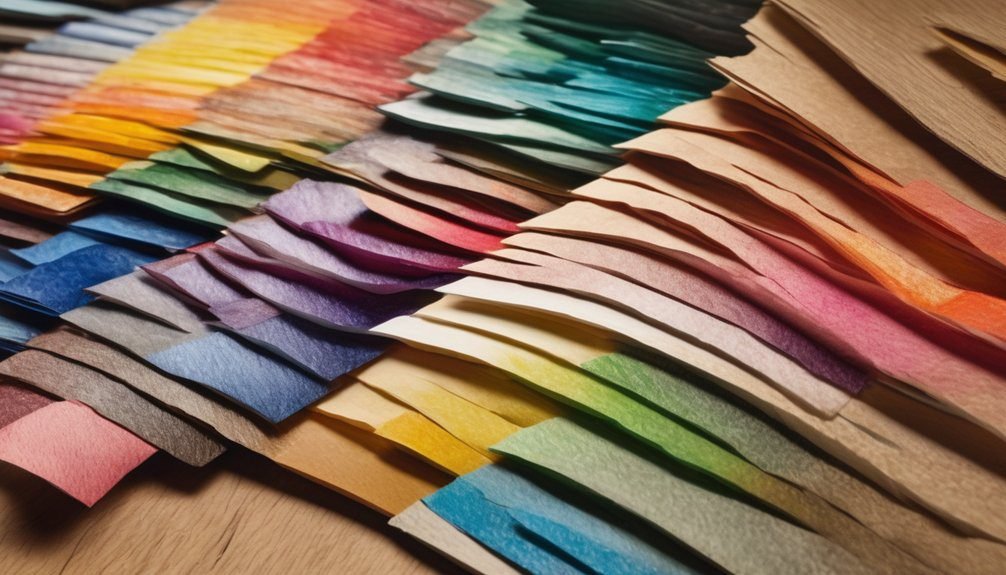
While choosing paper for coloring, absorbency plays a crucial role in how your colors appear and interact on the surface.
If you select paper with high absorbency, your colors may sink in, resulting in a muted effect. On the other hand, low absorbency allows colors to sit on top, maintaining vibrancy and intensity.
Understanding this balance can enhance your artwork significantly.
- Imagine the rich, bold strokes of a marker gliding effortlessly across a smooth, low-absorbent surface.
- Picture the subtle blending of colored pencils on a paper that drinks in the pigments, creating soft gradients.
- Visualize the unexpected textures that emerge when watercolor flows freely on absorbent paper, revealing layers of depth and nuance.
Testing and Experimenting With Options
Once you understand how absorbency affects your colors, it’s time to test and experiment with different paper options. Grab several types of paper and try them out with your favorite coloring tools. You’ll quickly notice how each paper reacts differently to your colors.
Here’s a simple table to help you track your findings:
| Paper Type | Color Performance |
|---|---|
| Marker Paper | Bright, vibrant |
| Watercolor Paper | Soft, blended |
| Cardstock | Bold, defined edges |
Take notes on how each paper feels and how the colors lay down. This hands-on approach will help you discover which paper best suits your style and enhances your artwork. Happy experimenting!
Frequently Asked Questions
Can I Use Regular Printer Paper for Coloring?
You can use regular printer paper for coloring, but it might not hold up well with heavy ink or water-based markers. It’s better to choose thicker, specially designed paper for a more enjoyable coloring experience.
What Paper Is Best for Watercolor Coloring?
For watercolor coloring, you’ll want to use watercolor paper. Its thick, absorbent surface prevents warping and allows colors to blend beautifully. Look for 200 lb or 300 lb weights for the best results.
Is Colored Pencil Paper Different From Marker Paper?
Did you know 70% of artists prefer specific papers for different mediums? Yes, colored pencil paper is different from marker paper; it’s typically smoother, allowing for better blending, while marker paper prevents bleed-through and ensures vibrant colors.
How Do I Store My Colored Paper?
You can store your colored paper flat in a drawer or a portfolio to prevent creasing. If you prefer, use a binder with sheet protectors to keep them organized and easily accessible for your projects.
Can I Combine Different Paper Types in One Project?
Yes, you can combine different paper types in one project! Just make sure they complement each other and suit your coloring mediums. Experimenting with textures and finishes can enhance your artwork’s overall appeal and creativity.
Conclusion
Choosing the right paper for coloring can be a game changer, transforming your artwork from ordinary to extraordinary. By considering weight, thickness, texture, and absorbency, you’ll unlock a world of vibrant possibilities. Don’t hesitate to experiment with different options; it’s like discovering a treasure trove of creativity! So, grab your favorite coloring tools and start exploring—your masterpiece awaits on the perfect paper! Trust us; you won’t believe the difference it makes!