
Imagine sitting by a tranquil stream, the gentle flow mirroring your thoughts as you pick up a colored pencil. Just like that water, your emotions can take shape through color. By blending journaling with coloring, you can unlock new dimensions of reflection and creativity. This combination not only enriches your writing but also cultivates a deeper understanding of your feelings. What techniques can you explore to enhance this vibrant practice?
Key Takeaways
- Incorporate coloring tools like pencils or markers to enhance creativity and make journaling more engaging.
- Use color choices to reflect emotions, promoting deeper self-connection and understanding.
- Set a calming atmosphere to encourage mindfulness, helping to focus on your thoughts while coloring.
- Combine journaling prompts with coloring to facilitate deeper reflection and explore your feelings visually.
- Embrace the process and imperfections in coloring to foster a more expressive and fulfilling journaling experience.
The Benefits of Coloring in Journaling
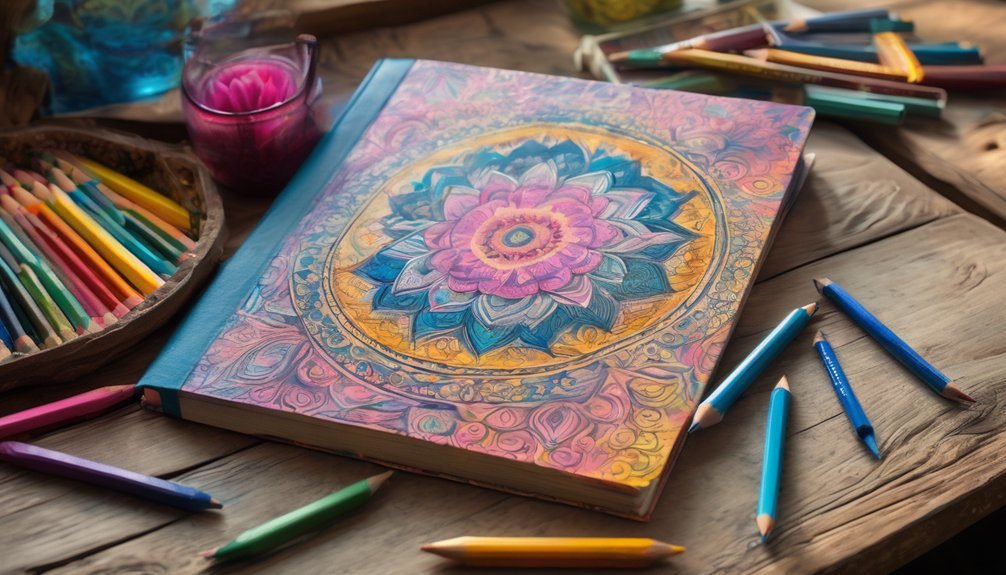
While you may think of journaling as just putting pen to paper, adding coloring to the mix can enhance your experience in surprising ways.
Coloring sparks creativity, allowing your thoughts to flow more freely as you express yourself visually. It helps you engage both mind and body, making journaling a more immersive experience.
The process of coloring can reduce stress, providing a calming effect that encourages deeper reflection. You’ll find that choosing colors can evoke different emotions, helping you connect with your feelings on a deeper level.
Plus, the act of coloring can improve focus, making it easier to concentrate on your thoughts.

Choosing the Right Coloring Tools
Integrating coloring into your journaling practice opens up a world of possibilities, but the tools you choose can greatly influence your experience.
Selecting the right tools ensures you feel inspired and engaged during your creative process. Here are three essential items to consider:
- Coloring Pencils: Choose high-quality colored pencils for vibrant colors and smooth blending. They allow for precision and control, perfect for intricate designs.
- Markers: If you prefer bold and bright hues, markers are an excellent choice. Look for ones that are non-toxic and quick-drying to avoid smudging.
- Watercolors: For a more dynamic look, consider watercolors. They can create soft washes and gradients, adding depth to your journaling pages.
With the right tools, you’ll enhance your coloring experience significantly!
Techniques for Mindful Coloring
As you embark on your mindful coloring journey, remember that the process can be as enriching as the final product.
Start by setting the right atmosphere: find a quiet space, dim the lights, and play soft music if it helps you relax. Focus on your breath, taking deep, calming inhalations before you begin.
Instead of rushing, allow yourself to savor each stroke of color; feel the texture of the paper and the glide of your tools. Use colors intuitively—let your emotions guide your choices.
Try incorporating patterns or mandalas to enhance your focus. If your mind wanders, gently redirect it back to the present moment.
Embrace imperfection; it’s about expression, not perfection. Enjoy every moment of this creative practice!
Color Psychology and Its Impact on Emotions
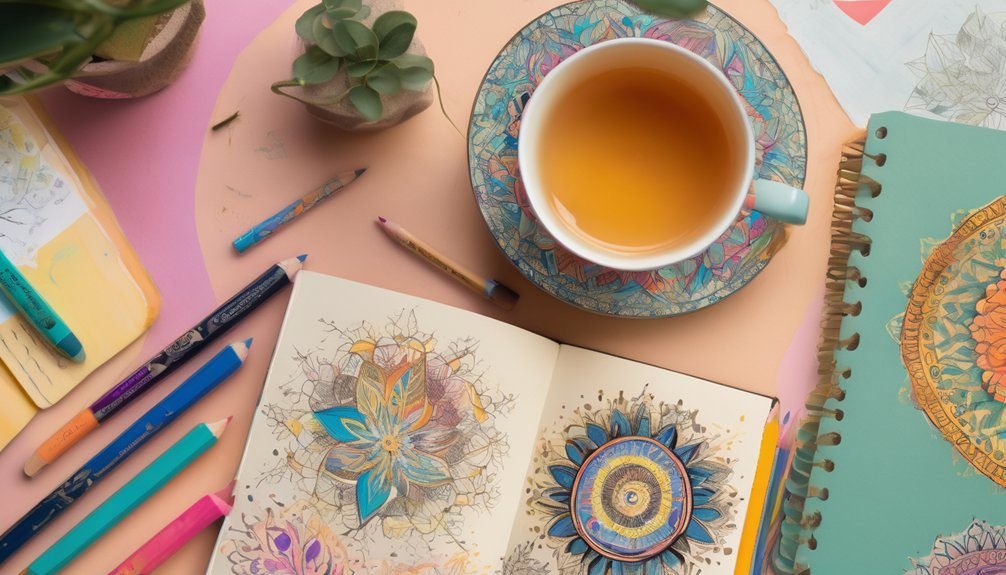
Color psychology reveals how different hues can profoundly influence your emotions and mindset. By understanding how colors affect you, you can enhance your journaling experience.
Here are three key colors and their emotional impacts:
- Blue: Often associated with calmness and tranquility, blue can help reduce stress and promote clear thinking.
- Yellow: This cheerful color boosts happiness and creativity, making it perfect for sparking new ideas in your journal.
- Green: Symbolizing growth and balance, green can foster a sense of renewal and encourage reflection on personal development.
Incorporating these colors into your journaling practice can elevate your emotional well-being, helping you connect more deeply with your thoughts and feelings.
Experiment with shades to find what resonates with you.
Incorporating Doodles and Illustrations
Adding doodles and illustrations to your journaling can further enrich your creative expression. They allow you to visually represent your thoughts and feelings, making your entries more personal and engaging.
Don’t worry about artistic skills; even simple sketches convey your emotions effectively. Use doodles to highlight key moments or themes in your writing, creating a visual connection to your words. Incorporate elements like stars, hearts, or nature scenes that resonate with your mood.
Furthermore, illustrations can serve as prompts, inspiring deeper reflection on your experiences. Experiment with different styles; maybe you’ll find that patterns or whimsical characters enhance your journaling experience.
Let your imagination flow, and remember, there are no rules—just have fun!
Creating Themed Color Pages
While you explore your journaling journey, creating themed color pages can add a delightful structure to your entries.
By organizing your thoughts around specific themes, you’ll enhance your creative process and deepen your reflections. Here are three ideas to help you get started:
- Seasonal Themes: Use colors that represent the current season—warm tones for fall, cool pastels for spring—to evoke the mood of the time.
- Emotional Colors: Choose hues that reflect your feelings. For instance, vibrant reds for excitement or calming blues for tranquility can guide your reflections.
- Goal-Oriented Pages: Set themes based on personal goals. Use colors that inspire motivation, like bright yellows for positivity or greens for growth.
Embrace these themes to enrich your journaling experience!
Using Coloring for Stress Relief
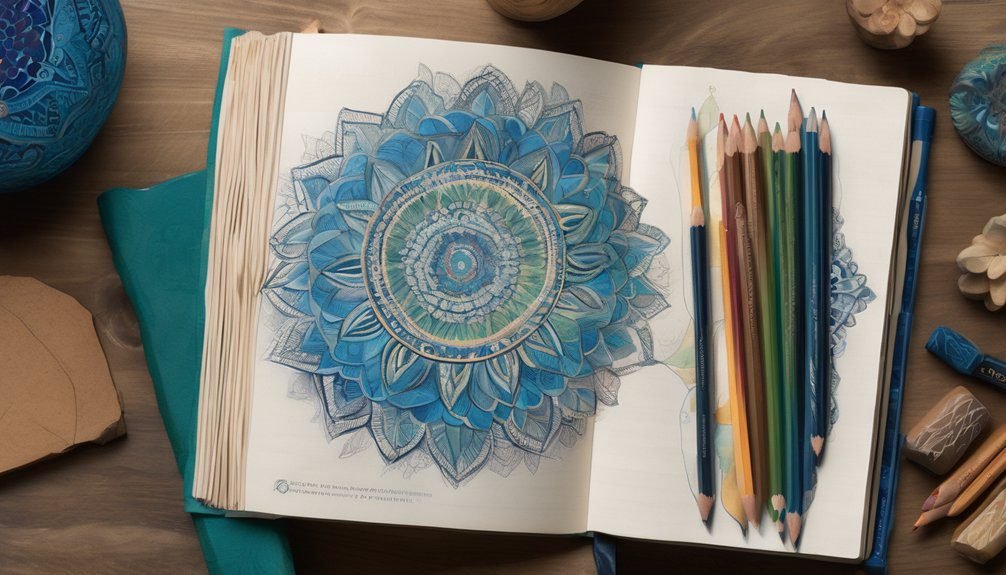
Engaging in journaling can be a therapeutic escape, and incorporating coloring into the mix amplifies its stress-relieving benefits. When you color, you focus on the present moment, allowing your mind to quiet down. This simple act can distract you from daily worries and help you unwind.
You don’t have to be an artist; just pick colors that resonate with you and let your creativity flow. As you fill in each space, notice the calming rhythm it creates. The combination of coloring and journaling creates a sensory experience that soothes your mind and spirit.
Combining Writing and Coloring for Deeper Reflection
When you combine writing and coloring, you unlock a powerful tool for deeper reflection. This creative fusion allows you to engage both your mind and your emotions, enhancing your self-awareness.
Here are three ways to maximize this practice:
Discover three effective methods to enhance your creative practice and deepen your self-reflection.
- Visual Expression: Use colors to represent your feelings. Choose hues that resonate with your mood, allowing your artwork to visually narrate your thoughts.
- Journaling Prompts: Write down specific prompts, then color as you reflect on your responses. This method can deepen your understanding of your experiences.
- Mindful Moments: Set aside dedicated time for this activity. The mindful approach helps you focus, encouraging a more profound connection with your thoughts and feelings.
Embrace this combination to enrich your journaling experience!
Sharing Your Colorful Journals With Others
Sharing your colorful journals with others can amplify the benefits of your creative practice. When you invite friends or family to view your work, you open the door to meaningful conversations and insights. Their reactions might inspire you to explore new themes or techniques in your journaling.
Consider hosting a casual gathering where everyone shares their colorful pages. This not only fosters community, but also encourages vulnerability and support among participants.
You might even form a journaling group, exchanging creative ideas and techniques.
Frequently Asked Questions
Can I Use Digital Coloring Tools for Journaling?
Yes, you can definitely use digital coloring tools for journaling. They offer a creative way to express your thoughts and emotions, allowing you to personalize your entries while enjoying the therapeutic benefits of coloring.
How Often Should I Color in My Journal?
You should color in your journal as often as you breathe—if only to distract yourself from life’s chaos. Seriously, aim for at least once a week; it’s therapeutic, and your mind deserves a colorful break!
What if I’M Not Good at Coloring?
It doesn’t matter if you’re not good at coloring! Just focus on enjoying the process. Your journal’s meant for self-expression, so let loose, experiment with colors, and embrace imperfections as part of your creative journey.
Is There a Specific Time of Day to Color?
Studies show that coloring reduces stress by 75%. You can color anytime it suits you, but early mornings or evenings often provide a peaceful atmosphere, making it easier to relax and focus on your thoughts.
Can Coloring Be Beneficial for Children’s Journaling?
Yes, coloring can be beneficial for children’s journaling. It encourages creativity, enhances focus, and helps them express emotions. By integrating colors, they’ll find journaling more engaging and enjoyable, fostering a lifelong love for self-reflection.
Conclusion
So, go ahead and grab those crayons—who needs a therapist when you’ve got a coloring book? Dive into the world of hues and scribbles, where your deepest thoughts can shine between the lines of your latest masterpiece. Sure, it might take a little longer than scrolling through social media, but hey, you’re crafting profound insights while coloring outside the lines. So, put on your artistic hat and let the colors spill; your journal is waiting for a vibrant transformation!