
Watercolors can be both delicate and bold in your coloring book creations. When you combine these two elements, the results can be stunning. It’s essential to understand the right techniques and materials to achieve the best effects. You might be surprised at how quickly you can transform a simple design into a vibrant masterpiece. Let’s explore the steps that will help you enhance your artwork effectively.
Key Takeaways
- Choose a high-quality coloring book paper that can handle water without warping or bleeding.
- Use a protective backing like cardboard to stabilize the page while painting.
- Apply the wet-on-dry technique for more control and defined edges in your designs.
- Experiment with color swatches before applying to determine desired hues and blends.
- Clean your brushes and supplies regularly to maintain the quality of your artwork.
Choosing the Right Watercolor Supplies
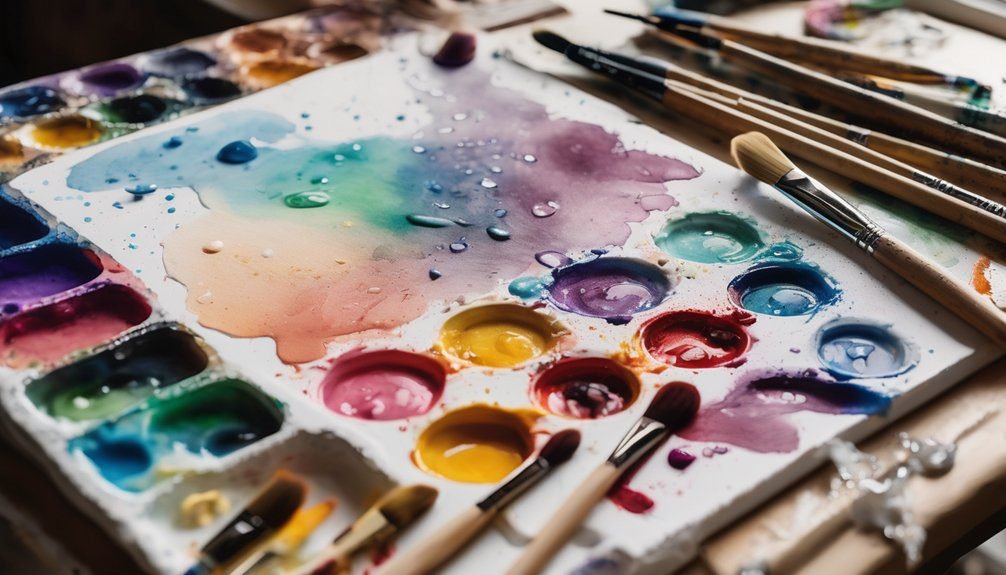
When you’re ready to dive into watercoloring your coloring books, choosing the right supplies makes all the difference.
Start with a good set of watercolors; tube or pan options both work well. If you’re a beginner, pan sets are user-friendly and easy to transport.
Begin your watercolor journey with a reliable set of paints—pan options are perfect for beginners!
Next, grab some quality brushes. A variety of sizes will help you tackle different areas of your coloring book.

Make sure you have a palette for mixing colors, and don’t forget water containers—one for rinsing brushes and another for mixing.
Finally, invest in high-quality watercolor paper if your coloring book pages are thin. This prevents warping and ensures vibrant results.
With the right supplies, you’ll create stunning, watercolor masterpieces!
Preparing Your Coloring Book Pages
To get the best results with watercolors in your coloring book, start by preparing your pages properly. This crucial step enhances your experience and ensures your artwork shines.
Here’s how you can set the stage for creativity:
- Choose high-quality paper that can withstand water.
- Use a protective backing, like cardboard, to prevent warping.
- Sketch lightly with a pencil to guide your design.
- Seal the page with a clear fixative to prevent bleeding.
- Experiment with color swatches on a separate sheet before applying to your page.
Techniques for Applying Watercolors
Applying watercolors in your coloring book can be a delightful experience, and mastering a few techniques will elevate your artwork.
Start by using a wet-on-dry technique, where you apply wet paint directly onto dry paper. This allows for more control and defined edges.
For a softer look, try the wet-on-wet method; wet the paper first, then add paint for beautiful, organic blends.
You can also explore the use of brushes of different sizes—smaller brushes for detail and larger ones for washes.
Don’t forget to experiment with varying water ratios; more water creates lighter washes, while less water produces vibrant, saturated colors.
Lastly, practice lifting color with a damp brush or tissue for corrections.
Enjoy the creative process!
Blending and Layering Colors

While experimenting with blending and layering colors in your watercolor coloring book, you’ll find that these techniques can significantly enhance your artwork.
Blending allows you to create smooth transitions between colors, while layering adds depth and richness. Start by applying a base color, then gradually add a second hue, using a wet brush to merge them seamlessly.
Don’t be afraid to play with different combinations; each attempt reveals unique possibilities.
- Feel the joy of discovery as colors dance together.
- Experience the thrill of unexpected shades.
- Watch your artwork come alive with depth.
- Embrace the soothing rhythm of layering.
- Celebrate your personal touch in every stroke.
With practice, you’ll master these techniques and elevate your creations.
Creating Texture and Effects
Building on your skills in blending and layering, creating texture and effects can take your watercolor artwork to the next level.
Experiment with different techniques to add depth and interest to your coloring pages. Try using a dry brush to create a rough texture, or a wet-on-wet technique for soft, blended effects. You can also sprinkle salt onto wet paint for a unique, grainy finish.
For a bolder look, use a sponge to dab on color, mimicking natural textures like foliage or clouds. Don’t forget to explore lifting techniques; a damp brush can remove paint to create highlights or patterns.
Tips for Maintaining Control
To maintain control while using watercolors in your coloring books, it’s essential to understand how water and pigment interact. Here are some tips to help you stay in command of your brushstrokes and achieve beautiful results:
- Start with less water to avoid overwhelming colors.
- Use a smaller brush for detailed areas, giving you precision.
- Practice layering colors gradually, allowing each layer to dry before adding more.
- Keep paper towels handy to blot excess water, preventing unwanted runs.
- Experiment on scrap paper to find the right balance between water and pigment.
Cleaning and Caring for Your Supplies
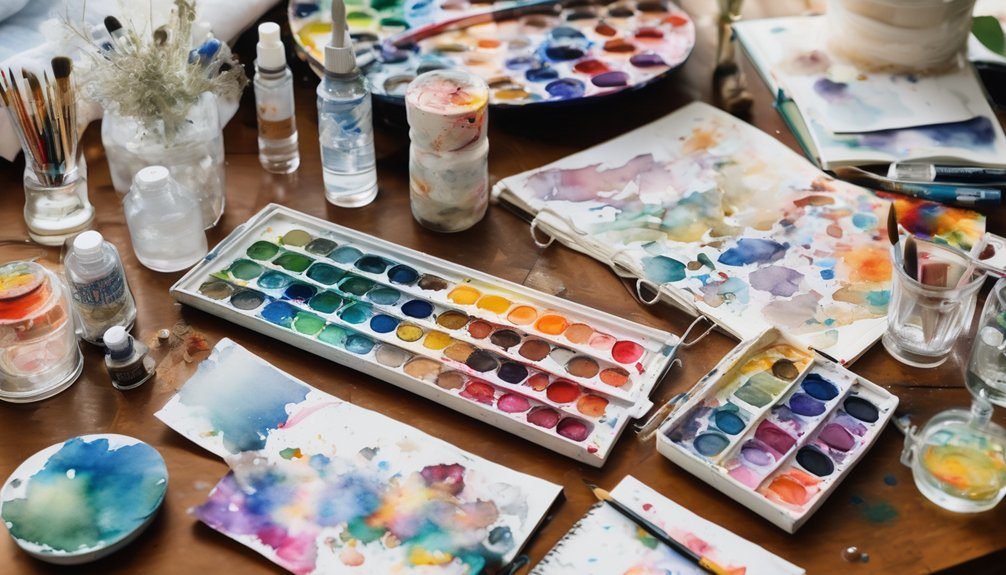
Cleaning and caring for your watercolor supplies is crucial for maintaining their quality and ensuring your artwork remains vibrant. Start by rinsing your brushes in clean water after each use, then reshape the bristles to prevent damage. For palettes, wipe off excess paint with a damp cloth and wash them with mild soap when necessary.
Here’s a quick reference table for your cleaning routine:
| Item | Cleaning Method | Frequency |
|---|---|---|
| Brushes | Rinse, reshape bristles | After each use |
| Palettes | Wipe & wash with soap | Weekly |
| Water jars | Rinse & change water | Daily |
Frequently Asked Questions
Can I Use Watercolors on Any Type of Coloring Book Paper?
You can’t use watercolors on every type of coloring book paper. Look for thick, high-quality paper designed for wet mediums. If the paper’s too thin, it may warp or bleed, ruining your artwork.
How Do I Prevent Colors From Bleeding Into Each Other?
To prevent colors from bleeding, use less water, apply colors in thin layers, and allow each layer to dry completely before adding more. Experiment with techniques to find what works best for your project.
What Should I Do if My Watercolors Dry Too Quickly?
If your watercolors dry too quickly, try using a wet palette to keep your paints moist. You can also work in smaller sections, adding water to your brush more often to maintain the flow.
Are There Specific Watercolors Recommended for Beginners?
If you’re starting out, try student-grade watercolors like Winsor & Newton Cotman or Prang. They’re affordable, easy to blend, and offer vibrant colors. You’ll discover a world of creativity waiting just for you!
Can I Mix Watercolors With Other Mediums in Coloring Books?
Yes, you can mix watercolors with other mediums like colored pencils or markers. Just ensure your paper can handle it, and allow each layer to dry before adding more colors for the best results.
Conclusion
With your watercolors in hand, you’re ready to transform your coloring book into a vibrant masterpiece. Each brushstroke is a dance of color, breathing life into your designs. As you blend and layer, watch your artwork bloom like a garden in spring. Remember, the journey of creativity is just as beautiful as the final piece. So, dive into this colorful adventure, and let your imagination soar on the wings of your paintbrush!