
Coloring might seem like a simple pastime, but it offers surprising benefits for teen mental health. Engaging in this creative activity can help you manage stress and anxiety while enhancing focus. It encourages mindfulness and provides a way to express your emotions. But how exactly does it work? Let’s explore the science behind coloring and its impact on emotional well-being.
Key Takeaways
- Coloring promotes mindfulness, helping teens reduce stress and focus on the present moment.
- Engaging in coloring activities can lower anxiety levels through repetitive motions and creative expression.
- It fosters emotional regulation by providing a safe outlet for processing feelings and thoughts.
- Coloring enhances self-esteem as teens experience a sense of accomplishment from their artwork.
- Group coloring activities encourage social connections, reducing feelings of loneliness and easing social anxiety.
The Science Behind Coloring and Mental Health

While you might think of coloring as a simple childhood activity, research shows it can significantly impact mental health, especially for teens. Engaging in coloring activates different areas of your brain, promoting focus and creativity.
This simple act encourages mindfulness, allowing you to immerse yourself in the moment and forget daily stresses. Studies indicate that the repetitive motions of coloring can reduce feelings of anxiety and improve emotional regulation.
When you choose colors and create patterns, you express yourself non-verbally, which can be liberating. Plus, the sense of accomplishment upon completing a piece boosts your self-esteem.

Reducing Anxiety Through Creative Expression
Creative expression, including activities like coloring, can be a powerful antidote to anxiety. When you engage in coloring, you shift your focus away from stressors and immerse yourself in the present moment.
The repetitive motions of coloring can calm racing thoughts, providing a sense of rhythm and stability. As you choose colors and fill in designs, you tap into your creativity, which can help release pent-up emotions. This process allows you to express feelings that might be hard to articulate verbally.
Moreover, seeing your artwork take shape can boost your self-esteem and foster a sense of accomplishment. By dedicating time to coloring, you’re not just creating art; you’re also nurturing your mental well-being and reducing anxiety.
Enhancing Focus and Mindfulness
Coloring isn’t just a way to reduce anxiety; it also sharpens your focus and enhances mindfulness. When you pick up those colored pencils and start filling in intricate designs, you engage your mind fully in the present moment. This focused activity helps you push aside distractions and worries, allowing you to concentrate on the strokes of color and patterns before you.
As you become absorbed in the details, you practice mindfulness, which fosters awareness of your thoughts and feelings. This can improve your overall mental clarity.
Regularly engaging in coloring can train your brain to maintain focus, making it easier to tackle other tasks in your life with greater concentration and intention. So, grab those colors and embrace the moment!
The Role of Coloring in Emotional Regulation
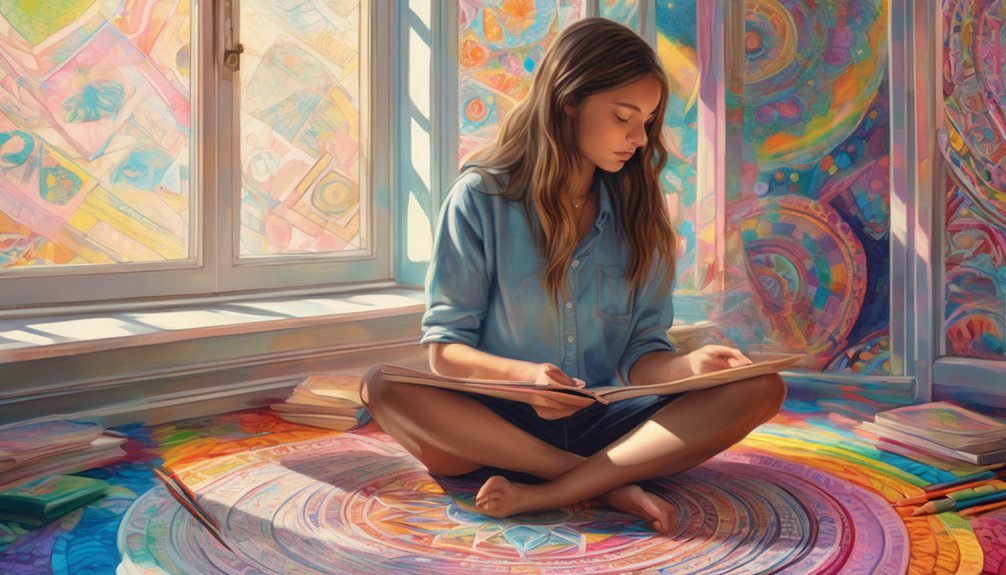
Artistic expression plays a significant role in emotional regulation, and coloring is a powerful tool for managing feelings. When you pick up those colored pencils or markers, you engage in a calming activity that allows you to process emotions.
As you fill in the designs, you focus your mind, creating a sense of peace amidst chaos. This act of coloring can help you release pent-up stress and anxiety, providing a safe outlet for your emotions.
You can choose colors that resonate with your mood, which adds a personal touch to the experience. Ultimately, coloring serves as a therapeutic practice, allowing you to explore your feelings, reflect on your thoughts, and find balance in the whirlwind of teenage life.
Boosting Creativity and Problem-Solving Skills
When you immerse yourself in a coloring activity, you not only find relaxation but also unlock new pathways for creativity and problem-solving. Coloring encourages you to make choices about colors, patterns, and designs, fostering innovative thinking. As you engage in this process, your brain begins to connect ideas in unique ways, enhancing your ability to think outside the box.
Here’s a quick look at how coloring impacts your creative and problem-solving skills:
| Activity | Benefit | Example |
|---|---|---|
| Coloring | Sparks creativity | Exploring color palettes |
| Doodling | Encourages free thought | Creating unique designs |
| Pattern creation | Develops logical reasoning | Forming intricate designs |
| Mixing colors | Enhances risk-taking | Trying unexpected combos |
Engaging in coloring can truly inspire you to think differently!
Building a Sense of Accomplishment
A sense of accomplishment can be incredibly fulfilling, and coloring provides a perfect avenue to achieve it. As you fill in each section of a coloring page, you witness your progress unfold. Completing a page gives you a tangible result, boosting your confidence and reinforcing your ability to set and achieve goals.
You can experiment with colors, techniques, and styles, and each finished piece showcases your creativity and effort. This process not only distracts you from stress but also builds a sense of pride in your work. By dedicating time to coloring, you create a space where you can celebrate your achievements, however small they may seem.
These positive feelings can enhance your overall mental well-being, making you feel accomplished and capable.
Social Connections and Group Coloring Activities

Coloring with others can foster meaningful social connections that enhance your mental health. When you join group coloring activities, you create opportunities to bond with peers over a shared experience.
These moments allow you to express creativity together, break down social barriers, and engage in conversations that can deepen friendships. You might find comfort in discussing your artwork or sharing tips, which encourages open communication and collaboration.
Participating in these activities also helps reduce feelings of loneliness and isolation by making you feel part of a community. Plus, the relaxed atmosphere of coloring can ease social anxiety, making it easier to connect with others.
Practical Tips for Incorporating Coloring Into Daily Life
Engaging in group coloring activities can spark a desire to incorporate coloring into your daily routine. To make it easier, try setting aside a specific time each day for coloring, even if it’s just 10 minutes. You can also keep a coloring book and supplies in your bag for moments of free time. Consider inviting friends to color with you, turning it into a fun social event. Lastly, explore different coloring mediums, like digital apps or watercolors, to keep things fresh.
| Tip | Description |
|---|---|
| Set a Daily Time | Dedicate 10 minutes each day. |
| Keep Supplies Handy | Carry a coloring book in your bag. |
| Color with Friends | Organize coloring meet-ups. |
| Try Different Mediums | Experiment with apps or watercolors. |
| Use Online Resources | Find free printables online. |
Frequently Asked Questions
Can Coloring Help Improve Academic Performance in Teens?
Yes, coloring can help improve your academic performance. It enhances focus, reduces stress, and boosts creativity, allowing you to engage better with your studies. So, grab those colored pencils and start creating to elevate your learning!
What Types of Coloring Materials Are Best for Mental Health?
Bright colored pencils and smooth gel pens invite your creativity, while soft pastels create soothing blends. Choose textured markers for bold expressions, and let your imagination flow freely, crafting a vibrant escape that calms your mind.
How Often Should Teens Color for Maximum Benefits?
You should color several times a week for maximum benefits. Aim for at least 20-30 minutes each session. Regular practice helps you relax, boosts creativity, and enhances focus, making it a rewarding activity.
Are There Any Age Restrictions for Coloring Books?
Sure, there aren’t any age restrictions for coloring books—unless you’re a world-renowned artist, obviously! You can enjoy them at any age, so grab those crayons and unleash your creativity, no matter how old you are!
Can Coloring Be Used in Therapy for Teens?
Yes, coloring can be effectively used in therapy for teens. It helps you express emotions, reduce anxiety, and enhance focus. By engaging in this creative activity, you can discover new ways to cope with challenges.
Conclusion
Incorporating coloring into your routine isn’t just a fun pastime; it’s like giving your mind a gentle hug. By allowing yourself to unwind through creative expression, you’re not only easing stress but also nurturing your emotional well-being. So, grab those colored pencils and let your imagination flow. Remember, it’s not just about filling in spaces; it’s about crafting a brighter, more connected you. Embrace this simple joy and watch your mental health blossom!