
Coloring can feel like a chaotic storm for kids with sensory sensitivities. It’s crucial to create a space that feels safe and inviting, where they can express themselves without overwhelm. By understanding their unique needs and preferences, you can transform coloring into a calming experience. Curious about how to set up this perfect environment? Let’s explore some effective strategies to make coloring enjoyable for every child.
Key Takeaways
- Create a quiet, clutter-free workspace with soft lighting to reduce sensory overload during coloring sessions.
- Use a variety of non-toxic, easy-to-grip coloring materials like crayons, colored pencils, and gel pens.
- Incorporate short breaks to help maintain focus and prevent frustration during coloring activities.
- Personalize the coloring space with calming decorations and scents to enhance comfort and creativity.
- Encourage self-expression by discussing color choices and celebrating individual artistic decisions without judgment.
Understanding Sensory Sensitivities in Kids
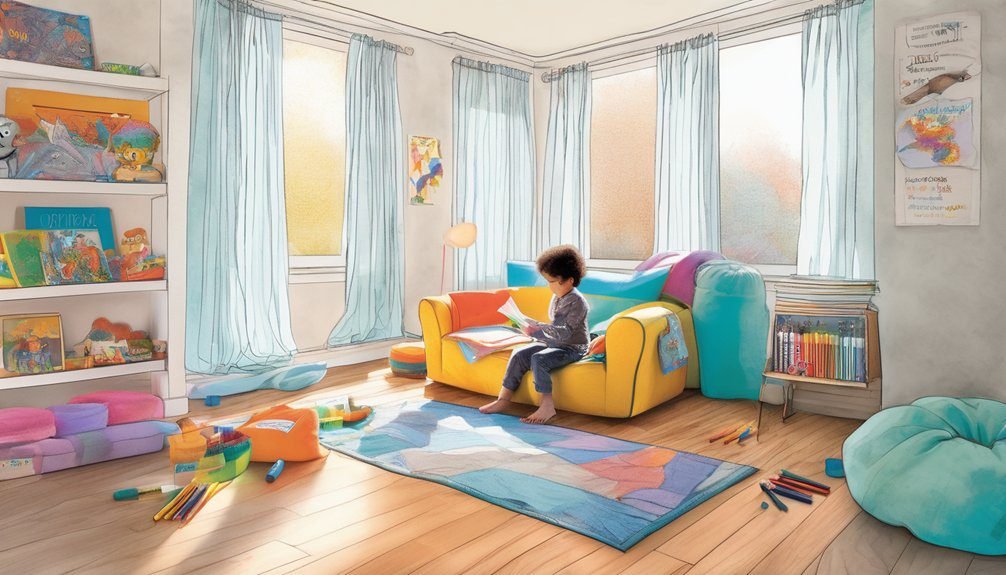
When you understand sensory sensitivities in kids, you can better support their needs during activities like coloring. Many children experience heightened responses to sights, sounds, or textures, which can affect their focus and enjoyment.
For instance, bright colors or loud environments may overwhelm them, causing frustration or withdrawal. You’ll notice that some kids might prefer softer lighting or quieter spaces, allowing them to express their creativity without distraction.
Additionally, recognizing their unique triggers helps you create a comfortable atmosphere. Pay attention to their body language; it often speaks volumes about their comfort levels.

Choosing the Right Coloring Materials
Selecting the right coloring materials can significantly enhance your child’s experience. Consider the textures, colors, and ease of use. You’ll want to choose items that feel comfortable and enjoyable for them. Here’s a quick comparison to guide your choices:
| Material Type | Benefits | Recommended For |
|---|---|---|
| Crayons | Easy grip, vibrant color | Younger kids or beginners |
| Colored Pencils | Control and precision | Older kids or detailed work |
| Markers | Bold colors, quick coverage | Quick projects or large areas |
| Gel Pens | Smooth application | Creative detailing |
| Pastels | Soft texture, blending options | Artistic expression |
Opting for Non-Toxic and Washable Supplies
After choosing the right coloring materials, it’s important to ensure they’re safe for your child. Opting for non-toxic and washable supplies not only protects their health but also makes cleanup a breeze.
Here are three key items to consider:
- Non-Toxic Crayons: Look for brands that specify they’re free from harmful chemicals. This helps keep your child safe while they express their creativity.
- Washable Markers: These are perfect for little hands that might accidentally color outside the lines. They easily wash out of clothes and surfaces.
- Watercolor Paints: Choose kid-friendly, non-toxic options that provide vibrant colors without the worry of harmful ingredients.
Creating a Calm and Inviting Coloring Space
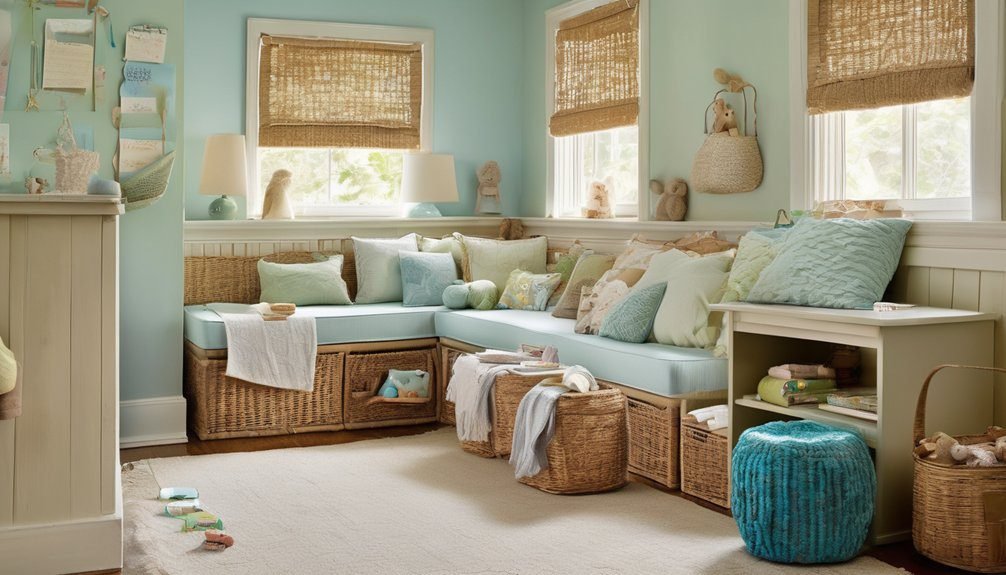
To foster creativity and focus, creating a calm and inviting coloring space is essential for your child. Start by choosing a quiet area free from distractions like loud noises or clutter.
Consider soft lighting, which can set a soothing tone, and use comfortable seating that supports their posture. Include a variety of coloring materials—different types of paper, crayons, markers, and colored pencils—organized neatly to encourage exploration.
Personalize the space with calming decorations, like nature-themed prints or favorite colors, to make it feel special. Lastly, add a sensory element, like a soft blanket or fidget toys, to help your child feel grounded and relaxed while they create.
This environment will inspire their imagination and enhance their coloring experience.
Establishing a Comfortable Coloring Routine
A calming coloring space sets the stage for a successful routine that nurtures your child’s creativity.
To establish a comfortable coloring routine, consider these steps:
- Schedule Regular Time: Pick a specific time each day for coloring. Consistency helps your child know what to expect and builds anticipation.
- Minimize Distractions: During coloring time, turn off electronics and create a quiet atmosphere. This allows your child to focus on their art without interruptions.
- Incorporate Breaks: Allow short breaks during the coloring session. This helps prevent frustration and keeps your child engaged, making the experience more enjoyable.
Using Alternative Coloring Techniques
Exploring alternative coloring techniques can enhance your child’s creative experience and make it more enjoyable. Instead of traditional crayons or markers, try using watercolors or pastels. These mediums allow for more fluid expression and can be less overwhelming for sensitive children.
Consider incorporating sponge painting or finger painting, which can provide tactile stimulation and encourage your child to experiment. If your child enjoys texture, try coloring with fabric swatches or even natural materials like leaves and flowers.
Encourage them to mix colors directly on the paper, fostering creativity and exploration. Remember, the goal is to make coloring a fun and relaxing activity, so let your child lead the way in discovering what techniques resonate most with them.
Incorporating Fidget Tools and Sensory Breaks
While coloring can be a calming activity, incorporating fidget tools and sensory breaks can further enhance your child’s focus and enjoyment. Fidget tools engage your child’s hands, allowing them to release excess energy while they color.
Here are three ways to integrate these elements into their coloring sessions:
- Fidget Toys: Offer items like stress balls or textured toys that your child can squeeze or manipulate during breaks.
- Timed Breaks: Set a timer for coloring, followed by a short break where your child can stretch or engage in a sensory activity.
- Switching Activities: Alternate between coloring and using fidget tools to keep your child engaged and prevent frustration.
These strategies can help create a balanced and enjoyable coloring experience!
Setting Realistic Expectations and Goals
Setting realistic expectations and goals for your child’s coloring sessions can make a significant difference in their overall experience. Start by acknowledging their current skills and interests. Instead of aiming for a completed masterpiece, focus on finishing a small section or using specific colors. This approach helps reduce pressure and fosters enjoyment.
Encourage your child to explore without the fear of making mistakes; remind them that it’s okay to color outside the lines. Set achievable time limits to keep sessions short and engaging, allowing for breaks if needed. Celebrate their progress, no matter how small, and tailor goals to match their unique abilities.
This way, coloring becomes a fun and stress-free activity that they’ll look forward to.
Encouraging Self-Expression Through Color Choices
Color is a powerful tool for self-expression, and encouraging your child to choose their own colors can enhance their creativity and confidence.
When kids select colors that resonate with them, they learn to communicate their feelings and ideas visually. Here are three ways to promote this self-expression:
- Provide a Variety of Colors: Offer a diverse range of coloring materials, like crayons, markers, and colored pencils, to inspire their choices.
- Encourage Experimentation: Remind your child that there’s no “wrong” way to color. Let them mix colors or use unconventional shades for different elements.
- Discuss Their Choices: Ask your child why they chose certain colors. This dialogue helps them articulate their thoughts and feelings, reinforcing their personal expression.
Celebrating the Creative Process, Not Just the Outcome
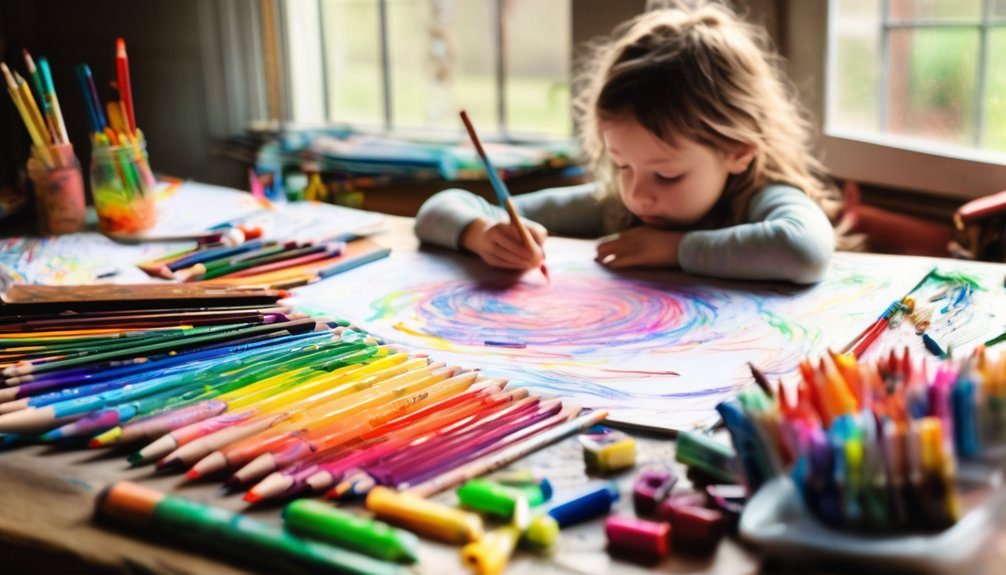
Focusing on the creative process can transform your child’s coloring experience into a rewarding journey. Encourage them to explore colors and techniques without the pressure of perfection. Emphasize the joy of experimenting—mixing shades, trying new patterns, or even using unconventional tools.
Celebrate their choices and the stories behind their artwork. Ask open-ended questions about their creations, fostering dialogue that nurtures their imagination. Remind them that mistakes can lead to unexpected masterpieces, turning challenges into opportunities for growth.
Frequently Asked Questions
What Age Is Appropriate for Kids to Start Coloring?
Kids can start coloring as early as 15 months. At this age, they enjoy exploring colors and textures. By three years, they’ll have better control, making coloring a fun and engaging activity for them.
How Can I Tell if My Child Has Sensory Sensitivities?
You can tell if your child has sensory sensitivities by observing their reactions to different textures, noises, or environments. If they seem overwhelmed, anxious, or avoid certain activities, it’s worth exploring further.
Are There Specific Colors That Calm Sensory-Sensitive Children?
Yes, calming colors like soft blues, gentle greens, and muted pastels often soothe sensory-sensitive children. You can experiment with these shades to see which ones your child responds to best during coloring activities.
How Can I Involve Siblings in the Coloring Process?
To involve siblings, set up a collaborative mural on a large sheet of paper. For example, imagine their excitement as they work together, creating a vibrant scene that reflects their unique ideas and strengthens their bond.
What Are Some Signs My Child Enjoys Coloring?
You’ll notice your child smiling, focusing intently, and choosing vibrant colors. They might express excitement or share their artwork proudly. If they ask for more coloring time, it’s a clear sign they’re enjoying it!
Conclusion
By creating a sensory-friendly coloring environment, you’re not just providing a fun activity; you’re fostering emotional well-being and creative expression in kids. Research shows that engaging in calming, creative tasks can significantly reduce anxiety and enhance focus. So, embrace the process and let your child explore colors freely. Remember, it’s about the joy of coloring together, not just the final masterpiece. Celebrate each moment, and you’ll both discover the magic of creativity.