
It’s funny how a simple corner in your home can transform into a vibrant coloring sanctuary for your kids. You might not realize it, but the right setup can ignite their creativity and provide a perfect escape for them. With a few thoughtful choices, you can create an inviting space that encourages exploration. Let’s explore how to turn that blank area into a colorful haven where your children can unleash their artistic talents.
Key Takeaways
- Choose a well-lit, quiet corner away from distractions to enhance focus and creativity.
- Gather a variety of washable coloring supplies and fun themed coloring books.
- Design an inviting space with colorful decor, comfortable seating, and natural light.
- Implement organized storage solutions like labeled bins and shelves for easy access.
- Regularly rotate materials and maintain cleanliness to keep the coloring corner fresh and exciting.
Choosing the Right Location
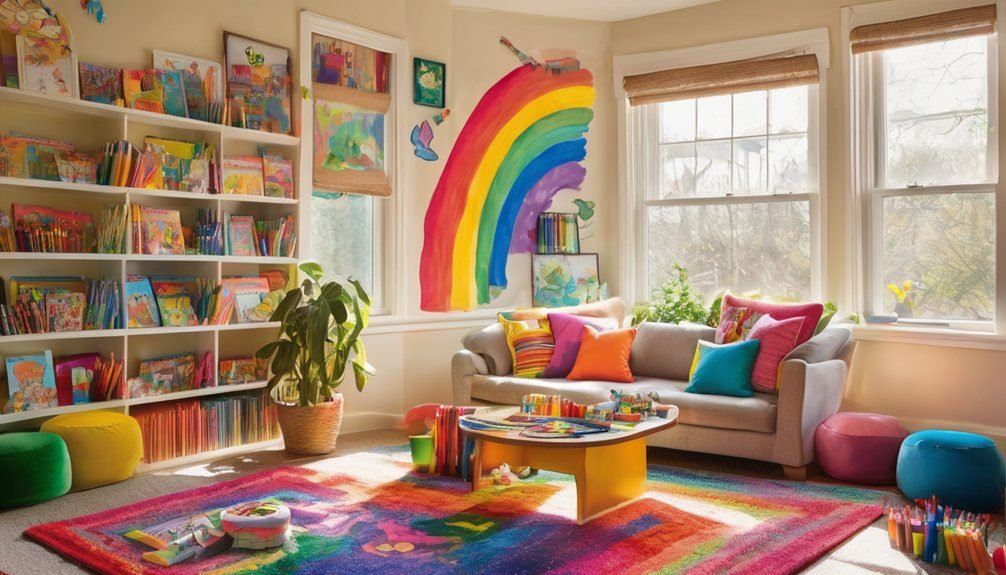
When setting up a kids coloring corner at home, picking the right location is crucial. You want to find a space that’s both comfortable and inspiring.
Look for a spot with good natural light, like near a window, to help your child focus and enjoy their creativity. Make sure the area is away from distractions, such as TVs or noisy siblings, so they can immerse themselves in their artwork.
Consider using a soft mat or a small table to create a defined space that feels special. If possible, keep the corner accessible, allowing your child to engage whenever inspiration strikes.

A cozy nook can encourage creativity and make coloring an inviting activity your child looks forward to.
Gathering Essential Supplies
Creating a vibrant coloring corner requires gathering the right supplies to spark your child’s creativity. Start with a variety of coloring materials like crayons, colored pencils, and markers. Look for washable options to make cleanup easier.
Next, choose a selection of coloring books or printable pages featuring your child’s favorite characters or themes. Don’t forget about special items like glitter pens or stickers to add an extra touch of fun.
You’ll also need a sturdy surface, like a small table or desk, and comfortable seating. Consider adding an organizer to keep everything tidy and easily accessible.
Lastly, include a few white sheets of paper for free drawing. By gathering these essentials, you’ll set the stage for hours of imaginative play.
Designing an Inviting Space
After gathering all the necessary supplies, it’s time to focus on designing an inviting space that inspires creativity. Choose a bright, cheerful corner in your home where your kids can feel excited to color. Use colorful rugs, art-themed wall decals, or even a chalkboard wall to spark their imagination.
Here are some elements to consider for your coloring corner:
| Element | Description |
|---|---|
| Seating | Comfortable, kid-sized chairs or cushions |
| Lighting | Natural light or soft lamps for a cozy feel |
| Decor | Fun artwork or motivational quotes to inspire creativity |
Incorporating Storage Solutions
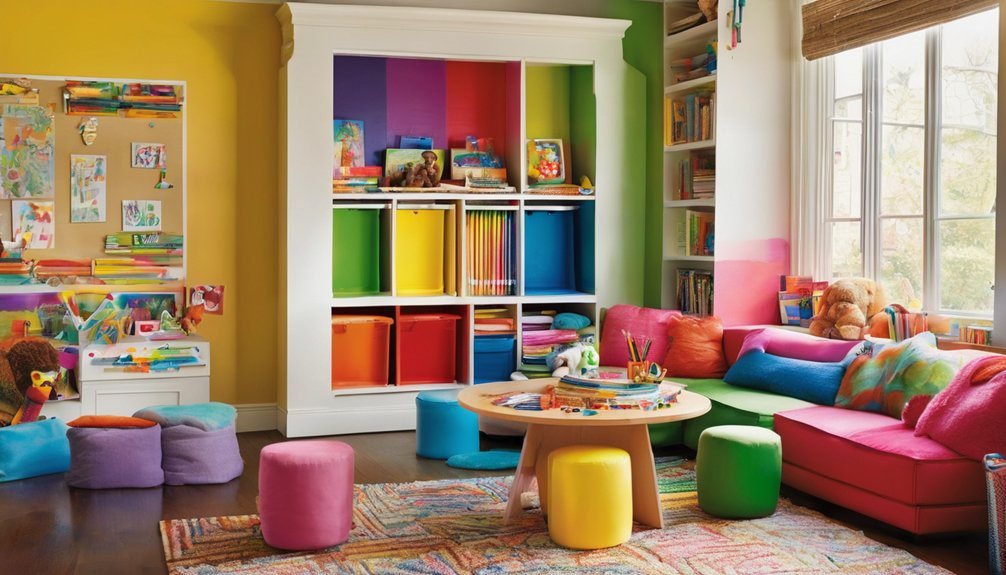
To keep your kids’ coloring corner organized and clutter-free, incorporating storage solutions is essential.
Start by using colorful bins or baskets to hold crayons, markers, and colored pencils. Label each container so your kids can easily find and return supplies.
A small shelf or cart can help keep paper and coloring books accessible yet tidy. Consider using a wall-mounted organizer for extra storage without taking up floor space.
You might even repurpose an old shoebox or tin can for unique storage options. Encourage your kids to take responsibility for their space by involving them in the organization process.
With the right storage solutions, their coloring corner will stay neat, allowing creativity to flourish without the mess.
Adding Personal Touches
A little creativity goes a long way in making your kids’ coloring corner feel special. Start by letting your children choose their favorite colors for the walls or furniture.
Adding personalized artwork, like their own drawings framed on the wall, can really brighten the space. You might also consider using a chalkboard or whiteboard where they can display their latest creations.
Incorporate fun, themed decorations—think animals, superheroes, or princesses—based on their interests. Don’t forget to add cozy seating, like bean bags or colorful cushions, to make it inviting.
Finally, create a small shelf for their favorite books and coloring guides, so they feel a sense of ownership and pride in their special space.
Encouraging Creativity and Exploration
While kids are naturally curious, creating an environment that encourages creativity and exploration can help them thrive. Fill your coloring corner with various materials like crayons, markers, colored pencils, and even unconventional items like fabric scraps or nature finds.
Let your kids experiment with these supplies without strict guidelines. Encourage them to mix colors, create patterns, or even invent their own characters.
Introduce themed projects or challenges to spark their imagination, but allow them to take the lead. Be supportive by asking open-ended questions about their artwork, helping them articulate their thoughts and feelings.
Celebrate their unique creations, reinforcing the idea that there’s no right or wrong in art, just personal expression. This freedom nurtures their confidence and inspires ongoing creativity.
Maintaining the Coloring Corner
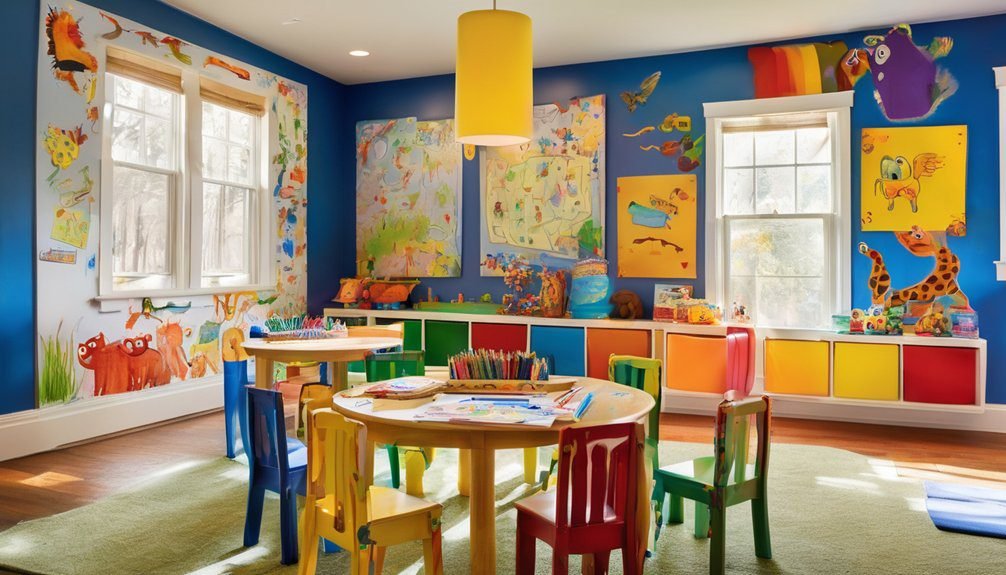
Maintaining your kids’ coloring corner is essential for fostering an ongoing creative environment. Regular upkeep not only keeps the space inviting but also encourages your little ones to express themselves freely.
Keeping your kids’ coloring corner well-maintained nurtures their creativity and encourages self-expression in a welcoming space.
Here are some tips to help you maintain the area:
- Organize supplies: Designate specific spots for crayons, markers, and paper to make clean-up easy.
- Rotate materials: Introduce new coloring books or themes to keep their interest piqued.
- Clean regularly: Wipe down surfaces and remove any clutter to create a fresh space.
- Encourage independence: Teach your kids to put away their tools after each session.
- Celebrate their art: Display their completed works to inspire ongoing creativity and pride in their efforts.
Frequently Asked Questions
What Age Is Appropriate for Kids to Start Coloring?
Kids can start coloring as early as 18 months. At this age, they’ll enjoy scribbling. By age three, they’ll begin to understand shapes and colors, making it a fun and engaging activity for them.
How Often Should I Refresh Coloring Supplies?
How often do you want your kids to feel inspired? Refresh coloring supplies every few months or when you notice worn-out items. Keeping things fresh encourages creativity and makes coloring more enjoyable for them!
Can I Use Recycled Materials for Coloring?
Absolutely, you can use recycled materials for coloring! Old magazines, newspapers, and cardboard make great canvases. Just gather what you have, and let your creativity flow while teaching kids the value of reusing materials.
What Are Some Creative Themes for Coloring Corners?
You can create themes like nature, underwater adventures, outer space, or favorite animals. Incorporating seasonal themes or popular characters adds excitement. Let your kids choose their favorites to spark their creativity and keep them engaged!
How Do I Handle Messes From Coloring Activities?
Did you know 70% of parents worry about messes? To handle coloring messes, use washable supplies and designate a cleanup time. Encourage your kids to help, making it a fun bonding experience while keeping things tidy.
Conclusion
Creating a kids’ coloring corner at home isn’t just about art; it’s a delightful journey into imagination. By picking the perfect spot, gathering colorful supplies, and designing a whimsical space, you’re inviting creativity to flourish. With a sprinkle of organization and a dash of personal flair, you’ll nurture their artistic spirit. So, let those crayons dance on the paper, and watch as your little ones turn their dreams into vibrant masterpieces, making memories along the way.