
You can turn summer coloring time at home into a simple, creative routine that keeps kids engaged and learning. With beach scenes, ice cream pages, flowers, and friendly animals, you give them chances to practice fine motor skills while exploring colors and shapes. A small coloring space can also help them settle in and share materials. Once you start choosing themes, a few easy ways can make the whole activity even more rewarding.
Key Takeaways
- Start with simple summer scenes like suns, flowers, and picnic baskets to help kids build confidence.
- Choose beach and ocean pages with shells, waves, and sea creatures to support calm focus and fine motor skills.
- Use ice cream and fruit coloring pages to teach flavors, vocabulary, and careful coloring.
- Try garden and sunshine scenes to encourage bright color choices and observation of nature.
- Set up coloring time with supplies, a quiet space, and a timer for easy home activities.
Easy Summer Coloring Ideas for Kids
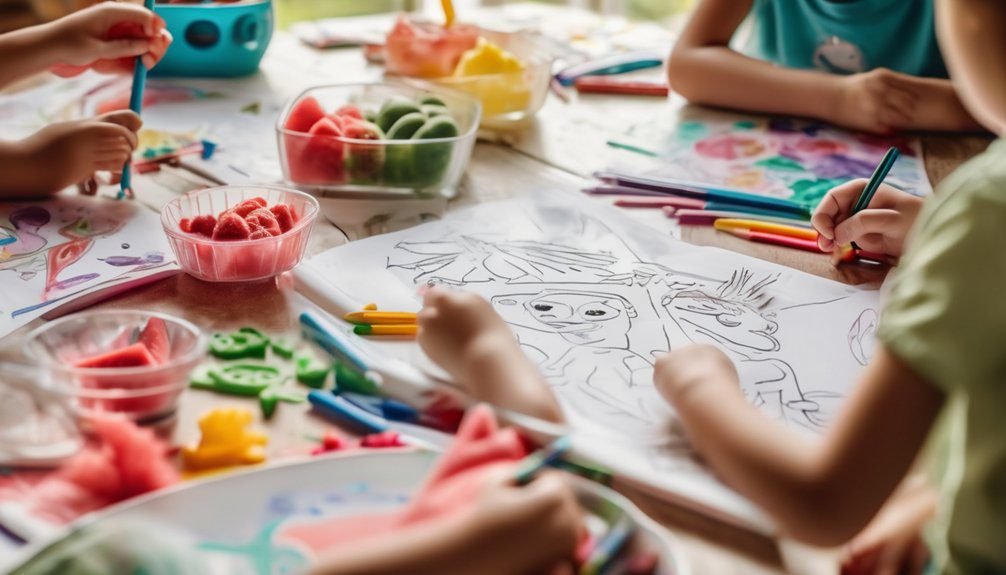
Bright crayons and simple summer scenes can make coloring feel fun and easy for kids. You can start with suns, flowers, and picnic baskets to build confidence and keep choices simple.
Try crayon techniques like light pressure for soft skies and firm strokes for bold shapes. You can guide little hands to stay inside large outlines, but don’t worry if they wander; that’s part of learning.
Use light pressure for soft skies and firm strokes for bold shapes while little hands learn.
Color mixing also helps you spark curiosity: let kids layer yellow and red to see warm orange, or blend blue and yellow for bright green.

Keep pages open, offer short coloring breaks, and praise effort warmly. When you stay patient and present, you help your child feel capable, creative, and close to you.
Beach and Ocean Summer Coloring Pages
Beach scenes give kids lots to color without feeling overwhelming, from sandy shores and shells to waves, starfish, and friendly sea turtles. You can guide your child to notice shapes, patterns, and spaces as they fill in each detail.
These pages build fine motor control while inviting calm focus and creative choices. Try beach scenes with bright umbrellas, sand castles, and seashell designs to help your child practice color matching and hand control.
Ocean creatures like dolphins, fish, and crabs can spark talking, counting, and naming skills. You can also use underwater adventures and tropical landscapes to encourage storytelling, memory, and imagination.
Stay close, offer praise, and let your child explore at their own pace.
Ice Cream, Fruit, and Picnic Coloring Pages
After coloring seashells and sea turtles, you can keep the summer fun going with ice cream, fruit, and picnic coloring pages.
You’ll help your child notice ice cream flavors, like vanilla, chocolate, and strawberry, while practicing careful coloring and color choices. Encourage them to name fruit varieties such as watermelon, grapes, and oranges, which builds vocabulary and sorting skills.
Picnic scenes also let you talk about picnic essentials, like a blanket, basket, cups, and sandwiches, so your child connects pictures with real-life items. As they shade summer treats, they strengthen fine motor control, focus, and hand-eye coordination.
Picnic scenes help children connect pictures with real-life essentials while building fine motor control, focus, and hand-eye coordination.
You can praise each effort, ask gentle questions, and make the activity feel warm, calm, and shared.
Flowers, Gardens, and Sunshine Scenes
As your child colors flowers, gardens, and sunshine scenes, you can point out petals, stems, leaves, and buzzing bees to build observation skills and vocabulary. You’ll also nurture fine-motor control and calm focus while they explore flower symbolism in simple ways.
Try these ideas:
- Ask them to choose vibrant colors for each bloom.
- Invite them to notice garden creatures and describe where they live.
- Encourage them to fill sunshiny landscapes with warm yellows, blues, and greens.
- Talk about how flowers can show joy, growth, or friendship.
When you color beside your child, you help them connect art with nature, and you make the activity feel warm, safe, and meaningful.
Animal Coloring Activities for Kids
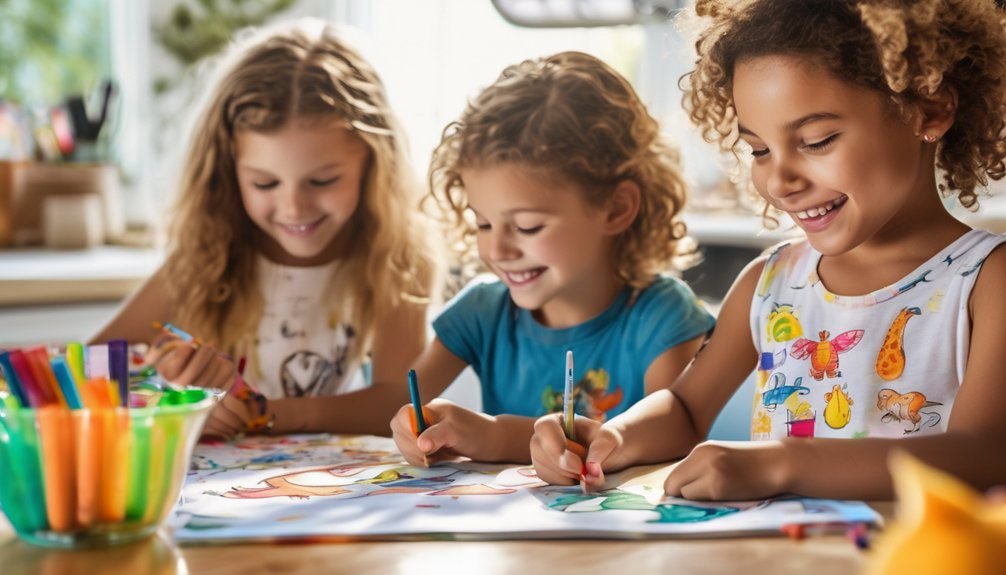
Animals can bring the same joyful energy as flowers and gardens, while adding new chances to learn and talk together.
Animals can spark the same joyful energy as gardens while inviting learning, talk, and playful connection.
You can invite your child to color lions, dolphins, birds, or farm animals, then name each one’s sounds, habitats, and body parts. Try adding wildlife patterns like stripes, spots, and scales so your child notices details and builds early observation skills.
You can ask simple questions: “Which animal lives in water?” or “What color would this turtle be?” These chats support language growth and curiosity.
After coloring, your child can wear animal masks and retell a tiny story about the creature. That playful step strengthens memory, confidence, and imagination while keeping your summer art time warm and connected.
Easy Ways to Set Up Coloring Time at Home
A few simple changes can make coloring time feel easy and inviting at home. You can gather coloring supplies in one basket, set out paper, and choose a quiet spot where your child feels safe and focused.
Try these steps:
- Pick creative themes that match your child’s interests.
- Use a timer for time management so coloring has a clear start and end.
- Bring supplies to outdoor spaces when the weather is nice.
- Invite siblings or friends for calm group activities.
You’ll help your child build confidence, practice attention, and enjoy a peaceful routine.
Keep the setup simple, and your child can relax, create, and feel proud of each finished page.
Frequently Asked Questions
What Coloring Tools Work Best for Young Children?
You’ll find thick crayons, washable markers, and jumbo colored pencils work best. These coloring tool types offer age appropriate options for small hands, build grip strength, and keep coloring fun, safe, and confidence boosting.
How Can I Prevent Coloring Pages From Tearing?
You can prevent tearing by choosing thicker paper and coaching gentle coloring strokes; because of course flimsy sheets adore drama. Try coloring page durability tests, and compare paper thickness options so your child’s art stays intact.
What Are Safe Non-Toxic Coloring Supplies for Kids?
You’ll want crayons labeled non-toxic and washable markers with safety seals. Choose colored pencils, watercolor paints, and glue sticks for kids, and check age labels. You can trust crayon safety when you buy reputable brands.
How Do I Store Finished Coloring Pages Neatly?
Use a paper bouquet: slip finished pages into clear folders, binders, or a labeled portfolio. Try simple storage solutions and organization tips, and you’ll keep your artwork neat, protected, and easy to revisit with love.
Can Coloring Activities Help Build Fine Motor Skills?
Yes, coloring activities can build your fine motor skills. You strengthen fine motor development when you grip crayons, control strokes, and stay within lines. It also supports creative expression, confidence, and hand-eye coordination.
Conclusion
As you wrap up your summer coloring time, let your child’s imagination bloom like a bright garden after rain. You give them a simple page, and they turn it into a beachy escape, a tasty picnic, or a sunny animal parade. Keep crayons close, make the space cozy, and watch creativity flow like a cool breeze. These small moments build focus, confidence, and joy—one colorful stroke at a time.