
Coloring isn’t just for kids; it offers significant benefits for older adults too. Engaging in this simple yet creative activity can sharpen your focus and enhance cognitive abilities. As you choose colors and stay within the lines, you might find more than just relaxation. There’s a deeper connection between coloring and mental clarity that’s worth exploring. What makes this artistic practice so effective at improving concentration and overall well-being?
Key Takeaways
- Coloring enhances focus by requiring sustained attention to detail and concentration on the task at hand.
- Engaging in coloring exercises decision-making skills, promoting a more active mental engagement.
- The repetitive nature of coloring acts as a calming meditative practice, fostering mindfulness and clarity of thought.
- Coloring stimulates neural connections, which can improve cognitive flexibility and memory retention in older adults.
- Group coloring activities encourage social interaction, further enhancing focus through a supportive and engaging environment.
The Cognitive Benefits of Coloring
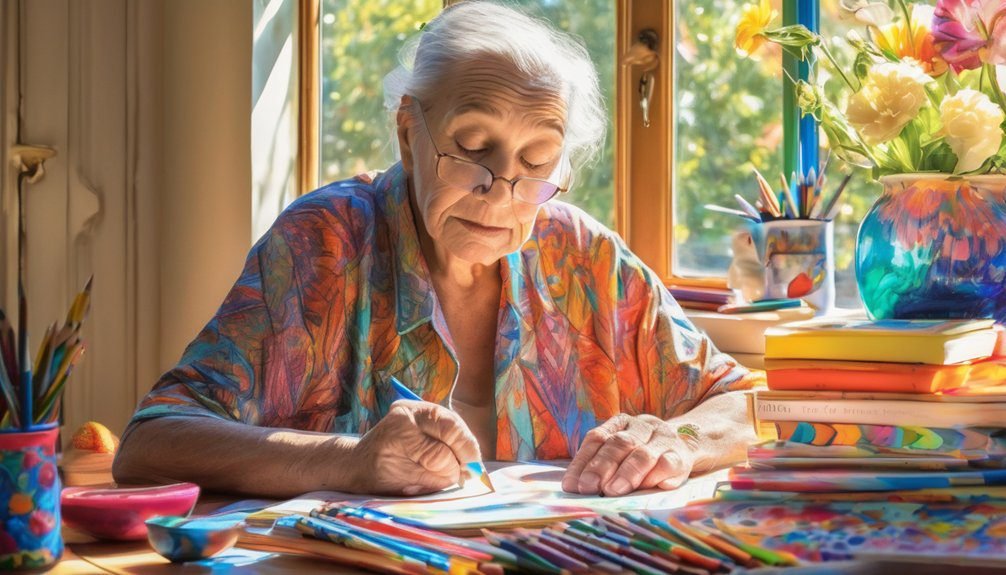
While you might think of coloring as a simple childhood pastime, it actually offers significant cognitive benefits for older adults. Engaging in coloring stimulates your brain, enhancing your focus and concentration.
As you choose colors and stay within the lines, you’re exercising your decision-making skills and fine motor coordination. This activity also encourages creativity, allowing you to express yourself freely, which can lead to improved problem-solving abilities.
Moreover, coloring can serve as a mental workout, helping to strengthen neural connections. By immersing yourself in this enjoyable task, you may find that it boosts your memory retention and cognitive flexibility.

Enhancing Mindfulness Through Art
As you immerse yourself in the world of art, you can enhance your mindfulness, creating a space for relaxation and self-reflection.
Engaging in creative activities like coloring allows you to focus on the present moment, shifting your attention away from daily distractions. Each stroke of color invites you to pay attention to your thoughts and feelings, fostering a deeper connection with yourself.
You’ll notice how the simple act of choosing colors can become a meditative practice, calming your mind and reducing anxiety. This process encourages you to be fully present, promoting a sense of tranquility.
The Relaxation Response: Stress Relief and Focus
Engaging in creative activities like coloring not only enhances mindfulness but also triggers the relaxation response, helping to alleviate stress and improve focus.
When you immerse yourself in coloring, your body shifts into a more relaxed state, reducing anxiety and promoting a sense of calm. This calming effect allows your mind to declutter, making it easier to concentrate on the task at hand.
As you focus on choosing colors and filling in shapes, you divert your attention from daily worries, creating a mental break. This simple act of creativity can lower cortisol levels and help you feel more centered, ultimately paving the way for greater productivity.
Motor Skills and Coordination Improvement

Coloring sharpens your motor skills and enhances coordination in older adults. When you pick up those colored pencils or markers, you’re engaging in activities that require precision and control.
Here’s how coloring helps:
- Grip Strength: Holding various tools strengthens your hand muscles.
- Hand-Eye Coordination: Staying within the lines improves your ability to coordinate visual input with hand movements.
- Fine Motor Control: You refine your dexterity as you manipulate colors and patterns.
- Spatial Awareness: Deciding where to place colors boosts your understanding of space and positioning.
These activities not only improve your motor skills but also contribute to overall cognitive function, making coloring a fun yet beneficial exercise for your coordination.
Stimulating Creativity and Problem-Solving
The benefits of coloring extend beyond motor skills; it also sparks creativity and enhances problem-solving abilities in older adults.
When you engage in coloring, you tap into your imagination, exploring colors and designs that reflect your personality. This act of creation encourages you to think outside the box, pushing your mind to find unique solutions to challenges.
As you choose colors and shapes, your brain forms new neural connections, which can improve cognitive flexibility. Plus, the focus required during coloring allows you to clear distracting thoughts, leading to a more creative mindset.
Social Connections Through Group Coloring Activities
While you may seek solitude in your coloring endeavors, participating in group coloring activities can foster meaningful social connections. Engaging with others while coloring not only boosts creativity but also strengthens your sense of community.
Here’s how group coloring can enhance your social life:
- Shared Experience: You bond with others over the creative process, discussing colors and techniques.
- Supportive Environment: You encourage one another, creating a positive atmosphere that promotes friendship.
- New Friendships: You meet diverse individuals, expanding your social network and finding common interests.
- Regular Interaction: You establish a routine, making it easier to stay connected with others in the group.
Practical Tips for Incorporating Coloring Into Daily Life
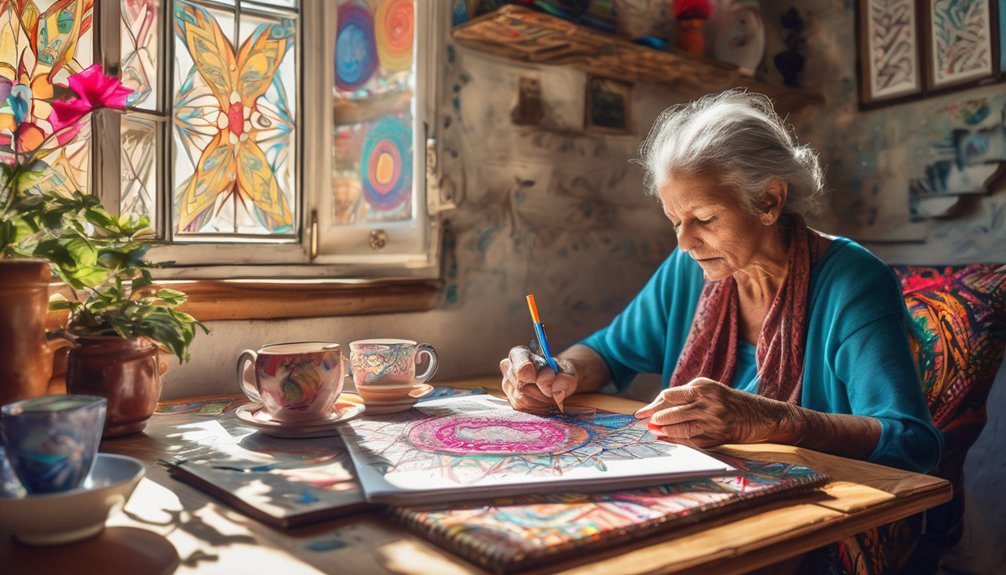
Incorporating coloring into your daily routine can be a simple yet effective way to boost focus and relaxation. Start by setting aside just 10-15 minutes each day.
Pick a comfortable spot where you can unwind without distractions. Choose coloring books or print pages that appeal to you—nature scenes, mandalas, or abstract designs.
Keep your supplies handy; having colored pencils or markers ready to go will encourage you to color more often. Consider pairing coloring with calming music or a podcast to enhance the experience.
If you enjoy socializing, invite friends or family to join you for a coloring session. This won’t only enrich your routine but also help strengthen your connections while you create beautiful art together.
Frequently Asked Questions
Can Coloring Help With Memory Retention in Older Adults?
Yes, coloring can help with memory retention in older adults. It engages the brain, stimulating neural connections and enhancing cognitive function, which can lead to improved recall and better overall memory performance during daily activities.
What Types of Coloring Materials Are Best for Seniors?
You’ll find that colored pencils, gel pens, and watercolor sets are best for seniors. They’re easy to grip, offer vibrant colors, and allow for creative expression without the mess that traditional paints might create.
How Often Should Older Adults Color for Maximum Benefits?
You should aim to color several times a week, ideally for about 30 minutes each session. Consistency helps you reap the maximum benefits, enhancing your focus and providing a relaxing, enjoyable experience.
Are There Specific Coloring Books Designed for Cognitive Improvement?
Absolutely! Research shows that engaging in cognitive activities like coloring can enhance brain function by up to 20%. You’ll find several coloring books specifically designed to stimulate cognitive improvement, featuring intricate designs and themes that challenge your mind.
Can Coloring Be Used as Therapy for Dementia Patients?
Yes, coloring can serve as a therapeutic tool for dementia patients. It stimulates creativity, fosters connection, and may enhance cognitive engagement, helping you create meaningful interactions while providing a calming outlet for emotional expression.
Conclusion
Incorporating coloring into your daily routine can sharpen your focus, enhance your mindfulness, and promote relaxation. As you choose colors and stay within the lines, you’ll boost your motor skills, stimulate your creativity, and even strengthen social bonds through group activities. So grab those colored pencils, embrace the calm, and let your imagination flow. Coloring isn’t just a pastime; it’s a pathway to a more engaged, stress-free, and connected life. Enjoy the journey, one stroke at a time!