
Coloring is like a gentle stream flowing through a busy day, offering kids a chance to pause and reflect. It’s not just about filling in spaces with color; it’s a multifaceted activity that nurtures various skills. From enhancing fine motor skills to fostering mindfulness, coloring serves a purpose beyond mere entertainment. What’s even more intriguing is how it opens the door to creativity and emotional expression. Discover how this simple activity can enrich your child’s quiet moments.
Key Takeaways
- Coloring promotes mindfulness, helping kids focus and block out distractions during quiet time.
- It encourages creative expression, allowing children to explore their imagination and emotions.
- Engaging in coloring enhances fine motor skills, improving hand strength and coordination.
- Coloring provides a peaceful moment, serving as a calming activity that reduces stress.
- It fosters social interactions through group coloring, promoting teamwork and communication among peers.
The Benefits of Coloring for Kids

Coloring isn’t just a fun pastime; it offers numerous benefits for kids. When your child picks up a crayon or colored pencil, they’re not just creating art; they’re exploring their creativity. This creative expression helps them develop imagination and boosts confidence as they see their ideas come to life on paper.
Additionally, coloring can be a calming activity, providing a peaceful moment in their day. It encourages focus and concentration, allowing kids to immerse themselves in a task without distractions. As they choose colors and think about their designs, they’re practicing decision-making skills.
Enhancing Fine Motor Skills Through Coloring
As children engage in the creative process of coloring, they’re also honing important fine motor skills. Gripping crayons or colored pencils helps little hands develop strength and dexterity.
As they navigate within the lines, they’re practicing coordination and control, which are essential for tasks like writing and using scissors later on. The varied movements required to color different shapes enhance their hand-eye coordination, making their fingers more agile.

Plus, choosing colors and blending them encourages decision-making and creativity. You’ll notice your child’s grip improving as they color more frequently, leading to better control over their writing instruments.
Promoting Mindfulness and Focus
When kids immerse themselves in coloring, they naturally enter a state of mindfulness that sharpens their focus. This focused attention helps them block out distractions, promoting a sense of calm.
As they concentrate on selecting colors and staying within the lines, children learn to be present in the moment. This practice not only soothes their minds but also enhances their ability to concentrate on tasks in other areas of life.
Additionally, coloring can serve as a mental break, allowing kids to reset after busy activities. By engaging in this simple yet effective quiet time activity, you’re helping them develop important skills for managing stress and maintaining focus, which can be beneficial as they navigate their daily routines.
Encouraging Creativity and Self-Expression
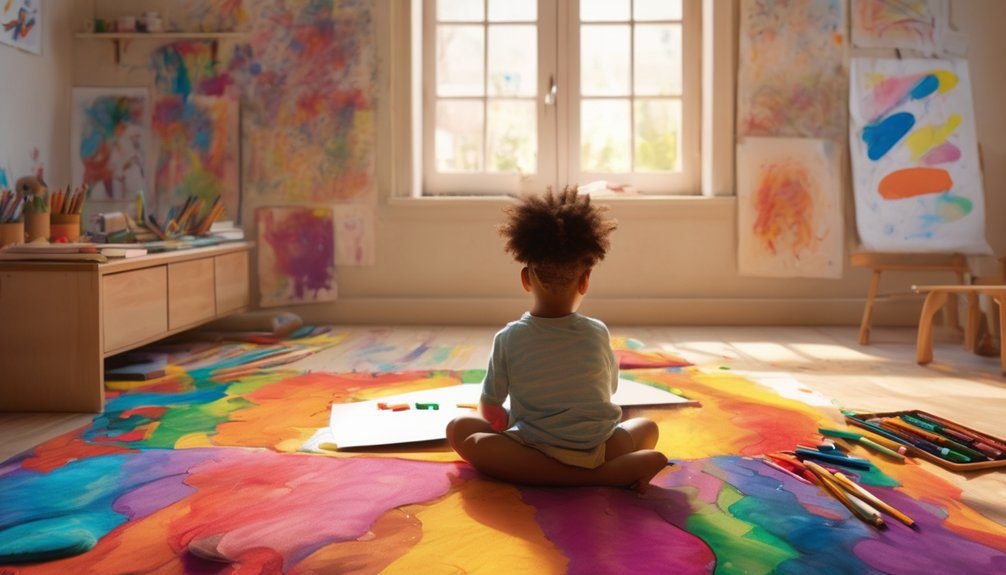
While engaging in coloring, kids unleash their imaginations and explore their unique perspectives. This activity not only entertains but also nurtures their creativity and self-expression.
When you encourage your child to color, you’re giving them the freedom to:
- Experiment with colors and techniques
- Create their own interpretations of characters or scenes
- Develop storytelling skills through their artwork
- Express emotions and feelings visually
- Build confidence in their artistic abilities
Each stroke of the crayon or marker becomes a personal statement, allowing them to communicate what words sometimes can’t.
Every mark made with crayon or marker transforms into a unique expression, conveying emotions that words often fail to capture.
As they color, they learn to appreciate their individuality, fostering a sense of pride in their creations. This process ignites a lifelong love for art and expression.
Color Psychology and Its Effects on Mood
Colors can profoundly influence your child’s mood and emotions, shaping their experiences during quiet time activities like coloring. For instance, warm colors like red and orange can evoke feelings of excitement and energy, while cooler hues like blue and green often promote calmness and tranquility.
If you encourage your child to use a variety of colors, they might explore different emotions and express themselves more fully. Yellow can spark happiness, while purple may inspire creativity.
Coloring as a Stress Relief Tool
Coloring can serve as an effective stress relief tool for kids, providing them with a creative outlet to unwind and express their feelings.
When you encourage your child to color, they can experience a range of benefits that help alleviate stress:
- It fosters mindfulness, allowing them to focus on the present moment.
- Coloring stimulates creativity, giving them a chance to explore their imagination.
- It offers a sense of accomplishment as they complete each page.
- The repetitive motions can be calming, promoting relaxation.
- It encourages self-expression, helping them communicate their emotions visually.
Building Patience and Perseverance

As kids engage in coloring activities, they unknowingly cultivate patience and perseverance. When they take time to stay within the lines or choose colors thoughtfully, they learn to focus and commit to their decisions. Each stroke of the crayon or marker requires concentration, teaching them that good things take time.
As they work on more complex designs, they encounter challenges that test their resolve. Instead of giving up, they learn to push through, refining their skills with each attempt. This process not only enhances their artistic abilities but also instills a sense of accomplishment.
Ultimately, coloring becomes more than just a fun pastime; it’s a valuable tool for developing essential life skills that will benefit them in numerous situations.
Social Benefits of Coloring in Groups
While you might think of coloring as a solitary activity, it can actually foster strong social bonds when done in groups. When kids gather to color, they engage in shared experiences that enhance their social skills.
Here are some benefits you’ll notice:
- Encourages teamwork: Kids learn to collaborate on projects.
- Boosts communication: They share ideas and discuss their choices.
- Builds friendships: Coloring together can spark new connections.
- Promotes empathy: Children learn to appreciate each other’s styles and preferences.
- Creates a fun environment: Group coloring sessions can turn into joyful, laughter-filled moments.
Incorporating Coloring Into Daily Routines
Integrating coloring into your child’s daily routine can be a simple yet effective way to encourage creativity and relaxation. You can set aside specific times, like after lunch or before bedtime, for a calming coloring session.
Make it a part of your wind-down routine to help your child transition from the busyness of the day to a more relaxed state. Keep coloring materials easily accessible, so your child can grab them whenever they need a moment of peace.
You might also consider incorporating themed coloring days, where you connect the activity with topics they’re learning about. By consistently including coloring in their day, you’re nurturing their artistic side while providing a soothing outlet for their emotions.
Choosing the Right Coloring Materials for Kids
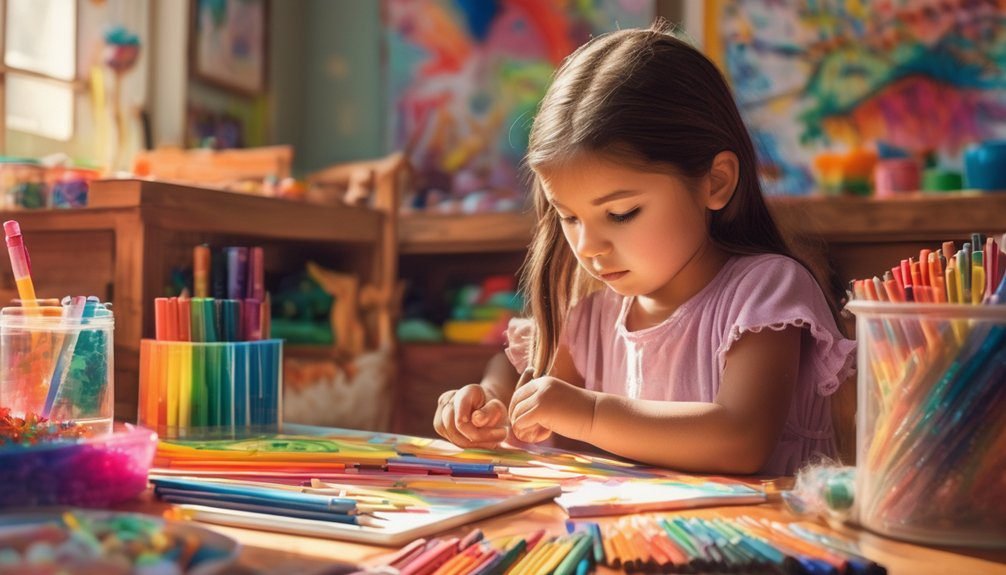
Selecting the right coloring materials can greatly enhance your child’s creative experience. When you choose the best supplies, you encourage their imagination and enjoyment.
Choosing the right coloring materials enriches your child’s creativity and sparks their imagination.
Here are some essential items to consider:
- Crayons: Easy to grip and perfect for small hands.
- Colored Pencils: Great for detailed work and blending colors.
- Washable Markers: Fun for bold colors, and they wash out easily!
- Quality Paper: Thick enough to prevent bleed-through and support various mediums.
- Coloring Books: Look for age-appropriate themes that inspire and challenge them.
Frequently Asked Questions
What Age Is Appropriate for Kids to Start Coloring?
Kids can start coloring as early as 12 months. At this age, they might enjoy scribbling with crayons. By age three, they’ll begin to understand shapes and colors, making coloring even more engaging for them.
How Long Should a Coloring Session Last?
Think of coloring as a gentle river, flowing through a child’s imagination. A session should last around 20 to 30 minutes; it’s long enough to spark creativity without overwhelming their budding focus and energy.
Can Coloring Improve Academic Performance?
Yes, coloring can improve academic performance. It enhances focus, fine motor skills, and creativity, all of which contribute to better learning. By engaging in coloring, you’re also fostering a positive attitude towards education and exploration.
What Types of Coloring Books Are Best for Children?
For children, the best coloring books feature simple designs, beloved characters, or educational themes. Look for books that encourage creativity and engagement, like those with animals, nature, or interactive elements to keep them entertained and focused.
Should Coloring Be Supervised or Can Kids Do It Independently?
While kids can color independently, supervision ensures safety and guidance. You’ll notice their creativity flourish, but keeping an eye on them prevents messes and encourages proper use of materials, balancing freedom with structure for enhanced enjoyment.
Conclusion
Incorporating coloring into your child’s routine isn’t just fun—it’s beneficial. Studies show that kids who engage in creative activities like coloring experience a 70% reduction in stress levels. This calming effect helps them focus better and express their emotions. By making coloring a regular quiet time activity, you’re not only nurturing their creativity but also equipping them with valuable skills for managing stress and enhancing well-being. So grab those crayons and watch your child thrive!